Alphabet’s $94.1B Stake in SpaceX Eyes Infrastructure Lead

Evening Analysis • Thursday, July 23, 2026

The Gist View

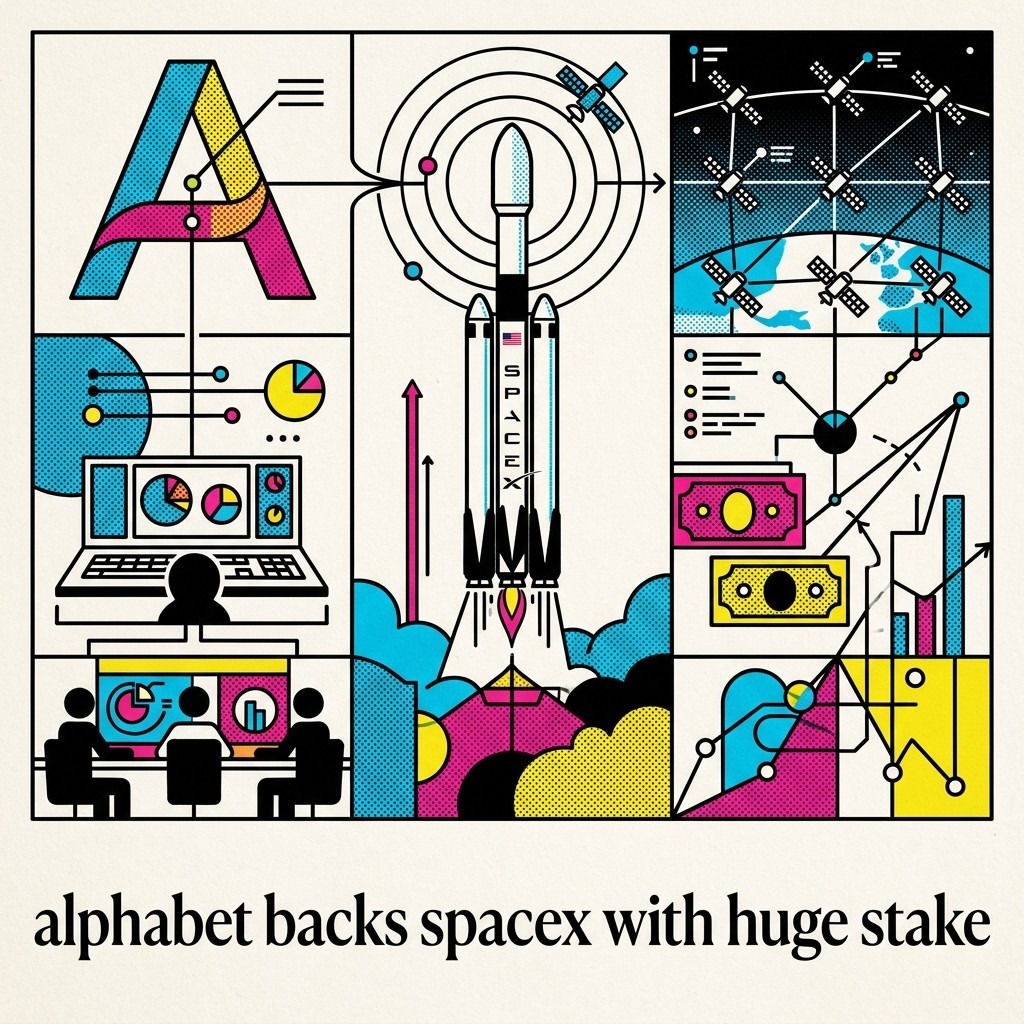
Alphabet Inc., the parent company of Google and the dominant global provider of digital advertising, disclosed a $94.1 billion stake in newly-public SpaceX. That 6 percent equity share reveals the actual endgame for the technology sector: securing dominance over the physical infrastructure of the future. The era of Big Tech operating purely as software platforms is over.

By holding an anchor position in orbit, Alphabet alters its own incentive to build a fully independent satellite internet rival. Rather than competing directly and inviting traditional antitrust scrutiny, the search giant captures the financial upside of space commercialization. SpaceX accepts this market concentration because colonizing Mars demands unprecedented cash, and only cash-rich tech giants can shoulder that long-term risk.

The terms of the investment guarantee a sustained partnership. Alphabet’s marketable equity securities in the rocket manufacturer include $80 billion in short-term restricted shares and another $14.1 billion restricted through 2027, according to the Wall Street Journal.

The Gist AI Editor

The Global Overview

Alphabet Secures SpaceX Infrastructure

Alphabet Inc. disclosed a $94.1 billion stake in SpaceX, securing a 6% share (WSJ). Tech giants are deploying massive capital to secure oligopolistic control over future physical space infrastructure, effectively escaping software antitrust scrutiny. While SpaceX requires unprecedented capital for Mars colonization and global satellite internet—a long-term risk only cash-rich tech giants can shoulder—this equity anchor fundamentally alters Alphabet’s incentives to fund an independent rival. This structural consolidation coincides with geopolitical protection: as the US government threatens tariffs against the UK to block tech taxes (Politico), Washington forcefully shields these same monopolies from foreign taxation. Meanwhile, NASA continues expanding sovereign space capacity, building on its Viking 1 Mars data architecture by testing the Artemis IV liquid hydrogen tank.

Treasury Selloff Tests Equity Markets

A bond selloff pushed the 10-year Treasury yield near a 2026 high (WSJ). Despite rising rates, analysts urge a bullish outlook on the S&P 500—a stock market index tracking 500 of the largest companies on United States exchanges—by focusing strictly on corporate earnings. This divergence demonstrates how dominant firms remain insulated from sovereign borrowing costs as long as profit margins hold.

Civic Backing Sustains Indian Protests

Thousands of Gen Z protesters in India are drawing widespread civic support (Bloomberg). Supplied with food, shelter, and medical aid by Bollywood figures and Sikh temples, this cross-class mobilization provides the operational endurance required to sustain opposition against institutional bottlenecks.

Stay tuned for further global developments in the next edition of The Gist. The Gist remains independent and reader-supported. If you value news free from corporate or state interests, consider supporting our mission with a donation.

The European Perspective

US Envoy Threatens UK Tech Taxes

By threatening tariffs over UK tech taxes, US Envoy Warren Stephens weaponizes state power as protectionist enforcement for Silicon Valley. During bilateral talks between Donald Trump and Keir Starmer, Stephens called a proposed UK social media ban “a little draconian from a freedom of speech point of view” (Politico). This links physical trade to digital sovereignty, raising costs for nations governing US platforms. However, unilateral European digital taxes disproportionately target US firms, acting as unlegislated tariffs Washington can legitimately counter.

German Housing Construction Collapse

The Ifo Institute, a Munich-based economic researcher, and EUROCONSTRUCT, a European construction research network, project German housing completions will drop to just 185,000 units in 2026 (Ifo). Persistent construction inflation and geopolitical fallout from the “Iran war” drive this structural capital freeze.

Major German Cabinet Reshuffle

Nina Warken replaces Thorsten Frei as Head of the Chancellery, while CDU (Germany’s main center-right party) General Secretary Carsten Linnemann becomes Health Minister (ZDF). Separately, following public protests over wartime stability, Ukraine replaced Olexander Syrskyj with Mychajlo Drapatyj as Army Chief, continuing the military command reshuffles we’ve tracked.

Italy Launches Auto Social Leasing

Italy’s Ministry of Enterprises finalized a scheme offering cars for a 100-euro monthly fee (Il Sole 24 Ore). The Dpcm Automotive decree unlocks state resources to directly subsidize demand, functioning as rent-seeking that funnels taxpayer capital to domestic manufacturers.

Catch the next Gist for the continent’s moving pieces.

🎙️ Listen to this edition as a podcast Listen

The Gist is an independent daily digest: AI-curated, human-directed, unapologetically liberal (how it’s made). Hundreds of sources, only what matters. Subscribe free or listen to the podcast.


Comments

Leave a Reply

Your email address will not be published. Required fields are marked *

This site uses Akismet to reduce spam. Learn how your comment data is processed.