US and Iran Strait of Hormuz Shipping Agreement
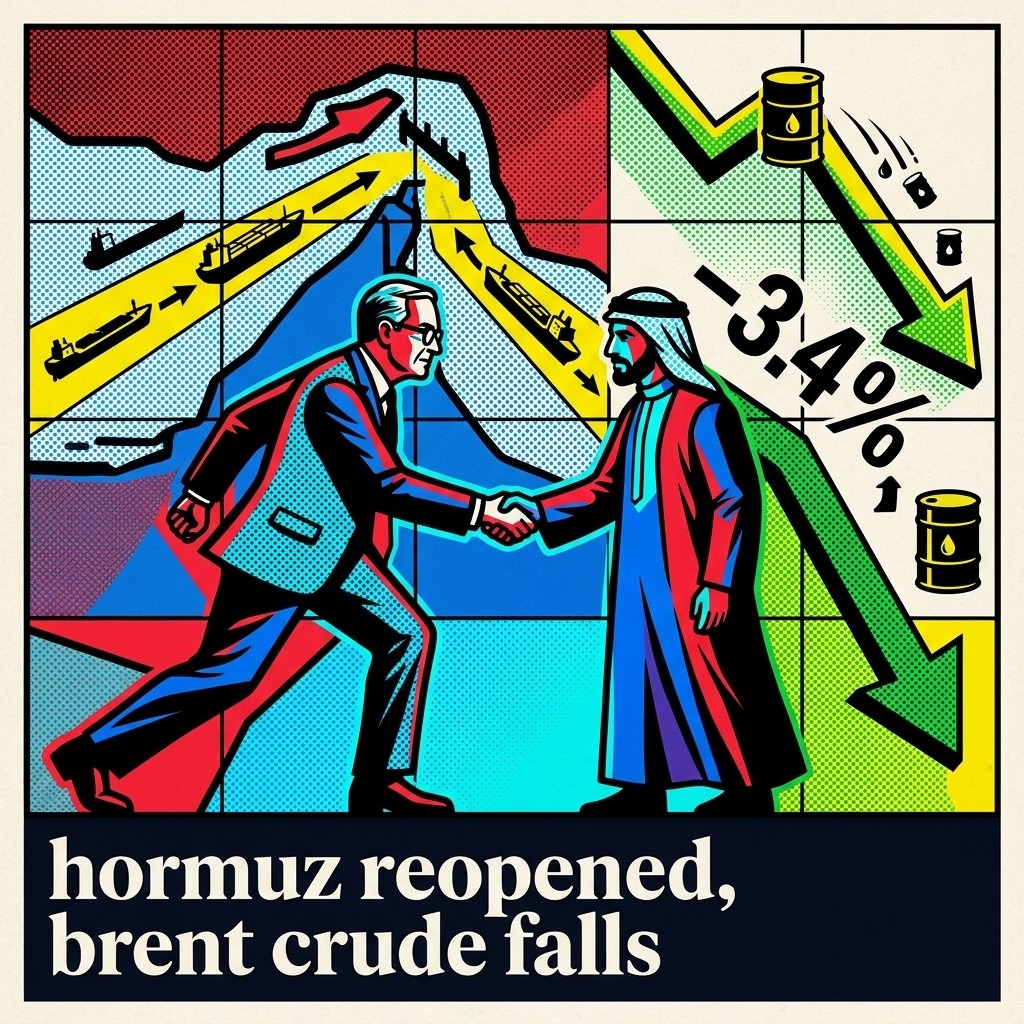
US Treasury Secretary Scott Bessent stated that a deal with Iran to reopen the Strait of Hormuz could be reached immediately, causing Brent crude to drop 3.4% to $80.88 a barrel (Forbes). Iranian and Omani negotiators agreed on a temporary arrangement to direct shipping through the strait, though Iran’s top leadership must still sign off. Bessent noted the agreement secures ‘freedom of movement’ without shipping tolls, allowing hundreds of stalled vessels carrying energy, fertilizers, and industrial gases to exit the Gulf (FT). With Bessent indicating an imminent deal, our previous coverage noting the suspension of strikes to facilitate negotiations has been directly confirmed by today’s temporary shipping arrangement.
Washington’s willingness to strike a temporary shipping arrangement with Iran effectively validates Tehran’s strategy of holding global commerce hostage, perversely incentivizing future disruptions of critical maritime chokepoints. Refusing a negotiated settlement would prolong severe inflationary pressures on global energy and commodity markets, inflicting immediate and politically fatal economic damage on Western consumers. However, the deal’s rapid materialization demonstrates that Western leaders will consistently prioritize immediate inflation relief over the long-term strategic isolation of hostile state actors.
NASA Commercial Lunar Lander Partnerships
NASA is partnering with commercial firms including Blue Origin, Firefly Aerospace, and Intuitive Machines to deliver foundational cargo landers to the Moon’s South Pole by 2028 (Reuters). Phase I of NASA’s Moon Base architecture plan, running through 2029, involves more than twenty robotic landings designed to test technologies and deploy critical scientific instruments. By outsourcing logistics to private operators, the US government shifts the massive capital requirements of space infrastructure onto commercial balance sheets, establishing supply chain dependencies before initiating permanent human outposts.
Moderna mRNA Ebola Vaccine Trials
Moderna launched Phase 1 clinical trials in Canada for its experimental mRNA-1469 vaccine targeting the Bundibugyo strain of the Ebola virus (Bloomberg). The trial is backed by a $50 million pledge from CEPI, the Coalition for Epidemic Preparedness Innovations, a global foundation that finances independent research projects to develop vaccines against emerging infectious diseases. The ongoing Ebola outbreak in the Democratic Republic of Congo is the second-deadliest on record, with more than 3,740 confirmed cases and over 1,650 reported deaths. This funding model injects external capital to de-risk pharmaceutical development in regions where local market demand cannot sustain initial research costs.
Spotify Quarterly Earnings and AI Compute Expenditures
Spotify reported Q2 2026 total revenue of €4.77 billion and reached a record 300 million premium subscribers, while total monthly active users climbed to 777 million (FT). Despite achieving a record gross margin of 33.4%, Spotify shares dropped 6% in pre-market trading. Elevated operating expenses, heavily driven by artificial intelligence compute costs, caused the company to miss profit expectations. The market penalty highlights a structural bottleneck: integrating autonomous technology scales user engagement, but the requisite hardware and energy expenditures severely compress operating margins.
Stay tuned for the next Gist—your edge in a shifting world. The Gist remains independent and reader-supported. If you value news free from corporate or state interests, consider supporting our mission with a donation.




Leave a Reply