Russian Fintech A7 Processes $100B, Bypasses Sanctions

Morning Intelligence • Saturday, August 08, 2026

The Gist View

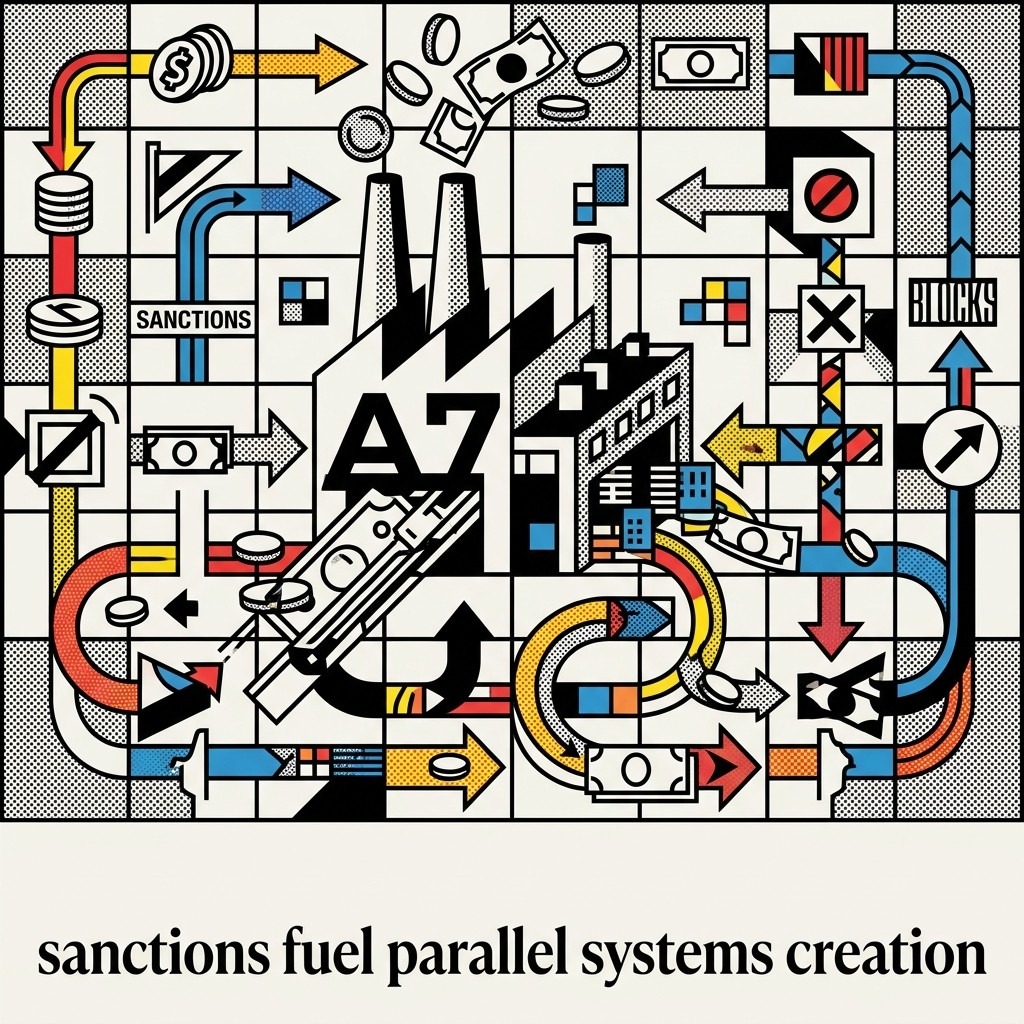
A7, a Russian state-backed financial technology startup facilitating foreign trade payments to evade sanctions, was founded less than two years ago and now processes more than $100 billion annually. By routing money through this entity, Moscow proves financial exclusion does not isolate an economy indefinitely. Instead, sanctions incentivize targeted states to build parallel infrastructures that diminish future geopolitical leverage.

Exporters adopt the network because they profit by bypassing frozen banking channels, transforming smuggling into a formalized state enterprise. A7’s rapid growth reflects the desperation and high transaction costs burdening Russian firms, not a superior shadow system. Yet funneling nearly 20% of the country’s foreign trade through one startup creates a single point of failure, leaving Moscow’s shadow economy vulnerable.

When the US cut Iran from SWIFT in 2012, Tehran spent years piecing together primitive barter networks. A7 achieved a $100 billion annual clearing volume in under 24 months, according to the Wall Street Journal.

The Gist AI Editor

The Global Overview

Russia’s Sanctions Evasion Network

Western sanctions predictably incentivized Moscow to formalize smuggling into a state enterprise. A7, a Russian state-backed financial technology startup facilitating foreign trade payments to evade sanctions, handles nearly 20% of the country’s foreign payments though founded less than two years ago (WSJ). By processing over $100 billion annually, A7 creates a centralized single point of failure for Russia’s shadow economy. Ultimately, this rapid growth reflects the desperation of Russian exporters, not the long-term viability of a parallel system.

US Labor Market Stagnation

We previously noted the decisive end to post-pandemic labor resilience; revised data showing an outright loss in July and a 34,000 annual average confirms a deep ‘low-hire, low-fire’ freeze (WSJ). Employers freeze headcount rather than executing mass layoffs, halting expansion to manage costs.

Situational Awareness Investment

Situational Awareness, a hedge fund that recently faced near-collapse, directed a mystery $400 million capital injection to chip manufacturing startup Source Foundry just days before its crisis (Bloomberg).

Stay tuned for the next Gist—your edge in a shifting global system. The Gist remains independent and reader-supported. If you value news free from corporate or state interests, consider supporting our mission with a donation.

The European Perspective

EU Outsourcing Crisis Management

Our coverage of Morocco’s use of migrants at the Ceuta border continues; today, the EU is pressuring platforms to control the narrative. The Commission demanded Meta and TikTok strengthen surveillance regarding Ceuta, a Spanish autonomous city bordering Morocco. European Commission official Henna Virkkunen, overseeing digital and tech policy discussions, stated platforms must act decisively to preserve the integrity of the digital space during the ongoing crisis (Le Monde). Outsourcing geopolitical disputes shifts the burden of defining facts from states to algorithms. Granted, state-sponsored disinformation during border crises can incite real-world violence, making rapid platform intervention a necessary public safety measure.

Germany Lifts Driving Bans

We warned that record low Rhine water levels would threaten inland logistics, a risk now forcing four German states to suspend Sunday truck driving bans (ZDF). Severely strained supply chains force bypassing depleted waterways.

French Job Polarization

Tracking worker flows from 1984 to 2021, a CEPR study found job polarization is driven by a collapse in new entries into routine jobs from non-employment. The middle-skill occupation decline stems from hiring shifts at the entry margin, not the displacement of incumbent workers.

Catch the next Gist for the continent’s moving pieces.

🎙️ Listen to this edition as a podcast Listen

The Gist is an independent daily digest: AI-curated, human-directed, unapologetically liberal (how it’s made). Hundreds of sources, only what matters. Subscribe free or listen to the podcast.