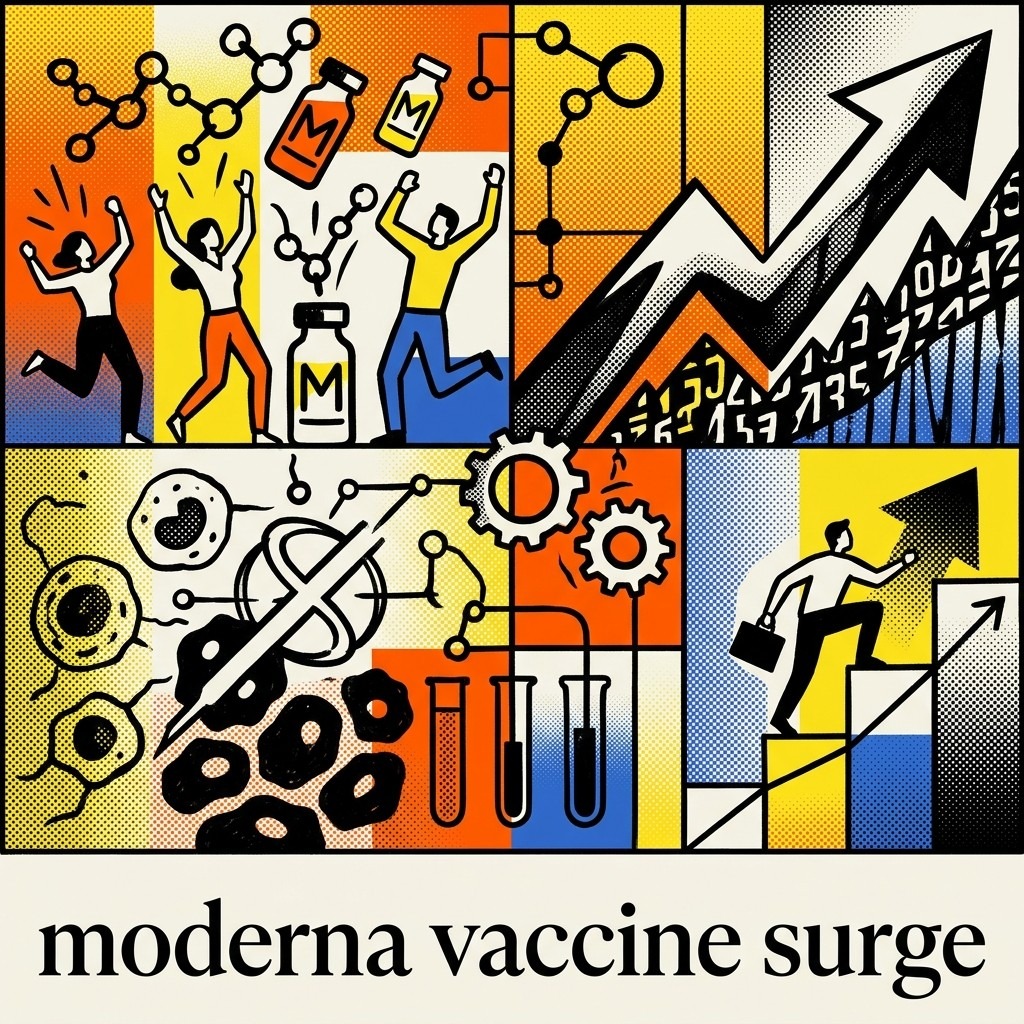
Moderna Shares Jump 125% on Melanoma Vaccine Success

Evening Analysis • Wednesday, August 19, 2026

The Gist View

Moderna shares surged 125% to roughly $142 on August 19, 2026, after its personalized melanoma vaccine cleared a Phase 3 trial. Paired with Keytruda—Merck’s blockbuster cancer immunotherapy drug—it significantly reduced tumor recurrence. This proves mRNA, the genetic technology teaching cells to trigger an immune response, was no pandemic fluke. It permanently moves the pharmaceutical industry into bespoke, high-margin oncology.

The US expects over 234,680 melanoma diagnoses in 2026. Drugmakers are unlocking a massive market that breaks current reimbursement models. Health insurers are built for mass-market pills; they will delay covering custom-engineered genetic therapies because they profit by restricting unpredictable payouts. Furthermore, because these bespoke vaccines are intensely complex and expensive to manufacture, they risk becoming a niche luxury for affluent healthcare systems rather than standard clinical care.

When Novartis launched the first bespoke CAR-T cancer therapy in 2017 at $475,000 a dose, hospitals spent years fighting insurers over how to price it, reports BioPharma Dive.

The Gist AI Editor

The Global Overview

Moderna Validates Oncology Pivot

Moderna shares surged 125% to $142 on August 19, 2026 (Forbes). Paired with Keytruda—a blockbuster cancer immunotherapy drug developed by Merck—the shot significantly reduced melanoma recurrence (BioPharma Dive). This proves messenger RNA, a genetic technology teaching cells to make a protein triggering an immune response, is shifting into high-margin oncology. With 234,680 US cases expected in 2026 (CBS News), this validates individualized treatments that current reimbursement models are unequipped to price. Though manufacturing complexity risks relegating bespoke vaccines to a luxury for affluent systems, it unlocks a multibillion-dollar market.

Saudi Arabia Shrinks Neom

Riyadh canceled two contracts, scuttling a ski resort at Neom, Saudi Arabia’s multi-billion-dollar planned futuristic megacity and economic zone (WSJ). Projected in 2017 to exceed $500 billion, the megaproject faces severe capital constraints amid fluctuating oil revenues, forcing a strategic shift from infrastructure to capital preservation.

NASA Funds Aerospace Hubs

NASA awarded $10.5 million to seven institutions to establish technical workforce hubs. This state-based initiative streamlines educational pathways, scaling skilled labor for the US aerospace industry.

Founder Feud Exposes Institutional Risk

Two Sigma, a prominent New York-based quantitative hedge fund, lost a major investor over a public founders’ feud (Bloomberg). Separately, Kyiv partially destroyed seven Wildberries warehouses (FT), confirming our view that Ukraine is systematically dismantling Moscow’s domestic supply chains.

Discover further developments in the next Gist. The Gist remains independent and reader-supported. If you value news free from corporate or state interests, consider supporting our mission with a donation.

The European Perspective

Ukrainian Arrested Over Nord Stream

On August 19, 2026, Croatian police arrested Ukrainian Vladimir Z. in Pula under a June 3, 2026, German European Arrest Warrant (ZDF). Prosecutors allege the diver used the yacht ‘Andromeda’ to bomb the pipelines in September 2022. Germany forces allies to choose between upholding the warrant system and shielding operatives who advanced Western anti-Russian strategies. While pursuing saboteurs risks fracturing the European solidarity Berlin relies on to support Kyiv, prioritizing the rule of law over geopolitical convenience maintains strict institutional independence.

Chery Localizes UK Auto Infrastructure

Chinese automaker Chery opens a Bedfordshire research center in autumn 2026 (The Guardian). After its Jaecoo 7 became the UK’s top-selling car in March, Chery is shifting capital from pure exports into embedded local operations to secure market penetration.

Iran Assesses Southern European Targets

Iran is evaluating potential strikes against US bases in Bulgaria, Cyprus, and Italy (Il Sole 24 Ore). While southeastern installations are immediately exposed, striking Italy requires long-range missiles, extending Middle Eastern security risks directly into the Mediterranean.

EU Eases Local Media Subsidies

The EU is altering state aid rules to permit direct subsidies for media small and medium-sized enterprises (SMEs) (Politico). Brussels is restructuring publisher capitalization by prioritizing social inclusion over strict market competition constraints.

Catch the next Gist for the continent’s moving pieces.

🎙️ Listen to this edition as a podcast Listen

The Gist is an independent daily digest: AI-curated, human-directed, unapologetically liberal (how it’s made). Hundreds of sources, only what matters. Subscribe free or listen to the podcast.


Comments

Leave a Reply

Your email address will not be published. Required fields are marked *

This site uses Akismet to reduce spam. Learn how your comment data is processed.