Saudi Arabia Launches State Maritime Insurance Amid Threats

Morning Intelligence • Monday, August 24, 2026

The Gist View

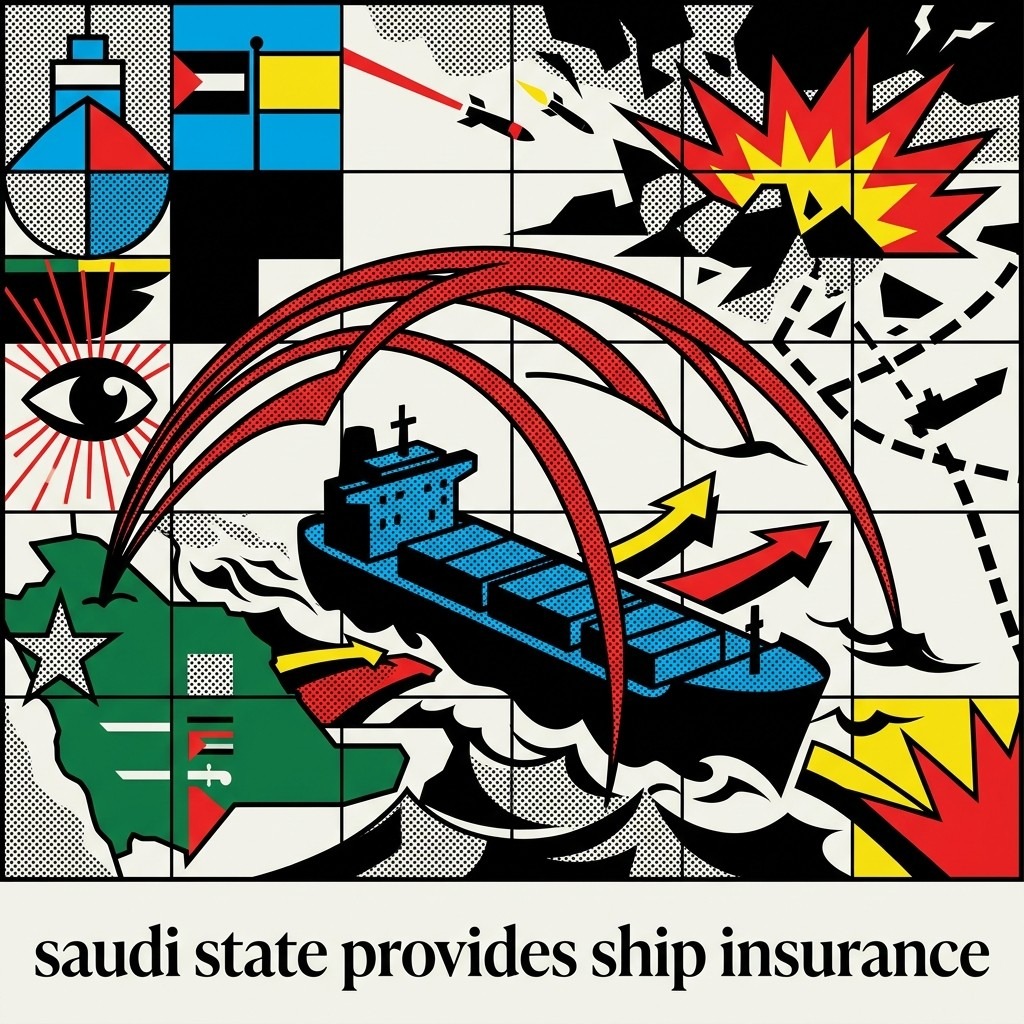
Saudi Arabia is holding talks to provide state-backed maritime war insurance for commercial ships and regional firms facing escalating attacks by the Houthis, a Yemeni militant group. This intervention reveals the hidden sovereign subsidy sustaining global trade: when private markets accurately price extreme geopolitical danger, governments must absorb the cost to prevent a total economic blockade.

Commercial insurers restrict maritime coverage because they lose money underwriting active conflict zones. Without state intervention, these private underwriters would withdraw entirely, effectively blockading Saudi ports and devastating the wider Middle Eastern economy. By acting as the insurer of last resort, Riyadh socializes the immense financial costs of regional instability, while shipping companies retain their freight profits.

The Financial Times reports that commercial underwriters have already sharply raised prices or restricted maritime coverage outright due to the broader Iran conflict. This withdrawal leaves sovereign states as the only entities capable of keeping targeted shipping lanes open.

The Gist AI Editor

The Global Overview

Saudi Arabia Socializes Maritime Risk

Saudi Arabia is holding talks to provide state-backed war insurance for ships, as commercial insurers restrict coverage owing to the Iran conflict and escalating Houthi attacks (FT). The ongoing global supply chain restructuring is now forcing regional states to act as insurers of last resort. This exposes the sovereign subsidy sustaining global trade: when private markets accurately price extreme geopolitical danger, governments must absorb the cost. The state socializes the expense of regional instability while shipping firms retain the profits. Yet, without this state intervention, commercial insurers would withdraw coverage entirely, effectively blockading Saudi ports and devastating the regional economy.

Federal Assistance Shifts Consumption

Americans facing new restrictions in the Supplemental Nutrition Assistance Program (SNAP)—the primary US federal food assistance program for low-income individuals—purchased 12% less soda (Stat news). This data reflects the direct behavioral impact of tying federal nutrition assistance to targeted consumer health interventions, demonstrating how regulators can alter domestic consumption patterns by changing specific product eligibility.

Carney Extends Trade Standoff

Mark Carney, the Prime Minister of Canada, who formerly served as the Governor of the Bank of England and the Bank of Canada, is testing his “no deal is better than a bad deal” doctrine as US trade negotiations remain collapsed (WSJ). Despite the risk of prolonged economic damage, his hardline approach continues to hold broad support from the Canadian public and political opponents. As Carney digs in, events confirm our warning that arbitrary trade demands inevitably devolve into protracted, mutually destructive stalemates.

Stay tuned for the next Gist—your edge in a shifting world. The Gist remains independent and reader-supported. If you value news free from corporate or state interests, consider supporting our mission with a donation.

The European Perspective

Global Shipping Operations

The shipping industry’s enthusiastic embrace of geopolitical turmoil proves that supply chain disruptions function as a lucrative regulatory moat, allowing incumbent carriers to command premium rates. A survey of over 300 shipping leaders by Kapa Research (a European public opinion and market research firm), conducted at the peak of the Hormuz crisis, reveals the industry views conflict as fundamentally beneficial to its business (Politico). While high freight rates are a necessary risk premium for operating in active conflict zones, adequately compensating carriers for severe physical danger, the structural outcome is lucrative. Red Sea disruptions have not damaged shipping giants; rather, they artificially restrict vessel supply through longer routes, predictably driving up freight rates and delivering windfall profits. Executives now expect global maritime influence to continue shifting eastward (Kapa Research).

UK Prime Minister Andy Burnham

Andy Burnham, the newly appointed Prime Minister of the United Kingdom and former Mayor of Greater Manchester, made his first official foreign trip to Kyiv to meet with Ukrainian leadership (ZDF). By pledging the UK will stand by Ukraine “as long as necessary,” Burnham signals to markets that British defense capital flows remain secure.

European Electronic Invoicing

Mandatory electronic invoicing laws in Europe are structurally reallocating credit toward firms that utilize invoice-based financing (CEPR). Because lenders can better assess credit risk using digitized invoice data, the compliance policy is inadvertently reshaping private capital distribution.

Catch the next Gist for the continent’s moving pieces.

🎙️ Listen to this edition as a podcast Listen

The Gist is an independent daily digest: AI-curated, human-directed, unapologetically liberal (how it’s made). Hundreds of sources, only what matters. Subscribe free or listen to the podcast.


Comments

Leave a Reply

Your email address will not be published. Required fields are marked *

This site uses Akismet to reduce spam. Learn how your comment data is processed.