The Global Overview
US Economic Campaign Against Iran
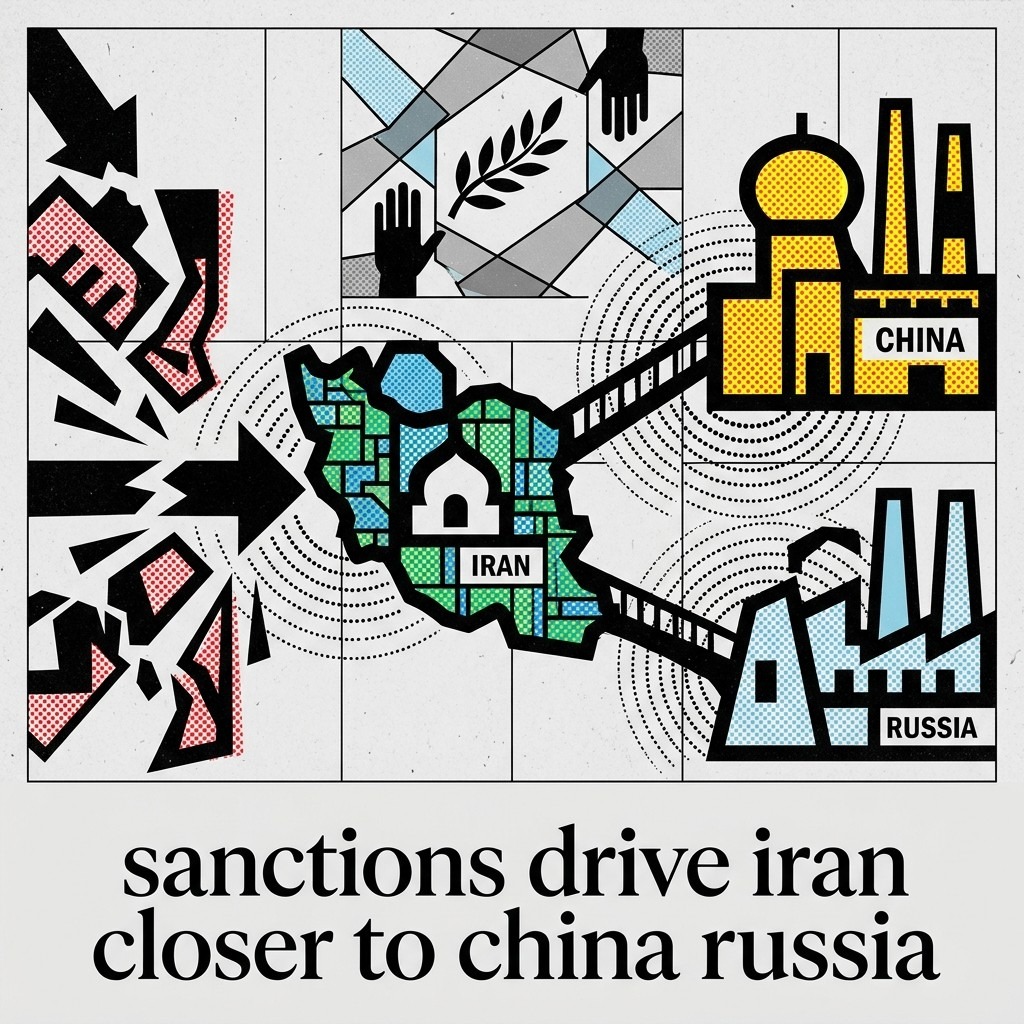
Six months into the conflict, the Trump administration unveiled new efforts to cripple Iran’s economy (WSJ). Relying entirely on total economic warfare to break Tehran merely incentivizes Iran to deepen its alternative financial networks with Beijing and Moscow, structurally weakening the hegemony of US sanctions. However, severe, compounding financial sanctions remain the only non-kinetic tool capable of meaningfully degrading Iran’s capacity to fund its regional proxy networks without risking direct US military casualties. Meanwhile, Pakistan’s Army Chief, Field Marshal Asim Munir, concluded a one-day visit to Tehran as part of a diplomatic push to mediate the standoff (Politico Europe). This intervention demonstrates that middle powers are acting within the diplomatic space left by direct US-Iran confrontation, prioritizing regional stability over strict alignment with Washington.
South Korean Kospi AI Selloff
A slow-motion collapse in the Kospi—the benchmark stock market index of South Korea—erased $2.5 trillion in value as investors unwound speculative bets on the artificial intelligence boom (WSJ). As global markets digest the Kospi crash, structural instability in US Treasury yields remains a persistent underlying risk, validating concerns that manipulating yield mechanics cannot indefinitely mask massive sovereign deficits. Furthermore, the protracted US-Canada trade standoff and its resulting retaliatory tariffs continue to strain North American supply chains, confirming our position that using tariffs as capricious political weapons functions primarily as a broad-based tax on domestic consumers.
Tech Capital and Aerospace Expansion
JPMorgan shortened the time horizon for SpaceX workers to borrow against their private stock holdings and is considering extending the same relaxed collateral requirements to investors and employees of Anthropic, a major artificial intelligence safety and research startup (FT). Elsewhere, NASA and SpaceX scheduled the launch of the Nancy Grace Roman Space Telescope for no earlier than 7:26 a.m. EDT on Sunday, August 30 (Bloomberg). The next-generation observatory will launch aboard a SpaceX Falcon Heavy rocket from Florida to explore dark energy and exoplanets.
Stay tuned for the next Gist—your edge in a shifting world. The Gist remains independent and reader-supported. If you value news free from corporate or state interests, consider supporting our mission with a donation.
|