US-Iran Tensions Spike G7 Debt Costs, Prompt Tough Choices

Morning Intelligence • Sunday, August 30, 2026

The Gist View

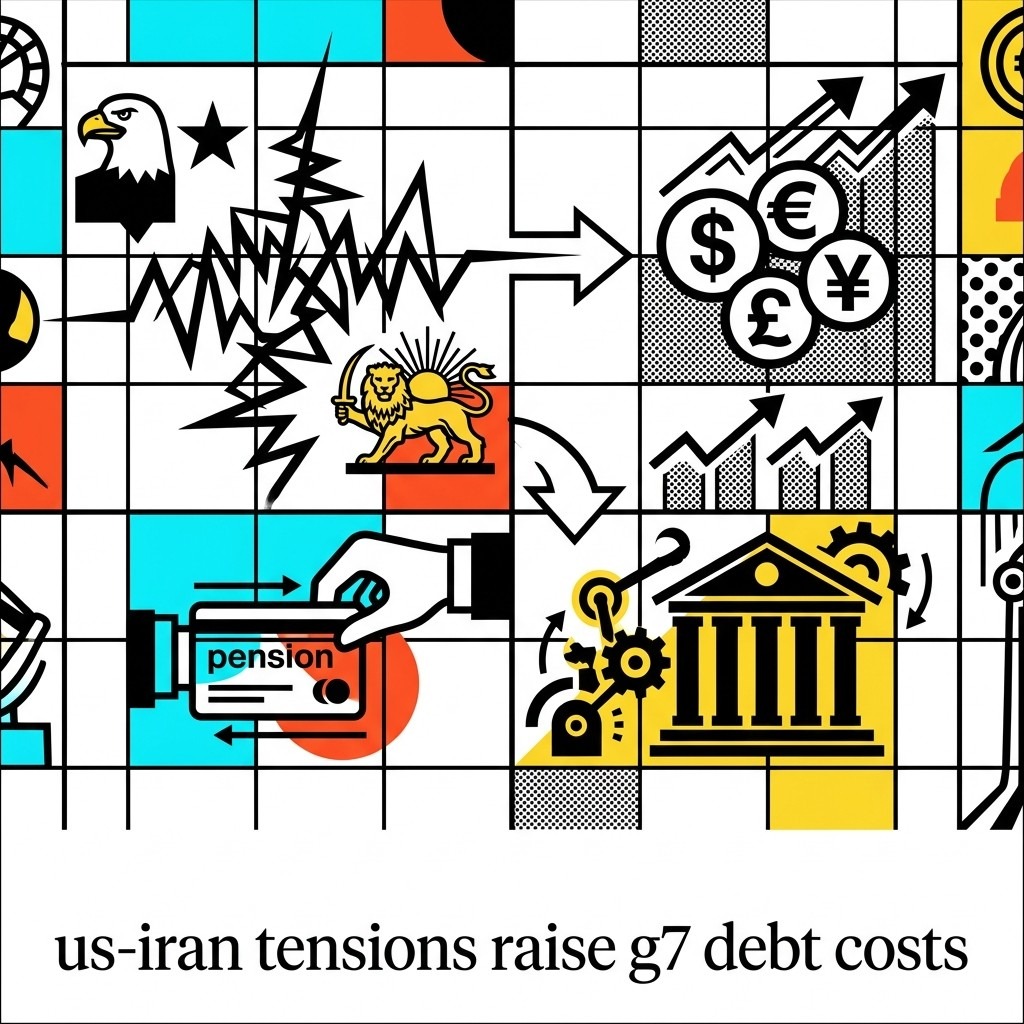
The economic conflict between the US and Iran is adding tens of billions of dollars to the debt service costs of the Group of Seven, a bloc of industrialized democracies. While sovereign borrowing rates already faced upward pressure from aging populations and baseline inflation, this Middle Eastern standoff acts as a rapid accelerant. Geopolitical commitments now carry an instantaneous domestic price tag.

Western politicians expand foreign blockades because they gain immediate security credentials at home, leaving their finance ministries to absorb the fallout in sovereign debt auctions. When capital costs reprice this violently, governments face an unyielding math problem. They must either slash domestic entitlements to cover the interest shortfall, or force central banks to monetize the deficit.

The assumption that rich nations can project military and economic power for free is officially over. “Geopolitical fragmentation could reduce global economic output by up to 7 percent over the long term.” — International Monetary Fund.

The Gist AI Editor

The Global Overview

G7 Debt Costs Surge

The tradeoff of the US-Iran conflict is a mechanical repricing of sovereign debt. Rising yields add tens of billions to the debt service of the G7—an informal bloc of industrialized democracies including the US, Canada, France, Germany, Italy, Japan, and the UK. Nearly all G7 government bonds trade higher today than in February (FT). Global 2026 growth forecasts are slashed to 2.8%, with the OECD warning of a 2.1% slump. As previously argued, prolonged economic warfare against Iran imposes a direct fiscal tax, forcing Western governments to choose between domestic austerity and inflationary monetization.

China AI Video Dominance

In May 2026, 89 of the top 100 animated dramas on Douyin—ByteDance’s domestic Chinese equivalent to TikTok—were AI productions. ByteDance’s Seedance 2.0 model enables digital actors to replace humans, threatening millions of jobs in China’s short-drama gig economy (Marginalrevolution) and efficiently shifting capital from human labor to proprietary algorithmic platforms.

SpaceX and LEO Congestion

Low-Earth orbit material is creating severe collision risks, driven heavily by Starlink—SpaceX’s broadband satellite mega-constellation of over 10,000 satellites (WSJ). State-launched hardware compounds the crisis: US Space Command recently tracked over 700 debris pieces from a fragmented Chinese Long March 6A rocket that now intersect with heavily trafficked orbital paths.

Stay tuned for the next Gist—your edge in a shifting world. The Gist remains independent and reader-supported. If you value news free from corporate or state interests, consider supporting our mission with a donation.

The European Perspective

Italy Ties 2027 Tax Reform to Cybersecurity
Italy’s Ministry of Economy is prioritizing its 2027 tax reform, explicitly tying the fiscal maneuver to funding cybersecurity and national defense (Il Sole 24 Ore). Yet, Italy’s indebted treasury is directly exposed to the global Group of Seven (G7) bond yield surge. This debt repricing tightly constrains Economy Minister Giancarlo Giorgetti’s plans, forcing governments to choose between domestic austerity and inflationary monetization.

Swiss Banks Push Back on Post-Crisis Regulation
Giorgio Pradelli, CEO of Zurich-based EFG International, warned against regulatory overreach before chairing the Swiss Bankers Association (FT). Attempting to eliminate domestic banking risk through maximalist regulation perversely threatens to offshore capital to less transparent jurisdictions. While Pradelli notes Switzerland’s global prominence is threatened by simpler competing rules, aggressive capitalization rules remain a necessary insurance policy against sovereign bailouts for small nations.

UK Nicotine Marketers Front-Run June Ban
Nicotine pouch sales are jumping in the UK as manufacturers rapidly escalate marketing campaigns (Politico). This surge directly precedes a total UK ban on advertising and sponsorship for all non-medicinal nicotine products slated for next June.

Iceland EU Referendum Yields Razor-Thin Margin
Early results in Iceland’s EU referendum show the ‘Yes’ camp leading at 51.2% (Euronews). This margin captures the fraught tradeoff between securing Western integration and preserving sovereign control over maritime resources.

Catch the next Gist for the continent’s moving pieces.

🎙️ Listen to this edition as a podcast Listen

The Gist is an independent daily digest: AI-curated, human-directed, unapologetically liberal (how it’s made). Hundreds of sources, only what matters. Subscribe free or listen to the podcast.


Comments

Leave a Reply

Your email address will not be published. Required fields are marked *

This site uses Akismet to reduce spam. Learn how your comment data is processed.