EU Delays Methane Rules for Fossil Fuel Supply Security

Evening Analysis • Tuesday, October 06, 2026

The Gist View

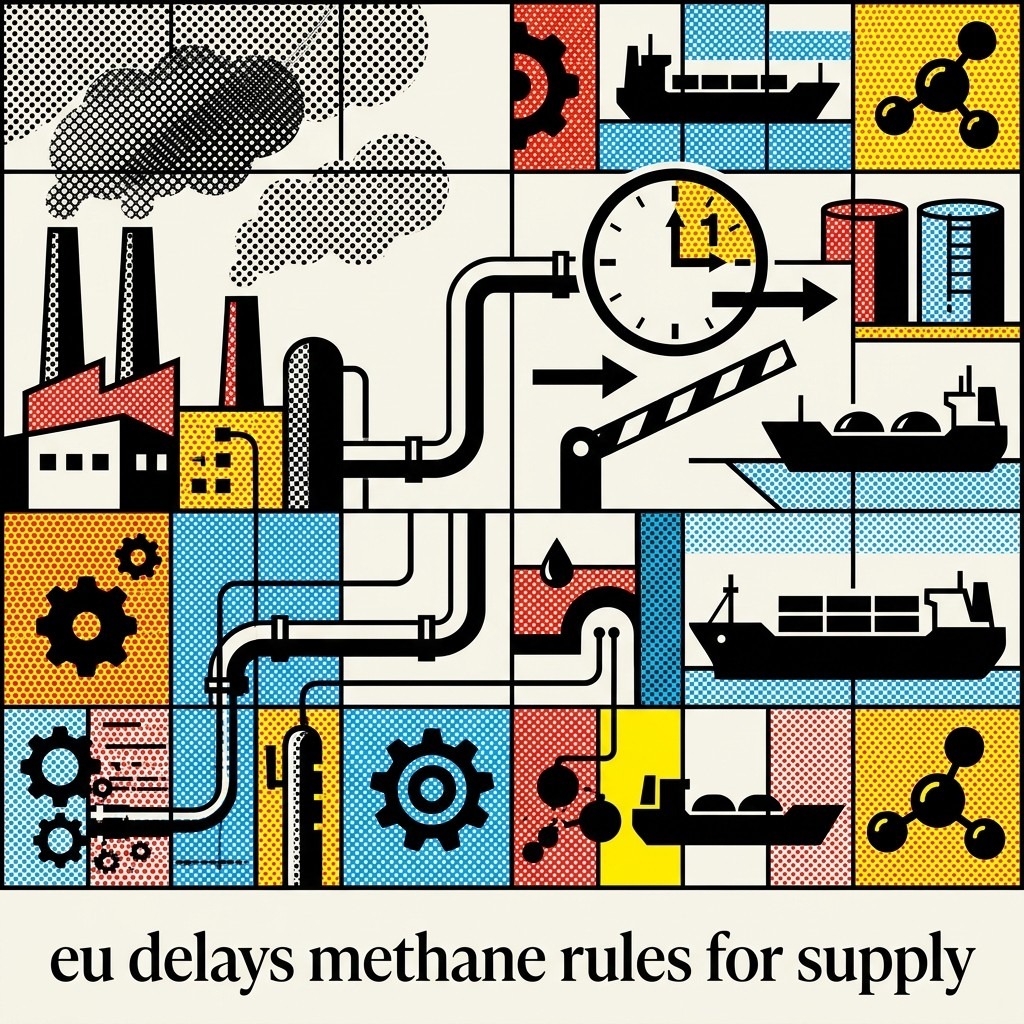
The European Union will grant fossil fuel exporters an extra one-year grace period before enforcing its landmark methane regulations. Europe can only impose strict environmental standards on foreign production when it dictates terms to a saturated market. The original mandate required energy importers to prove foreign suppliers tracked gas leaks to European standards. Exporters, chiefly the United States, balked.

The European Commission retreats because it gains supply security in a fragile market. Sourcing replacement natural gas has drained an additional €100 billion from European buyers this year. Facing contested shipping lanes, Brussels cannot risk choking off American liquefied natural gas just to enforce reporting equivalency.

Had regulators enforced the deadline, non-compliant importers faced fines of up to 20% of their global annual revenue. “Well-intentioned regulation agreed over two years ago now looks ill-timed,” notes Wood Mackenzie, the energy research consultancy.

The Gist AI Editor

The Global Overview

EU Delays Methane Rules to Shield Heavy Industry
The European Union will grant exporters an extra year to comply with methane emission regulations (WSJ). As conflicts in the Middle East and Ukraine disrupt energy supplies, policymakers are prioritizing industrial output over climate targets. This regulatory delay directly benefits manufacturers by reducing near-term compliance costs.

McKesson Acquires Option Care Health for $5.8 Billion
McKesson and private equity firm CD&R are buying infusion provider Option Care Health for $5.8bn (FT). Buyers are leveraging a window where healthcare services trade below historic valuation multiples—meaning the purchase price is unusually low compared to the company’s actual revenue. This shifts capital into decentralized healthcare delivery, bypassing traditional hospital bottlenecks.

Supreme Court Tests Energy Sector Liability
The US Supreme Court is reviewing whether fossil fuel producers must pay for climate damages (FT). The underlying systemic dynamic here is municipal leverage: local governments are attempting to force private energy capital to fund public infrastructure repairs, fundamentally altering who absorbs the financial costs of environmental friction.

Asos Plummets 11% Over Data Breach Threat
Retailer Asos saw its stock drop 11% after app users received a notification threatening a data leak (FT). A double-digit drop reflects institutional fear of immediate consumer liabilities, demonstrating how digital vulnerabilities instantly trigger massive capital flight.

Stay tuned for the next Gist—your edge in a shifting world. The Gist remains independent and reader-supported. If you value news free from corporate or state interests, consider supporting our mission with a donation.

The European Perspective

AfD Secures Saxony-Anhalt Parliament Leadership

The Alternative for Germany (AfD) secured the state parliament presidency and vice presidency in Saxony-Anhalt. Tobias Rausch won the presidency with backing from the BSW and 4 outside delegates, structurally expanding the party’s institutional authority (ZDF). This provides the AfD direct control over parliamentary procedure, shifting regional legislative power and administrative resources away from legacy parties.

Le Pen Pitches Fiscal Austerity

Marine Le Pen introduced a €140 billion savings plan for the 2027 French presidential election. The National Rally leader is signaling compliance to bond markets currently penalizing France’s fiscal deficits. By centering spending cuts rather than populist expansion, Le Pen positions her party as a pragmatic manager for international capital (Politico).

NATO Scrambles Jets Near Ukraine Border

Two Spanish F-18s under NATO command investigated radar anomalies near the Romania-Ukraine border (Euronews). Simultaneously, Kyiv installed physical drone nets across its northern bridge infrastructure (ZDF). Both developments highlight the escalating capital requirements of localized air defense, shifting municipal and military budgets toward physical infrastructure protection.

Siberian Plague Outbreak Prompts EU Review

The European Commission meets Wednesday to assess a suspected plague outbreak in Siberia (Euronews). This triggers regional health surveillance mechanisms along the eastern border. The non-obvious outcome is regulatory delays in cross-border commodity movement, as EU member states mandate stricter biosecurity protocols independent of existing geopolitical sanctions.

Catch the next Gist for the continent’s moving pieces.

🎙️ Listen to this edition as a podcast Listen

The Gist is an independent daily digest: AI-curated, human-directed, unapologetically liberal (how it’s made). Hundreds of sources, only what matters. Subscribe free or listen to the podcast.


Comments

Leave a Reply

Your email address will not be published. Required fields are marked *

This site uses Akismet to reduce spam. Learn how your comment data is processed.