SoftBank Seeks $100B from UAE for AI Hardware Investment

Morning Intelligence • Friday, October 09, 2026

The Gist View

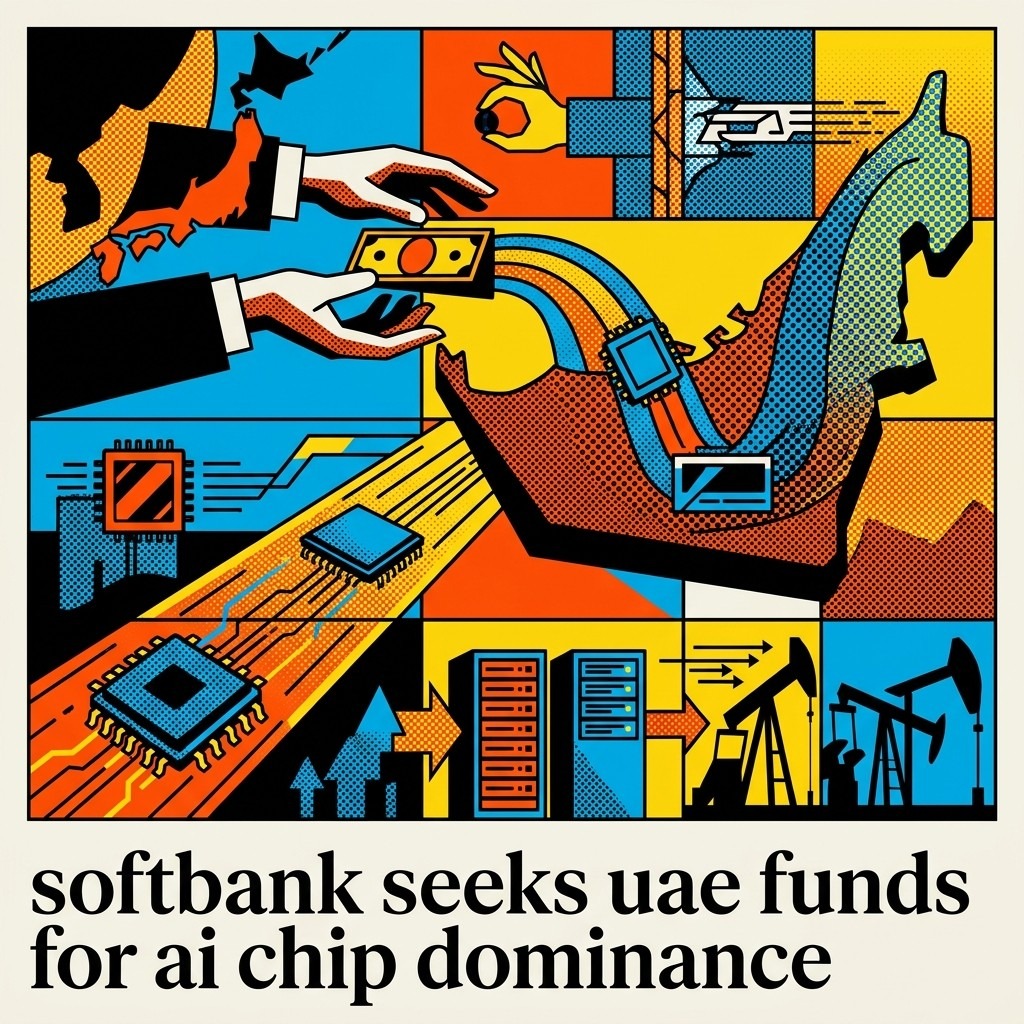
SoftBank, the Japanese investment holding company, is asking the United Arab Emirates for $100 billion to underwrite artificial intelligence hardware. Silicon Valley venture capital cannot supply funding at this scale, forcing hardware developers to seek out national treasuries.

Abu Dhabi funds foreign infrastructure because it circumvents Washington’s tightening export controls on advanced microchips. The Committee on Foreign Investment in the United States, the federal national security regulator, routinely blocks Middle Eastern wealth from acquiring American technology firms. By deploying billions through a Tokyo-based intermediary, the UAE secures dedicated server capacity outside US regulatory jurisdiction.

Operating a single massive-scale data center now requires roughly a gigawatt of dedicated power. As technology development mirrors heavy industry, “the defining constraint is no longer engineering talent, but the ability to secure sovereign-level electricity and capital” (Forrester, 2026).

The Gist AI Editor

The Global Overview

SoftBank Pursues $100 Billion Gulf AI Financing
SoftBank chief executive Masayoshi Son is negotiating with United Arab Emirates officials to secure $100 billion for artificial intelligence expansion (FT). This massive capital request highlights a structural realignment: as tech development outpaces domestic funding, Gulf sovereign wealth serves as the primary liquidity engine for global AI infrastructure. The UAE uses its petroleum revenue to lock in early access to foundational computing capabilities.

People’s Bank of China Accumulates Gold Reserves
Gold prices rose in Asian trading, driven by structural expectations that China’s central bank will continually increase its physical bullion reserves (WSJ). By systematically replacing US dollar-denominated assets with gold, Beijing builds financial defenses against potential Western sanctions. This accumulation reduces China’s reliance on US monetary policy and builds an alternative reserve base outside Western institutional control.

Oil Markets Maintain Geopolitical Risk Premium
Global crude prices remain elevated despite a slight dip in short-term trading (WSJ). Sustained high prices demonstrate that global supply chains are absorbing chronic geopolitical friction. Energy markets are currently pricing in immediate physical delivery risks, forcing importing nations to absorb higher baseline energy costs that directly compress their domestic industrial margins.

Boots UK Shifts Capital to In-Store Health Services
The UK pharmacy chain Boots is pivoting its retail strategy to capitalize on an aging demographic by expanding into direct medical services, such as in-store health checks (FT). As public healthcare systems face persistent capacity bottlenecks, commercial high street real estate absorbs the patient overflow. This structural shift converts demographic aging from a state funding liability into a private retail revenue stream.

Stay tuned for the next Gist—your edge in a shifting world. The Gist remains independent and reader-supported. If you value news free from corporate or state interests, consider supporting our mission with a donation.

The European Perspective

EU Cyber Agencies Test Chinese AI

As of October 8, 2026, the European Union’s cybersecurity agency (ENISA) and the Joint Research Centre are officially testing Chinese open-source artificial intelligence models (Politico). This moves institutional resources toward evaluating non-Western AI frameworks, structurally altering Europe’s technological strategy by exploring direct alternatives to US proprietary systems.

Intesa Sanpaolo Allocates €20 Billion for Domestic Supply Chains

Italy’s commercial banking leader, Intesa Sanpaolo, initiated a €20 billion financing plan targeting small and medium enterprises (Il Sole 24 Ore). This capital injection redirects domestic liquidity into localized manufacturing, insulating regional production capabilities from broader global trade volatility.

EU Approves Italian Deficit Spending for Defense and Energy

Brussels granted Italy an exemption to expand its national deficit to fund energy and defense expenditures (Il Sole 24 Ore). European Commissioner Valdis Dombrovskis confirmed the policy flexibility, demonstrating a systemic pivot where the EU formally prioritizes military readiness and industrial output over strict fiscal consolidation.

Ukraine Strikes Russian Refinery and Yandex Infrastructure

Ukrainian military operations targeted a major oil refinery in Omsk, penetrating 2,500 kilometers into Russian territory, alongside a Yandex data center (ZDF). Destroying data infrastructure alongside fossil fuel assets physically degrades domestic Russian internet logistics and energy revenue simultaneously.

Catch the next Gist for the continent’s moving pieces.

🎙️ Listen to this edition as a podcast Listen

The Gist is an independent daily digest: AI-curated, human-directed, unapologetically liberal (how it’s made). Hundreds of sources, only what matters. Subscribe free or listen to the podcast.


Comments

Leave a Reply

Your email address will not be published. Required fields are marked *

This site uses Akismet to reduce spam. Learn how your comment data is processed.