EU Caps Chinese Hybrid Vehicle Imports at 350,000 Annually

Evening Analysis • Tuesday, October 13, 2026

The Gist View

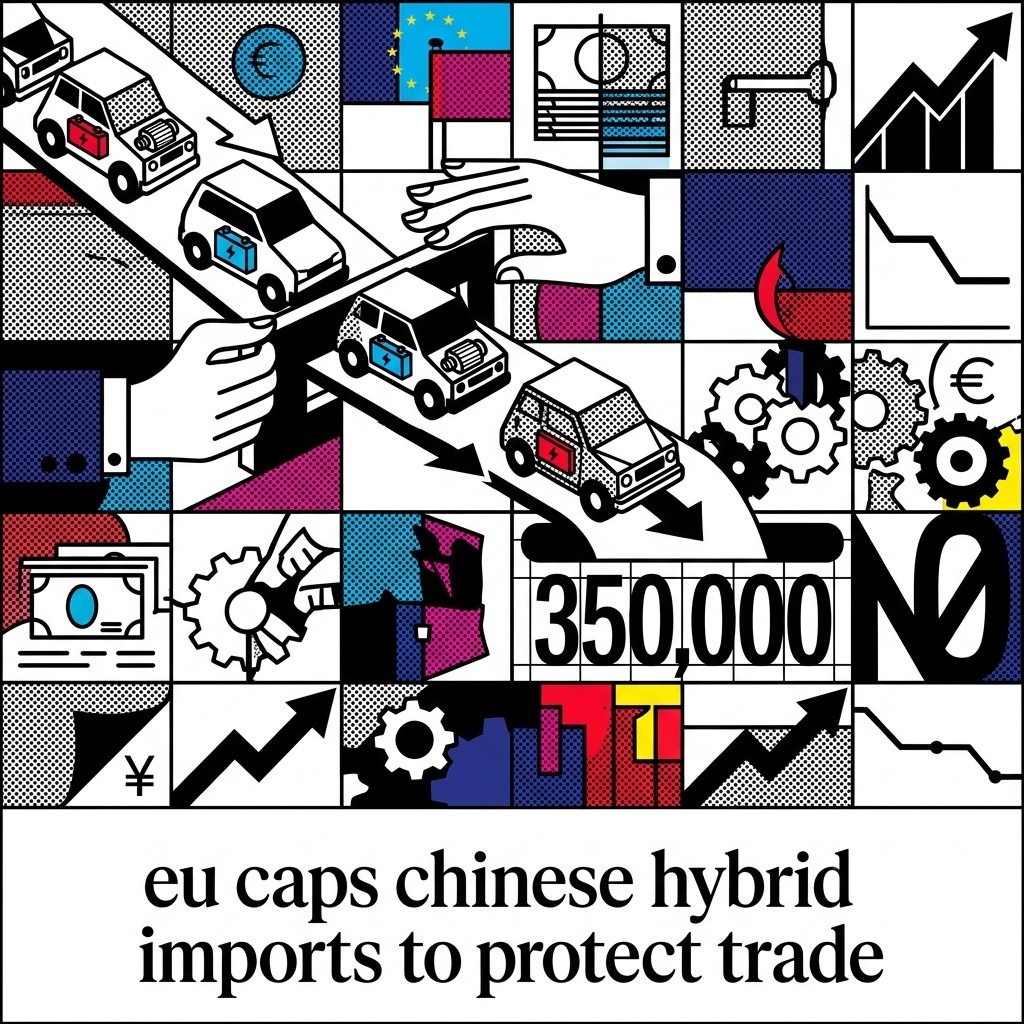
Advancing the trade deficit negotiations we tracked last week, the European Union will cap Chinese hybrid vehicle imports at 350,000 annually starting this December. The bloc is sealing a lucrative gap: while Brussels imposes tariffs of up to 45 percent on pure electric cars, hybrids still enter at a 10 percent rate. Chinese automakers exploit this loophole because it preserves their European revenue against weak domestic demand. By deploying a hard quota, regulators concede that price penalties alone cannot constrain state-backed production.

Anticipating this clampdown, manufacturers like BYD are funding assembly plants in Hungary to bypass border checks entirely. European diplomats counter by tying these quotas to mineral supplies, demanding Beijing guarantee export licenses for the rare earths required by Western industry.

“A marginal reduction in automotive exports will hardly make a difference,” notes Bruegel, a European economic think tank, estimating Chinese auto shipments form just €15 billion of the bloc’s €360 billion deficit.

The Gist AI Editor

The Global Overview

EU Escalates Chinese Hybrid Auto Restrictions
Extending the ongoing trade deficit negotiations, the European Union is formalizing plans to curb imports of Chinese hybrid vehicles (WSJ). This regulatory constraint protects domestic automakers from losing market share and forces Beijing to redirect auto exports, fundamentally altering global supply chain dependencies.

China’s Demographic Frictions
Beijing’s tepid economic recovery is increasingly complicated by structural demographic decline. With government bond yields falling (WSJ), domestic capital seeks safer state harbors. The systemic incentive for Beijing remains maintaining centralized control over resource allocation, resisting integration into developed market frameworks even as labor shortages limit long-term industrial output.

Capital Rotates to Direct Lending
As large commercial banks navigate shifting interest rates and consumer health pressures (Bloomberg), institutional capital is moving into private credit. Non-bank lenders leverage wider yield spreads—the premium earned over safe government bonds—to secure improved borrower protections. This capital explicitly targets defensive sectors like industrial automation to mitigate economic vulnerability.

France Recalibrates Nuclear Strategy
French officials are stalling a broad nuclear revival beyond the six new reactors already approved (Politico). By demanding investments align strictly with projected electricity needs rather than state prestige, the government is deliberately delaying immediate deployment to manage institutional fiscal bottlenecks and maintain leverage over European energy markets.

Stay tuned for the next Gist—your edge in a shifting world. The Gist remains independent and reader-supported. If you value news free from corporate or state interests, consider supporting our mission with a donation.

The European Perspective

German Energy Inflation
German inflation reached 3.3% in September, driven by fuel costs linked to the Iran conflict (ZDF). This three-year high redirects capital from discretionary consumer spending to utility providers, creating a structural drag on Europe’s industrial base.

French EU Budget Reallocation
Conservative presidential candidate Bruno Retailleau demanded a rebate on France’s EU contribution on October 13, 2026 (Politico). Facing domestic deficit pressures, French political factions are incentivized to reclaim capital from Brussels, a mechanism that would shift fiscal strain directly onto the broader EU budget.

EU Smart Glasses Hardware Mandates
Privacy regulators are mandating audio alerts and flashing lights for smart glasses (Politico). This framework forces technology manufacturers to internalize compliance costs, redirecting capital toward mandated hardware features that visually flag data collection to bystanders.

Nord Stream Sabotage Trial
The trial regarding the 2022 Nord Stream pipeline destruction begins in Hamburg this October (ZDF). Prosecuting a Ukrainian commander establishes judicial precedent for how European courts assign liability and formalize accountability in cross-border energy infrastructure attacks.

Uzbekistan Hardware Prototyping
A Tashkent engineering initiative selected 90 finalists from 1,925 applications to develop domestic rapid health-check devices (Euronews). This incubation strategy directs capital toward applied engineering, reducing regional reliance on imported medical hardware.

Catch the next Gist for the continent’s moving pieces.

🎙️ Listen to this edition as a podcast Listen

The Gist is an independent daily digest: AI-curated, human-directed, unapologetically liberal (how it’s made). Hundreds of sources, only what matters. Subscribe free or listen to the podcast.


Comments

Leave a Reply

Your email address will not be published. Required fields are marked *

This site uses Akismet to reduce spam. Learn how your comment data is processed.