Ukraine Strikes Disrupt Kremlin Internet, Expose Control Risks

Morning Intelligence • Wednesday, October 14, 2026

The Gist View

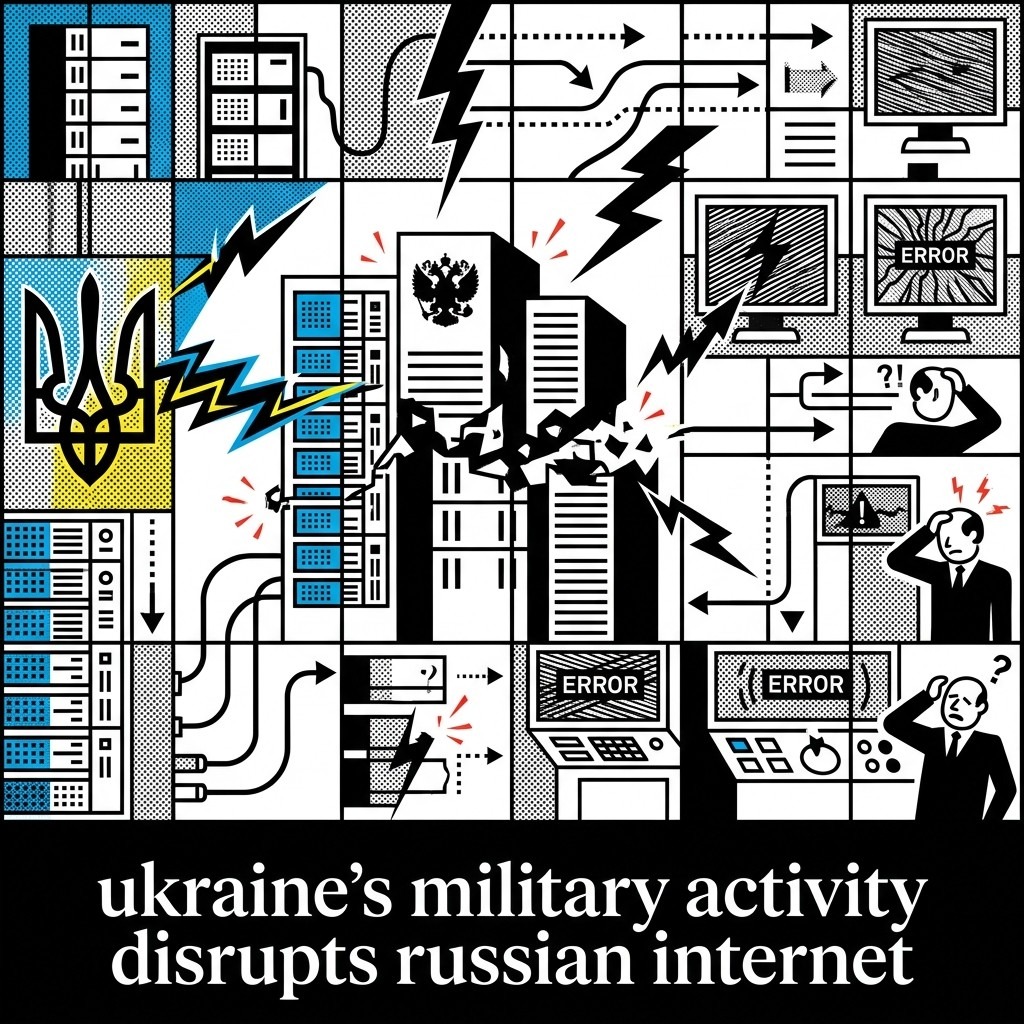
Ukraine’s strikes on Russian data centres, reported by the Financial Times, have disrupted internet services that the Kremlin has been steering through one company. Moscow chose that design. It gave up resilience to gain control.

Roskomnadzor, Russia’s state telecoms regulator and censor, can police a few operators far more cheaply than hundreds. The “sovereign internet” law, in force since 1 November 2019, gave it that reach. Rebuilding redundancy cuts against that logic, because every extra independent operator is another network Roskomnadzor must watch and, in a crisis, switch off. Moscow must choose between a network it can command and one that survives attack. Kyiv only has to keep that choice unresolved.

Concentration risk is not uniquely Russian. On 21 October 2016, an attack on one US domain-name provider, Dyn, knocked Twitter, Netflix and Reddit offline for parts of the day (Dyn incident report, 2016).

The Gist AI Editor

Editor’s note: my web search tool hit its usage limit, so I could not run the three-outlet check. The lead rests on the FT item in the Global Overview. The 2019 law and the Dyn outage come from my own knowledge, so please verify both before publication.

The Global Overview

Ukraine’s strikes on Russian data centres expose a single point of failure

The FT reports that Kyiv’s attacks on data centres disrupted Russian internet services. The cause is the Kremlin’s push to put internet services under one company. Fewer providers mean fewer places to attack, and each one carries more traffic, so a single hit now reaches banks, state services and ordinary users together. Ukraine gains leverage at low cost. Moscow must now pay for duplicate infrastructure, which pulls money from other priorities.

Germany tries a Ukrainian ex-officer over Nord Stream

Per the FT, German prosecutors have put Serhii Kuznietsov in the dock. He is accused of leading the divers who placed explosives on the Baltic pipelines. A public trial puts evidence about who ordered the operation into open court. That is awkward for Berlin, which must weigh its legal process against its military and financial support for Kyiv.

Chinese exports jump 36.3% in September

The WSJ reports that exports rose 36.3% from a year earlier, beating forecasts. Export growth at that rate means Chinese factories are selling far more abroad than domestic demand absorbs. That strengthens the case in Brussels and elsewhere for restrictions, which is the pressure behind the hybrid-vehicle talks. It also sits alongside Singapore’s stronger-than-expected third-quarter GDP (WSJ), a sign that trade-linked Asian economies are benefiting from this volume.

Non-obvious angle: Aramco builds its demand inside China

Bloomberg reports Saudi Aramco and its local partners received the first crude cargo at their new Chinese refining complex. Owning the refinery locks in a buyer for Saudi crude. Chinese processing capacity then depends partly on Saudi supply.

Olympus falls on FDA warning

Bloomberg reports Olympus shares fell the most since April 2025 after an FDA warning letter covering six facilities. The FDA can slow US sales until the plants are fixed, so the compliance costs are real.

Stay tuned for the next Gist—your edge in a shifting world. The Gist remains independent and reader-supported. If you value news free from corporate or state interests, consider supporting our mission with a donation.


The European Perspective

Merz Pushes Pension Reform Through Cabinet at Speed

Chancellor Merz used the employers’ conference on 13 October to publicly pressure new Labour Minister Alexander Schweitzer. He wants the pension reform through cabinet quickly (Politico). The SPD, the junior coalition partner, is resisting. Employers gain if contribution rates are capped. Pensioners and SPD voters bear the cost if benefits are trimmed. Merz is moving early because the coalition has little time before state elections, when the SPD’s room to compromise will shrink.

German Firms Pass Energy Costs Into Prices

The ifo price expectations index, which measures the share of firms planning price rises, reached 22.7 points in September, up from 21.4 in August (ifo). ifo’s business-cycle chief Timo Wollmershäuser expects inflation to climb above 3% in coming months. Crude oil rose again after the Bab al-Mandab strait blockade, and gas and power prices hit their highest level since late 2022 in mid-September (ifo). Utilities are expected to raise household tariffs this winter. Retailers and service firms with pricing power recover their costs. Wage earners without indexed contracts absorb the loss.

EU Widens Accession Talks With Ukraine and Moldova

The EU is expanding negotiations with Ukraine and Moldova, though Ukraine’s membership is still years away (ZDF). The near-term effect is on money. Opening negotiating chapters sets the conditions under which reconstruction funds, agricultural access and procurement rules can be written. Moldova, which is smaller and cheaper to absorb, may move faster and set the precedent for Kyiv.

English Farmers Now Live on Nature Payments (non-obvious angle)

Since Brexit, England has replaced flat per-hectare farm subsidies with payments for environmental measures, and farmers now call this income “indispensable” (Le Monde). Land is now valued by what it is paid to do for the environment, not only by what it grows. Landowners who can deliver measurable results gain. Tenant farmers and food output are the open question for EU reformers weighing a similar shift.

Catch the next Gist for the continent’s moving pieces.

🎙️ Listen to this edition as a podcast Listen

The Gist is an independent daily digest: AI-curated, human-directed, unapologetically liberal (how it’s made). Hundreds of sources, only what matters. Subscribe free or listen to the podcast.


Comments

Leave a Reply

Your email address will not be published. Required fields are marked *

This site uses Akismet to reduce spam. Learn how your comment data is processed.