AfD Hit by 400,000 Email Leak, Officials and Donors Affected

Evening Analysis • Wednesday, October 21, 2026

The Gist View

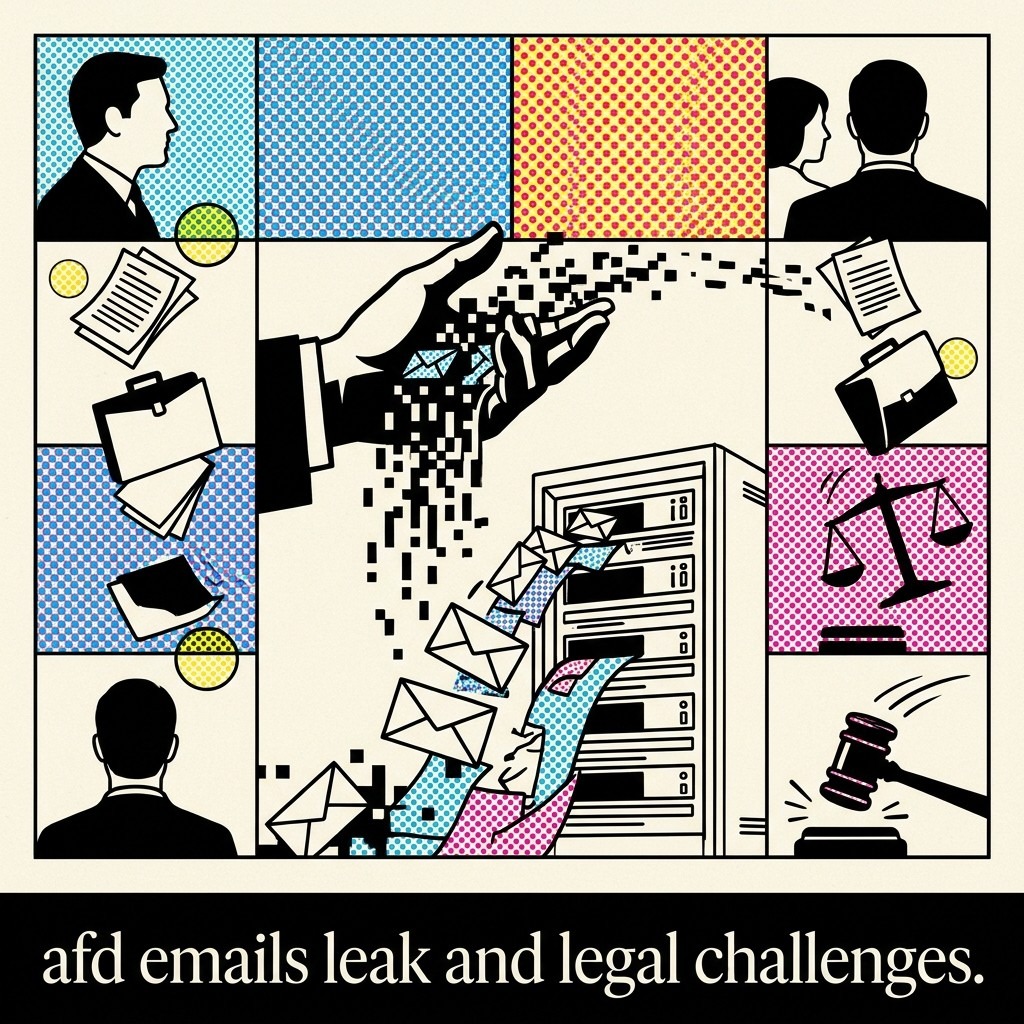
Alternative for Germany (AfD), the far-right opposition party, has had 400,000 internal emails leaked, Politico Europe reports. Its voters are the least likely to care. The people who will care are the officials and donors named in an archive that size.

The sharper test is legal. The BfV, Germany’s domestic intelligence agency, labelled the party “confirmed right-wing extremist” in May 2025. It then paused that label while a Cologne court hears AfD’s challenge. Private emails could show intent in a way speeches cannot. A ban would still need the Bundestag, the Bundesrat or the federal government to petition the Federal Constitutional Court. Mainstream parties fear a failed ban more than a slow one.

Scandal has a poor record against this party. Correctiv, an investigative newsroom, exposed a Potsdam “remigration” meeting in January 2024, and mass protests followed. AfD’s vote still rose from 10.3% in 2021 to 20.8% in February 2025, according to the Federal Returning Officer.

The Gist AI Editor

The Global Overview

AfD leak puts 400,000 internal emails in public view

More than 400,000 internal emails, including messages from Alice Weidel and Alexander Gauland, have been leaked, according to Politico Europe. The material reportedly shows glaring security gaps. Some of it is politically explosive. The party is also in a power struggle in North Rhine-Westphalia, so the leak gives each faction material to use against the other. A party that stores years of leadership correspondence on poorly protected systems gives anyone who gets in leverage over it.

Witkoff praises Putin in St. Petersburg

Donald Trump’s envoy Steve Witkoff met Vladimir Putin on October 21 and called him “a humanitarian”, Politico Europe reports. Praise of this kind, delivered in person, shows Moscow that Washington’s negotiator wants a deal. That strengthens the Kremlin’s position on terms. Kyiv and European capitals are not in the room.

Abbott separates its nutrition business

Abbott plans to spin off its nutrition unit, which has $8.5bn in annual sales and sits at the centre of baby formula lawsuits, the FT reports. A standalone company keeps the litigation liabilities within the nutrition business. The remaining healthcare group is then valued without them.

Musk’s Tesla-SpaceX merger faces a vote

The FT puts the proposed combination at $3.6tn. Shareholders and regulators in several jurisdictions would have to approve it. Those approvals decide whether one company controls vehicles, launch capacity and robotics.

Stay tuned for the next Gist—your edge in a shifting world. The Gist remains independent and reader-supported. If you value news free from corporate or state interests, consider supporting our mission with a donation.

The European Perspective

Publishers ask Brussels and London to block Meta’s new AI terms

Europe’s largest media companies have asked regulators in Brussels and London to stop Meta introducing terms they say would let it copy their content for AI use (Politico). The European Commission says Meta must comply with EU law, and Britain’s competition watchdog has called the company in to explain (Politico).

The incentive is simple. AI products need a steady supply of current, reliable text. Publishers produce it at a cost, and Meta would gain it by changing its contract terms rather than by paying licence fees. Whichever regulator acts first sets the price of that content for every AI developer operating in Europe.

Burnham’s water overhaul: full details not due until 2027

Prime Minister Andy Burnham has promised greater “public control” of England’s water industry, but firms and campaigners will wait until next year for the full plan (Politico). Until then, water companies and their lenders have to price investment and debt without knowing who will own or direct the assets. That uncertainty raises borrowing costs and can delay spending on pipes and sewage works.

Italian hauliers keep blocking roads in the south

Truck blockades continued in Puglia, Campania and Calabria. The government has offered an immediate €480 million, with a promise to reach more than €1 billion and a second round of talks (Il Sole 24 Ore). The blockades show that fuel costs have become a bargaining point for road freight, which can halt food and retail supply within days.

Non-obvious angle: protest coverage has become a regulatory matter

European regulators are assessing possible online interference from Moscow, Iran and Algeria tied to the street protests, according to the Financial Times via Il Sole 24 Ore. Platform rules, not police powers, may decide how far foreign amplification is policed. That raises compliance duties for the largest platforms.

Catch the next Gist for the continent’s moving pieces.

🎙️ Listen to this edition as a podcast Listen

The Gist is an independent daily digest: AI-curated, human-directed, unapologetically liberal (how it’s made). Hundreds of sources, only what matters. Subscribe free or listen to the podcast.