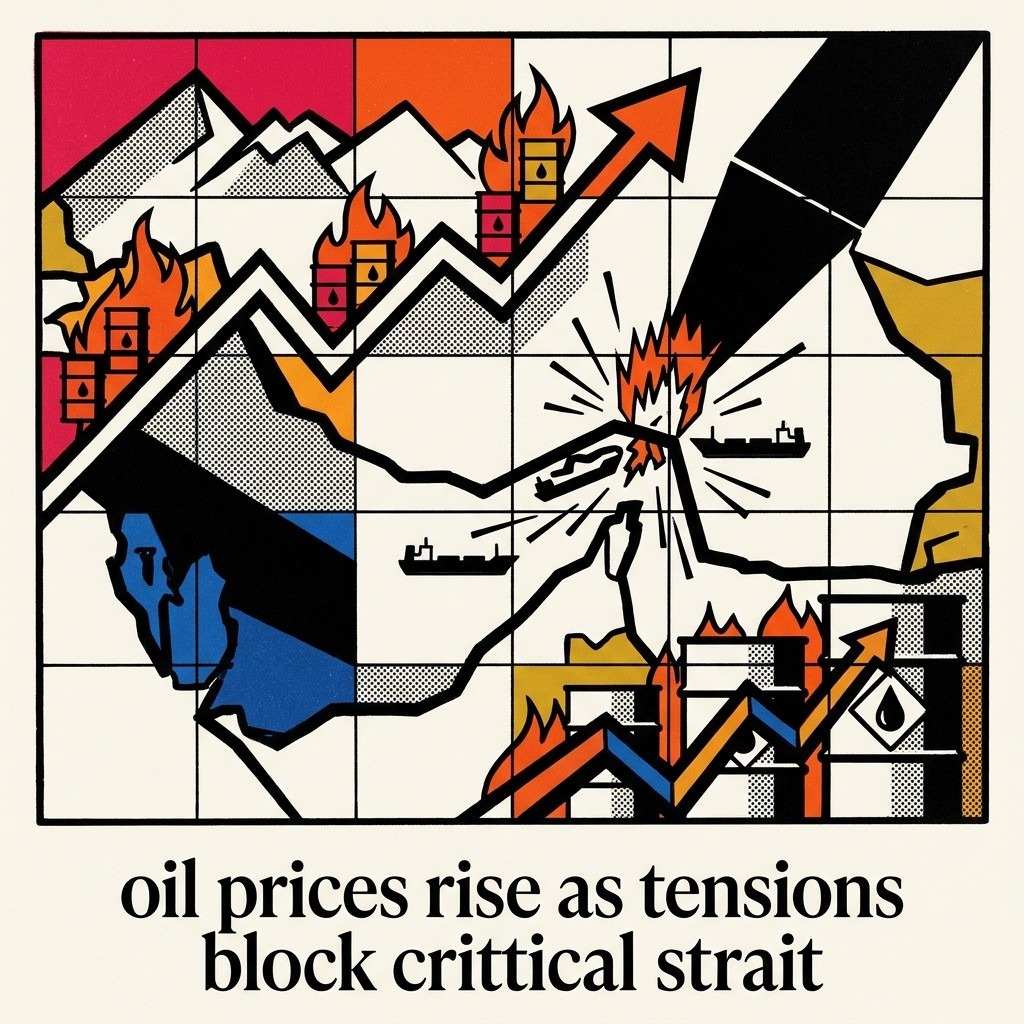
Oil Prices Surge Amid Middle East Tensions at Hormuz

Morning Intelligence • Thursday, October 22, 2026

The Gist View

Oil rose in early Asian trade on fears that fighting in the Middle East could resume. A threat alone is enough, because roughly 20 million barrels a day, about a fifth of world consumption, pass through the Strait of Hormuz, according to the US Energy Information Administration (EIA). Traders are pricing a possibility, not an event.

The usual fix does not work here. The spare production capacity of Saudi Arabia, the United Arab Emirates and Kuwait sits inside the Gulf, so extra barrels would have to leave through the same strait. Asian buyers, above all China, India, Japan and South Korea, take most of the crude that passes through it. Their factories pay first, and the customers who buy their goods pay later.

Only about 2.6 million barrels a day of unused pipeline capacity could bypass the strait, the EIA estimates. That is roughly an eighth of normal flow.

The Gist AI Editor

The Global Overview

Oil climbs as Middle East re-escalation fears return

Oil rose in early Asian trade on concerns that the Middle East conflict could flare again and disrupt regional supply (WSJ). Investors had been focused on artificial-intelligence jitters. As those eased, attention went back to oil. Asian equities fell.

Higher energy costs raise running costs for factories, airlines and freight, and they feed into shop prices. Gold fell in early Asian trade, weighed by rising energy costs and uncertainty over the Federal Reserve’s coming decision (WSJ). Costlier energy makes rate cuts harder to justify, and that is bad news for gold, which pays no interest.

Ukraine to buy weapons through a NATO agency

Under a new agreement, Kyiv could buy ammunition and weapons through a NATO agency, which may speed up deliveries and lower costs (FT). Buying through one agency pools orders from several countries. Suppliers get larger, steadier contracts, and Ukraine gets better prices without negotiating each deal alone.

Tesla cuts its sales target as it explores a SpaceX merger

Tesla reported flat revenue and falling profits, and Musk set a lower sales target as the company shifts from electric vehicles toward AI (FT). The merger exploration continues. Investors are now being asked to value Tesla on AI prospects rather than on car sales, which are no longer growing.

Abbott to spin off its nutrition unit

Abbott plans a standalone public company with $8.5bn in annual sales from the nutrition unit at the centre of baby formula lawsuits (FT). The split moves the litigation exposure into a separate company. Abbott’s core healthcare business would then be valued without it.

Non-obvious angle: shootings and later study

A new study of US university shootings between 1990 and 2025 finds no effect on time to degree. However, undergraduates enrolled at the time are 4.2% less likely to pursue further studies (Marginal Revolution). The cost appears later, in lost advanced-degree pipelines.

Stay tuned for the next Gist—your edge in a shifting world. The Gist remains independent and reader-supported. If you value news free from corporate or state interests, consider supporting our mission with a donation.


The European Perspective

Italy’s paper mills face furloughs as energy bills climb

About 50 Italian paper mills, 44% of the country’s plants, could be forced to use state-funded furlough (cassa integrazione) in the second half of the year, according to an Assocarta analysis reported by Il Sole 24 Ore. Assocarta is the industry association. Paper-making burns large amounts of gas and electricity, so higher energy prices hit it before they hit most sectors. When mills cut shifts, the state wage fund pays workers instead of the employers. Packaging buyers are likely to feel the effect next.

German firms are passing energy costs to customers

The ifo institute’s price expectations index, which measures the share of firms planning to raise prices, rose to 22.7 in September from 21.4 in August (ifo). Its economist Timo Wollmershäuser expects inflation to climb above 3% in coming months. Fuel and heating oil have already risen. Utilities are expected to raise power and gas prices in winter. Crude rose again after the Bab al-Mandab strait was blocked, and gas and power hit their highest levels since late 2022 in mid-September (ifo). Households and energy-intensive manufacturers carry the cost, while producers and traders gain.

Pope Leo needs no further cancer treatment

The Vatican said doctors Luigi Carbone and Stefano Margaritora found the 71-year-old pope needs no more treatment after last week’s lung surgery (DW, AFP, AP, Reuters). The Vatican announced the diagnosis openly, which departs from its usual secrecy over papal health. That openness limits the room for succession speculation.

Ukraine’s foreign fighters meet visa obstacles

Kyiv has promised to fix the residency and paperwork problems facing foreign volunteers, according to Politico. One veteran who has served since 2022 now says he would advise others against joining. Ukraine needs manpower, so unresolved paperwork could reduce recruitment.

Tesla beats forecasts as Musk keeps SpaceX merger talk vague

Tesla beat third-quarter earnings expectations. Musk declined to give details of a SpaceX merger, which would need approval from 50% of all Tesla shareholders (The Guardian).

Catch the next Gist for the continent’s moving pieces.

🎙️ Listen to this edition as a podcast Listen

The Gist is an independent daily digest: AI-curated, human-directed, unapologetically liberal (how it’s made). Hundreds of sources, only what matters. Subscribe free or listen to the podcast.