Iraq Closes Al Sheeb, Risks $10bn Iran Trade

Morning Intelligence • Saturday, October 24, 2026

The Gist View

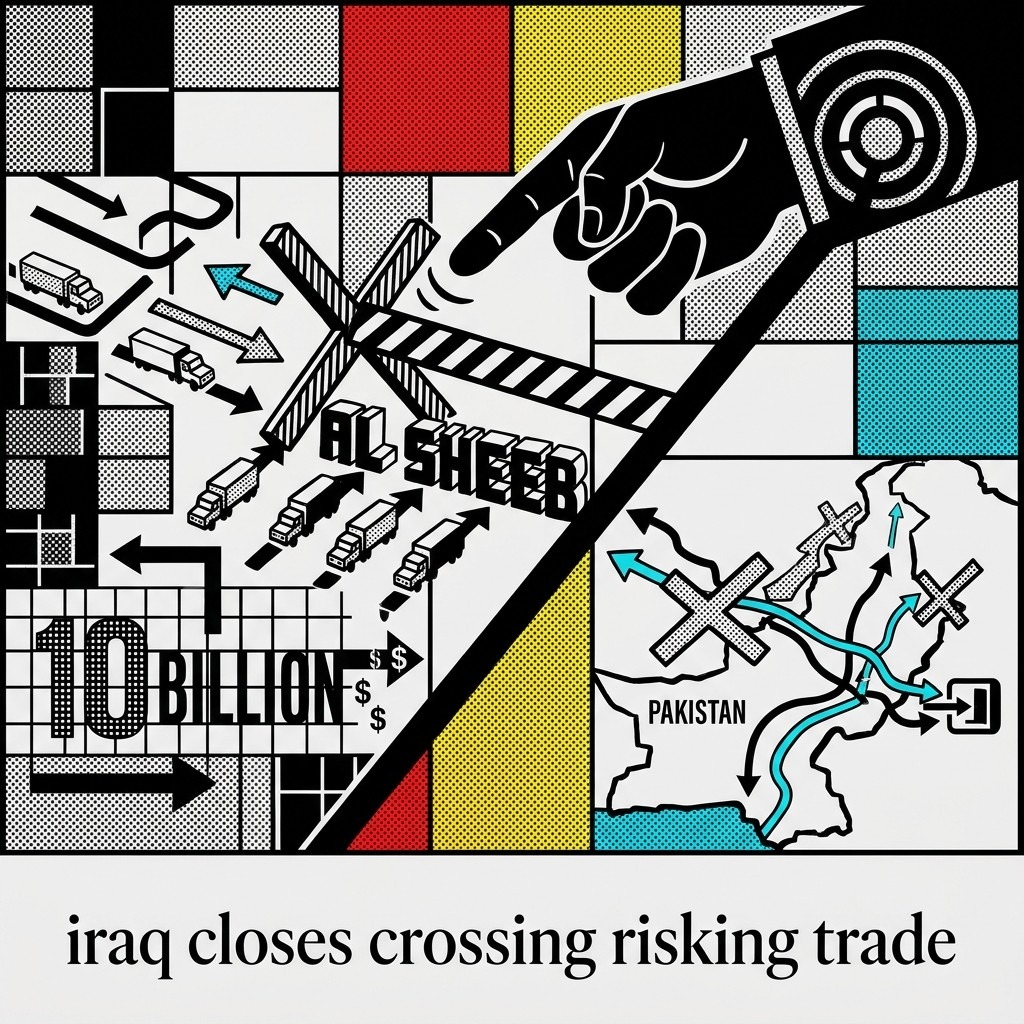
Iraq’s Prime Minister Ali al-Zaidi has shut the Al Sheeb crossing to Iran, putting at risk trade that topped $10bn last year, days after Pakistan closed two crossings on October 17. Washington has declared no land blockade, yet it is getting one, because Iran’s neighbours are enforcing it. President Masoud Pezeshkian says the southern sea routes his country relies on carried 75–80% of its trade before the US Navy halted them. The land borders are what remained.

Each closer protects its own interest first. Pakistan, according to Iran International, still admits Iranian gas tankers and fresh produce. Pakistani reports say Gabd-Rimdan alone brought in over 4,000 tonnes of Iranian cooking gas a day. Islamabad also mediates between Tehran and Washington, and a gatekeeper holds leverage with both. Baghdad cites drug and counterfeit-currency smuggling, but sources told Iran International that the US Treasury pressed the issue. Southern Iraqi markets may pay in higher prices for produce and building materials, The National reports.

Both moves can be undone. Pakistan’s army chief says its crossings have reopened, though normal traffic is unconfirmed. Iraq shut its Iran crossings a month ago after a drone attack on Saudi Arabia’s east-west pipeline, then reopened them within days, according to Bytes Europe.

The Gist AI Editor

The Global Overview

Pakistan and Iraq close border crossings to Iran

Pakistan and Iraq have shut some crossings, according to the WSJ. That removes the land routes Iran was using to get around the U.S. Navy blockade and air sanctions. Both neighbors depend on Washington for finance and security ties, and Iran’s trade now has fewer exits. Border towns that live off that trade lose income too.

UK commits £100 million to an AI biosecurity lab

Bloomberg reports the lab will be backed by OpenAI, Anthropic and Google DeepMind. The firms whose models may create biological risks will help the government study those risks. That gives them early sight of how officials assess them, and a say in the rules that follow. The government gains access to model testing it could not easily compel.

Yellow Vests return to French streets

The WSJ reports the movement that paralyzed Paris eight years ago is joining a wider set of protest groups. Several grievances now face the same government at the same time. That makes it harder for ministers to settle with any one group.

Starlink limits weaken Ukraine’s defenses

Retired Gen. Ben Hodges told Bloomberg that restrictions on Starlink service have hurt Ukraine’s counter-drone capabilities. He said they have also disrupted an early-warning system for incoming ballistic missiles. Ukraine’s air defense relies on a network owned by one private company. Its access terms can change without a vote by any government.

JetBlue creditors prepare for talks

The WSJ reports that senior creditors have hired PJT Partners and the law firm Akin as the airline’s shares and bonds fall. Creditors usually organize like this before they negotiate over who takes losses.

Stay tuned for the next Gist—your edge in a shifting world. The Gist remains independent and reader-supported. If you value news free from corporate or state interests, consider supporting our mission with a donation.

The European Perspective

Burnham presses Trump to keep Ukraine on Starlink

Britain’s prime minister, Andy Burnham, asked US President Donald Trump in a call on 23 October for “full access” for Ukraine to the Starlink satellite network, according to Downing Street (via ZDF). He also praised Trump’s efforts to bring Russia’s Vladimir Putin to the negotiating table.

The structural point is dependence. A single US-controlled private network carries a large share of Ukrainian military communications. Whoever sets its access terms holds leverage over Kyiv’s battlefield options, and European governments have no equivalent system of their own to offer.

Europe funds research that US start-ups monetise

Ifo president Clemens Fuest and more than 50 other scientists argue in the journal Science that Europe turns too little of its research into commercial strength (ifo). European-funded research often feeds the patents of US start-ups and underpins their market success.

Their proposal is to steer grants toward projects that can reach the market. The gain would go to European firms that now see the returns captured abroad, mainly by US venture-backed companies.

Energy costs are reaching shop prices in Germany

Ifo’s price expectations index, which measures the share of firms planning price rises, reached 22.7 points in September, up from 21.4 in August (ifo). Ifo expects inflation to climb above 3% in coming months. Crude oil rose again after the Bab al-Mandab strait was blocked, and gas and power prices hit their highest since late 2022 in mid-September (ifo).

Interest rates were less restrictive than assumed

Economists writing for CEPR estimate that the neutral interest rate, the rate that neither speeds up nor slows the economy, rose by about 2 percentage points in the US and 1.5 to 2 points in the euro area. Policy was therefore looser than it looked. That helps explain why growth and jobs held up despite sharp rate rises.

Kenya reports a second Ebola death

A 65-year-old woman, a close relative of the first victim, died after developing symptoms in quarantine in Nairobi, Kenya’s Health Ministry said (DW, Reuters, AFP). Seven people remain in treatment.

Catch the next Gist for the continent’s moving pieces.

🎙️ Listen to this edition as a podcast Listen

The Gist is an independent daily digest: AI-curated, human-directed, unapologetically liberal (how it’s made). Hundreds of sources, only what matters. Subscribe free or listen to the podcast.