Anthropic to Go Public, Partners with Tech Giants

Evening Analysis • Monday, October 26, 2026

The Gist View

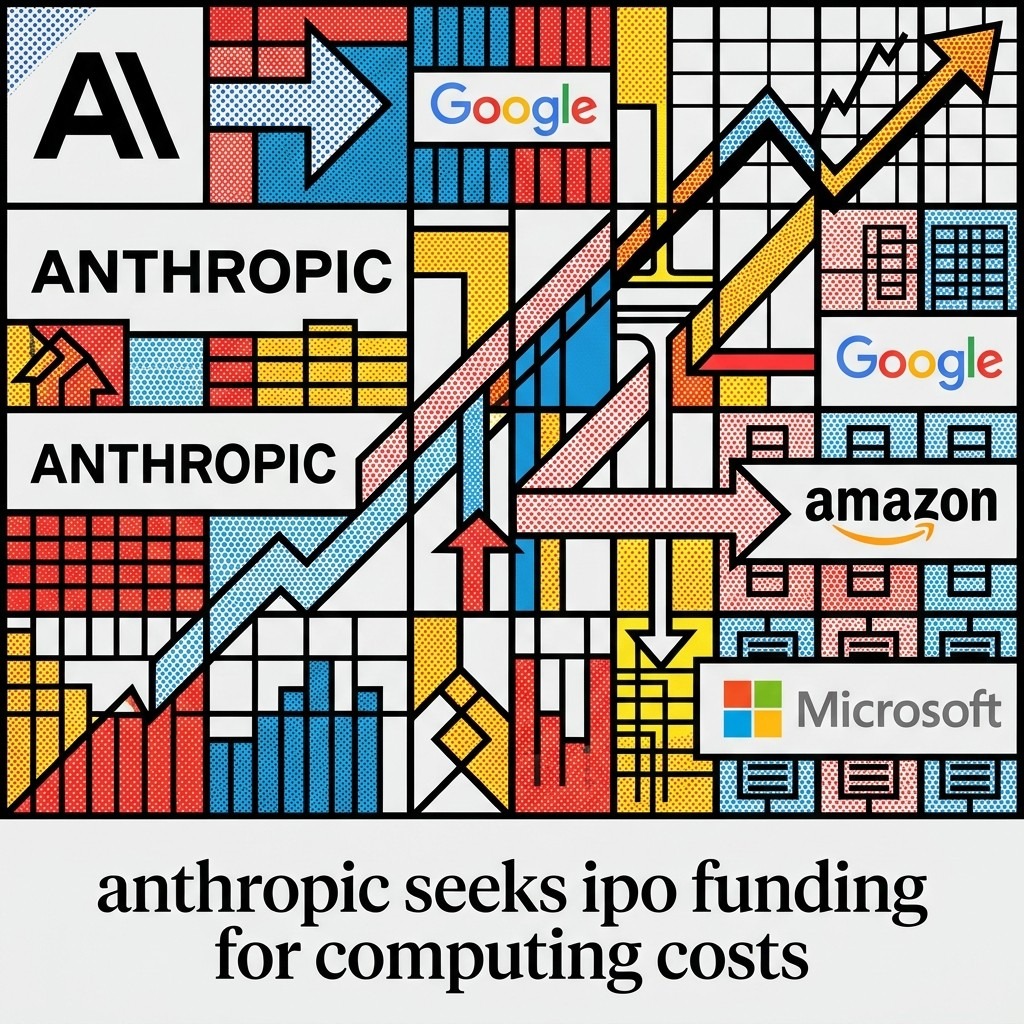
Anthropic, maker of the Claude AI assistant, has filed to go public, naming three suppliers as its route to customers: Google, Amazon and Microsoft. The telling detail is where the IPO money goes. Much of it will return to those three as computing bills. Amazon has invested $8bn in Anthropic, and in November 2025 Anthropic agreed to buy $30bn of computing from Microsoft’s Azure cloud.

Each supplier wins whichever model prevails. Google sells its own Gemini models, Microsoft sells those of OpenAI, the ChatGPT maker, and Amazon sells its own Nova models beside Claude. None needs Anthropic to dominate; each needs it alive and buying. Expect hard bargaining over the commission each cloud keeps on resales, because that figure sets Anthropic’s real margin.

Zynga is the precedent. It listed in December 2011 at $10 a share, selling almost every game through Facebook, and by late 2012 traded below $3 (Nasdaq prices).

The Gist AI Editor

The Global Overview

Anthropic’s IPO filing shows how much it depends on its rivals

Anthropic says it relies more and more on Google, Amazon and Microsoft to sell its AI to customers (Bloomberg). All three are also rivals, investors and key suppliers of computing power. So the companies that supply Anthropic’s computing also control much of its route to customers. That gives them leverage over its pricing and its margins. Investors buying shares are partly buying exposure to those three companies’ decisions.

Verizon’s best quarter in five years still sends its shares down

Verizon added a net 406,000 monthly phone lines, its strongest third quarter for wireless additions in five years, yet shares fell 2.8% (Bloomberg). Investors are pricing in SpaceX’s forthcoming Starlink Mobile service. A satellite operator that can sell directly to phone users could cap what carriers charge. Today’s subscriber gains matter less to the market than that future price pressure.

Immigration enforcement is moving into consumer prices

The WSJ opinion page argues that tougher immigration enforcement hurts the economy and that American consumers will now begin paying for it. The mechanism is labor supply. Fewer available workers in sectors such as farming, construction and food services push up wages and costs, and businesses pass those on to customers. This is one opinion piece, so the size of the effect is still unquantified.

NASA’s X-59 keeps flying toward quiet supersonic travel

NASA test pilot Mike Lippert flew the X-59 on Oct. 21 for one hour, after maintenance and a review that followed its busiest week of testing (NASA). The aircraft made its first supersonic flight on June 5. The data from these flights matters because regulators could use it to decide whether to lift the ban on supersonic flight over land.

Stay tuned for the next Gist—your edge in a shifting world. The Gist remains independent and reader-supported. If you value news free from corporate or state interests, consider supporting our mission with a donation.

The European Perspective

Europe weighs a €10bn plan to fly its own astronauts

European governments are deciding whether to fund independent crew and cargo launches before the 15 December European Space Agency summit in Rome, according to Euronews. The plan is priced at about €10bn. Europe’s astronauts currently fly on US vehicles, so Washington sets the schedule and the price. The money would mostly go to the big aerospace contractors in the countries that pay the most. Those countries will want contracts in return, and that bargaining is likely to shape the final design more than the technical case does.

German firms pass higher energy costs on to customers

The ifo institute’s price expectations index, which measures how many firms plan to raise prices, rose to 22.7 points in September from 21.4 in August (ifo). Ifo’s head of economic research, Timo Wollmershäuser, expects inflation to climb above 3% in the coming months. Crude oil rose again after the Bab al-Mandab strait was blocked, and gas and power prices hit their highest since late 2022 in mid-September (ifo). Fuel and heating oil have already risen. Utilities are expected to raise electricity and gas bills over the winter, so households will feel the increase later than businesses. Firms that can reprice quickly protect their margins. Wage earners and pensioners absorb the delay.

Germany’s early-retirement fight shows who pays for pension reform

Trade union Verdi is pressing Labour Minister Schweitzer for a draft law that keeps penalty-free retirement at 63, according to ZDF. ZDF also reports that a compromise under discussion in the conservative bloc would keep early retirement but with cuts, hitting women hardest. Women typically have shorter contribution records, so they would lose most from tighter eligibility. The saving would go to the pension fund and the federal budget.

Italy’s first special economic zone permit goes to a superyacht yard

The Ancona port authority has granted Ferretti Group the first single authorisation under Italy’s special economic zone regime, to expand its CRN superyacht yard (Il Sole 24 Ore). The permit replaces several separate approvals with one. If it holds up in practice, other manufacturers in southern and Adriatic ports will have a reason to expand there rather than elsewhere in Europe.

Catch the next Gist for the continent’s moving pieces.

🎙️ Listen to this edition as a podcast Listen

The Gist is an independent daily digest: AI-curated, human-directed, unapologetically liberal (how it’s made). Hundreds of sources, only what matters. Subscribe free or listen to the podcast.