Hyperscalers pay more for bunched-up bond sales, MFS portfolio manager says
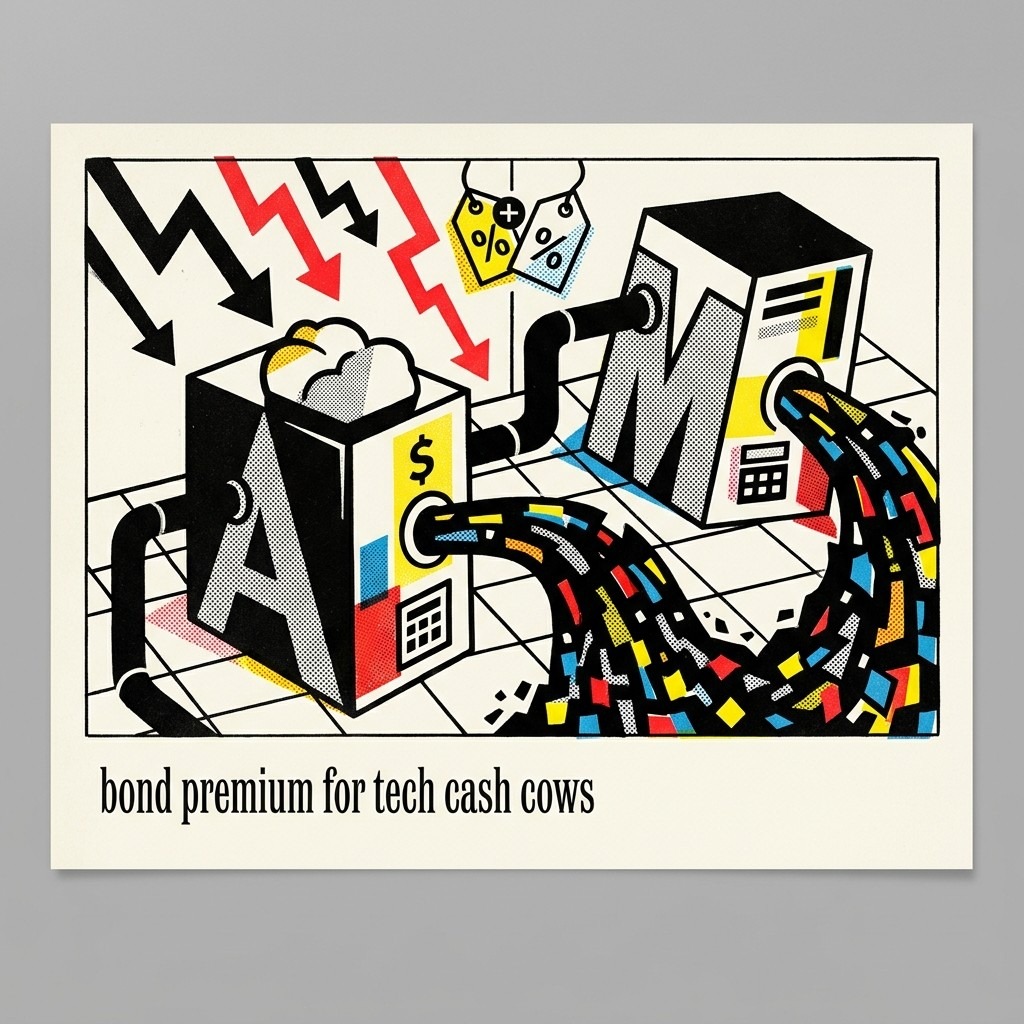
On 18 November, at Bloomberg’s Global Credit Forum in London, Pilar Gomez-Bravo, a fixed-income portfolio manager at MFS Investment Management, which buys corporate bonds, said she wished hyperscalers would learn from banks (Bloomberg). Hyperscalers are the largest cloud-computing companies, such as Amazon, Microsoft, Google and Meta, and they buy most AI chips and data-centre capacity. She said banks issue right after earnings and in manageable sizes, while hyperscalers are having to pay “a little bit more” because of the “disorderly nature” of their issuance (Bloomberg). JPMorgan Asset Management’s Iain Stealey also spoke on the panel (Bloomberg). The same day, Nvidia, the US maker of the AI chips that power most AI data centres, held its first earnings update since longtime leader Jensen Huang departed, and told investors he is not coming back and the company will be fine without him (Bloomberg). Nvidia has been stepping back from financing its own customers, so demand for its chips may depend more on bond-market funding, and the bond market charges more when issuance arrives in bunches. Whether Anthropic priced its IPO on 18 November, as we predicted, remains unconfirmed.
Bank of England raises rates for the first time since the Iran war began
The BOE, the Bank of England and the UK central bank, raised its key interest rate earlier in November, its first rise since the war began, which made it the last of its peers to tighten policy in response to higher energy prices (WSJ, 18 November). Governor Andrew Bailey sees the length of the Iran war as the key to where rates go next (WSJ).
NASA-funded team confirms first stellar merger in the Andromeda galaxy
Researchers identified a star slightly less massive than the Sun that spiralled into a puffy supergiant at the outskirts of Andromeda and merged with it, and they nicknamed the “rejuvenated” star Bao (NASA, 18 November). Quick-turn observations from the James Webb Space Telescope bolstered the NASA-funded discovery (NASA).
Stay tuned for the next Gist—your edge in a shifting world. The Gist remains independent and reader-supported. If you value news free from corporate or state interests, consider supporting our mission with a donation.