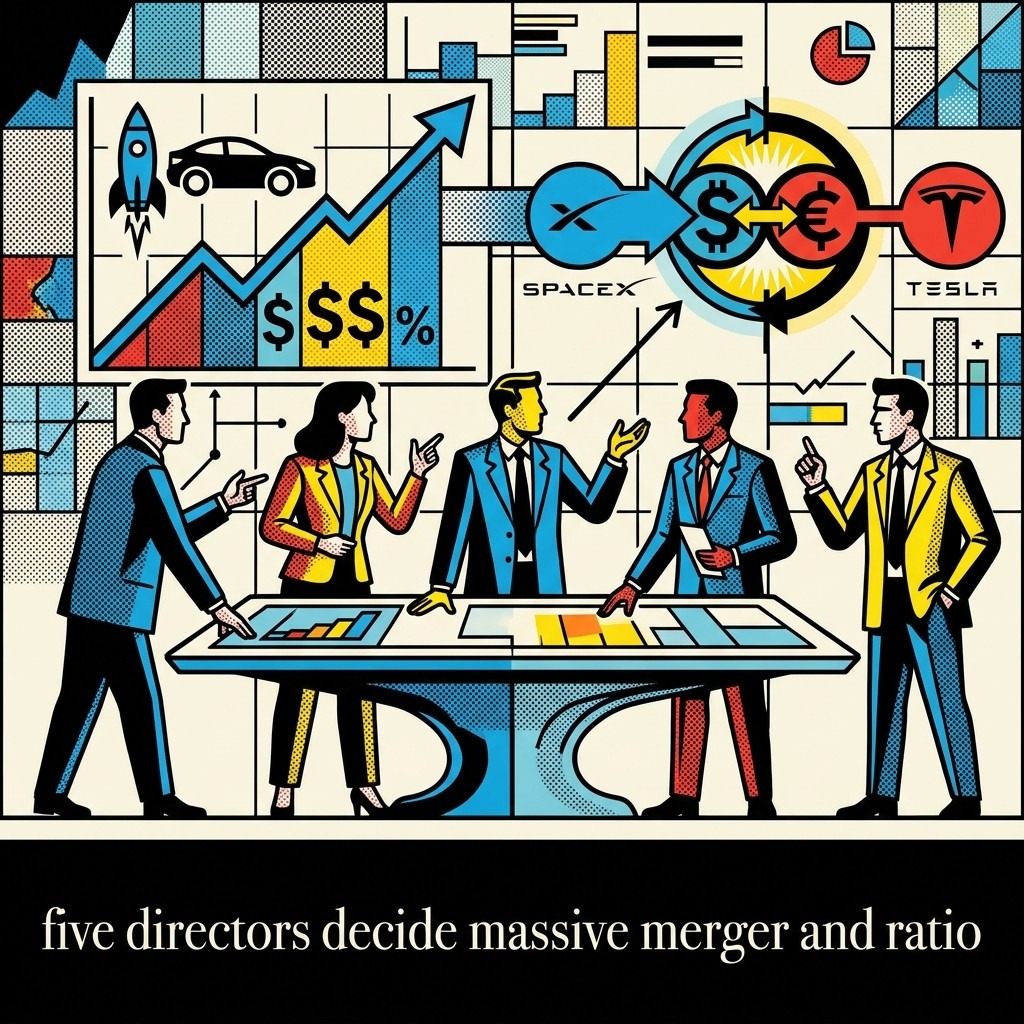
SpaceX and Tesla hand the largest merger ever to five directors
The FT reported on 25 November that SpaceX, Elon Musk’s rocket and satellite-internet company based in Texas, and Tesla, his electric-vehicle and energy company, also based in Texas, have given five directors responsibility for the largest merger of all time. The FT sizes the combination at about $3.5tn and calls it Musk’s “M&A endgame”, M&A meaning mergers and acquisitions, the buying and combining of companies. Both companies are run under dual-class shares, a structure in which founders hold stock with extra voting power and so keep control with a small share of the economic ownership, and yesterday’s edition covered the argument that this setup weakens shareholder oversight, so this deal is the first large case of it in practice.
Trump Media ordered to hand over Truth Social records
According to The Intercept, on 24 November a federal judge opened the discovery phase, the stage where each side must produce documents, in The Intercept’s lawsuit over the president’s scheme to enrich himself by selling early access to his Truth Social posts. The ruling means Trump Media must now hand over Truth Social records, which gives the plaintiffs access to the platform’s own data about how that access was offered.
Indian stocks top the world as investors sell AI names
Bloomberg reported on 25 November that Indian stocks surged again, extending a world-beating November rally, as renewed selling of global AI companies pushed money toward markets with little exposure to the theme. The WSJ ran an analysis the same day saying the US economy would take a painful hit from an AI bust, although economists still disagree on how large the damage would be. Together they fit our line that cash flow, not research prestige, sets valuations, because investors are now sorting markets by how much AI they hold.
Tyler Cowen asks whether “protectionism” can prevent AI disempowerment
On Marginal Revolution on 25 November, the economist Tyler Cowen took up the debate over whether AI will disempower humans and asked whether protectionism, meaning reserving some intellectual tasks for humans, could prevent it. His example is a list of twenty important maths problems: should AIs, with some human guidance, take a crack at them, or should humans do the work themselves?
Stay tuned for the next Gist—your edge in a shifting world. The Gist remains independent and reader-supported. If you value news free from corporate or state interests, consider supporting our mission with a donation.