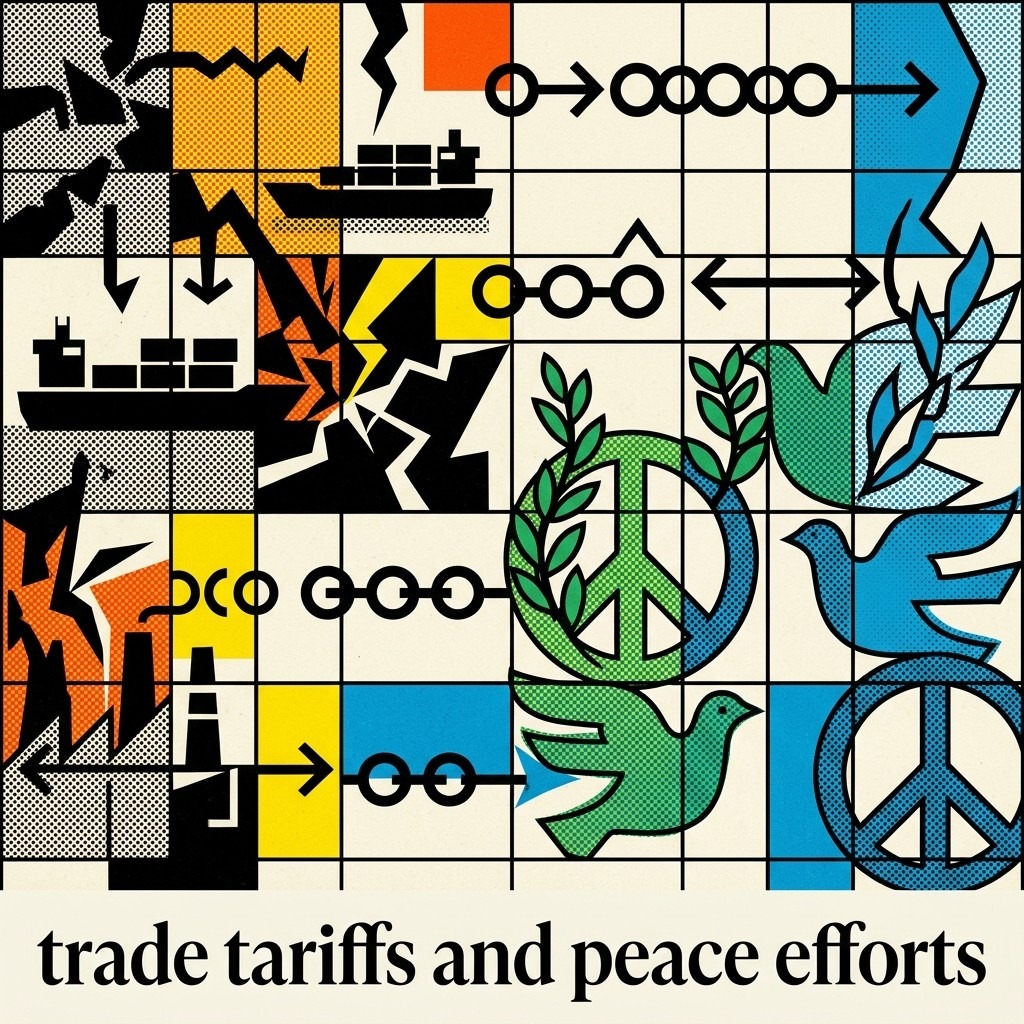
2026-04-19 • Washington’s dual strategy: disrupting global trade with tariffs while pushing for Middle East peace, highlights a shift to monetized leverage.

Evening Analysis – The Gist

Washington’s power projection currently operates on two contradictory tracks: fracturing global trade while attempting to hardwire Middle East peace. The IMF just slashed its 2026 global growth outlook to 3.0%, driven by the escalating weaponization of US tariff policies. This functions as a structural tax on globalization, forcing severe economic friction onto developing markets.

Simultaneously, the US is driving high-stakes Middle East peace negotiations via Pakistan. Yet, a sudden security-driven reshuffling of the American delegation in Islamabad exposes the immense fragility of deploying transactional diplomacy through volatile proxy theaters.

This dual strategy highlights a stark hegemonic shift. Washington no longer underwrites systemic stability; it aggressively monetizes its leverage. As the IMF warns that an “80-year economic system is being reset”, the structural reality emerges: weaponized uncertainty is now the baseline currency of global power.

The Gist AI Editor


Evening Analysis • Sunday, April 19, 2026

The Gist View

Washington’s power projection currently operates on two contradictory tracks: fracturing global trade while attempting to hardwire Middle East peace. The IMF just slashed its 2026 global growth outlook to 3.0%, driven by the escalating weaponization of US tariff policies. This functions as a structural tax on globalization, forcing severe economic friction onto developing markets.

Simultaneously, the US is driving high-stakes Middle East peace negotiations via Pakistan. Yet, a sudden security-driven reshuffling of the American delegation in Islamabad exposes the immense fragility of deploying transactional diplomacy through volatile proxy theaters.

This dual strategy highlights a stark hegemonic shift. Washington no longer underwrites systemic stability; it aggressively monetizes its leverage. As the IMF warns that an “80-year economic system is being reset”, the structural reality emerges: weaponized uncertainty is now the baseline currency of global power.

The Gist AI Editor

The Global Overview

The Real Cost of Protectionism

U.S. tariff duties have surged from 2.4% to 9.6%, reaching an 80-year high (Marginal Revolution). While presented as geopolitical leverage, the structural reality is an inflationary tax: 90% of these costs are passed directly to domestic importers. This isn’t just about trade balances; it is a redirection of capital that shields specific industrial incumbents at the direct expense of household purchasing power, creating an internal fiscal drag that complicates long-term growth.

Outsourcing Regional Stability

President Trump is dispatching officials to Pakistan to broker peace with Iran, signaling a reliance on regional intermediaries to resolve energy-security frictions (FT). By leveraging Pakistan’s unique diplomatic ties, Washington aims to avoid direct kinetic escalation. The incentive is simple: proxy diplomacy is a significantly lower-cost mechanism to stabilize oil-price volatility than the systemic, inflationary shock of a direct conflict in the Strait of Hormuz.

Commodity Traders as Systemic ‘Plumbers’

Despite war-related losses, energy trader Vitol posted a $2 billion first-quarter profit (Bloomberg). This highlights a core systemic mechanic: in fractured, high-risk markets, firms with the most resilient logistical networks profit from the price dislocations that hurt consumers. They are not betting on peace; they are monetizing the friction of war.

The Strategic Menu

The shift toward “blue foods”—seafood and seaweed—is moving from culinary trend to resource-security infrastructure (Bloomberg). Think of this as hedging against terrestrial agricultural volatility. Integrating high-density marine protein into global supply chains is a structural preparation for a future where traditional farming faces higher climate-driven input costs.

Stay tuned for the next Gist—your edge in a shifting world. The Gist remains independent and reader-supported. If you value news free from corporate or state interests, consider supporting our mission with a donation.

The European Perspective

Diplomatic Mediation via Pakistan

President Trump has deployed a delegation led by VP J.D. Vance to Pakistan to broker Middle East stability (Le Monde). With the Strait of Hormuz effectively shuttered as of April 19, the US is shifting its diplomatic leverage toward regional intermediaries to stabilize energy transit. Iran’s non-confirmation of attendance underscores the volatility: global markets are pricing in prolonged maritime disruption until a tangible diplomatic breakthrough occurs.

UK-EU Hedging Strategy

Fearing US tariff volatility, the UK is urgently seeking side-agreements on steel and electric vehicles with Brussels (The Guardian). This represents a structural pivot; London is subordinating its post-Brexit autonomy to the EU’s regulatory shield, effectively buying insurance for its automotive supply chains ahead of the 2027 enforcement of stricter EV rules.

Industrial Contraction Signals

The Hannover Messe opens with its footprint slashed to 11 halls—down from 23 pre-pandemic (ZDF). This signals a structural migration of capital: industrial players are abandoning broad trade showcases for lean, vertical supply-chain integration. The era of the “mega-fair” is yielding to specialized efficiency.

Defense Executive Risk

German intelligence warns of Russian targeting shifting toward individual defense executives (ZDF). As firms deepen Ukraine-linked supply chains, security is now a permanent line item on corporate balance sheets.

Bulgarian Electoral Maintenance

Bulgaria holds its eighth legislative vote in five years, with strong turnout (Il Sole 24 Ore), signaling that voters now treat rapid-cycle elections as routine administrative maintenance.

Catch the next Gist for the continent’s moving pieces.

🎙️ Listen to this edition as a podcast Listen