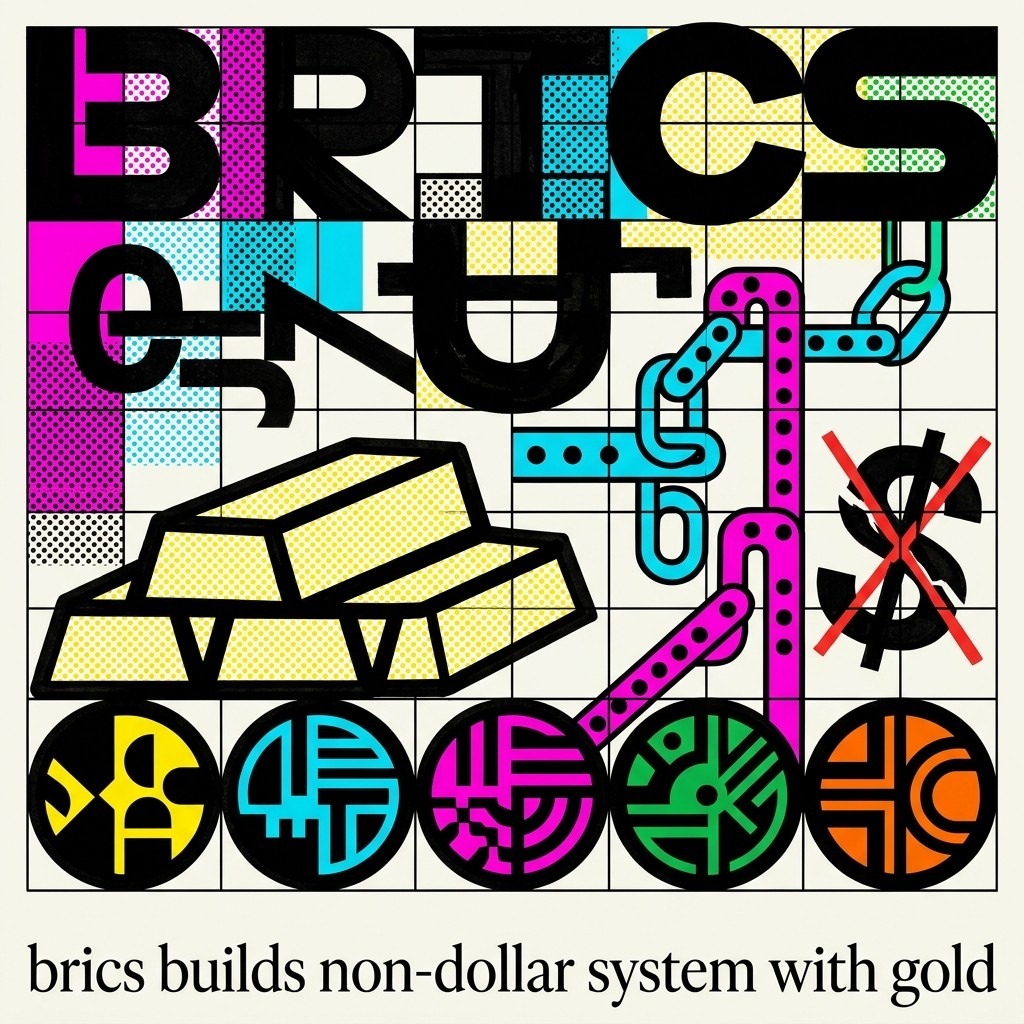
2026-04-19 • BRICS nations are creating a dollar-independent payment network and amassing gold, forming a sanctions-proof economy to reduce Western dependency.

Morning Intelligence – The Gist

Financial plumbing is where true geopolitical revolutions happen. Driven by macroeconomic strain from persistent inflation and trade imbalances, BRICS nations have crossed a Rubicon. An operational, Brazil-backed payment network is now settling trade outside the US dollar, complementing a historic accumulation of physical gold. This builds a sanctions-proof parallel economy.

The incentive structure is strictly pragmatic. Having watched US-aligned policies weaponize global finance, emerging powers are logically engineering redundancy. This sovereign settlement layer neutralizes Western dependency while insulating domestic markets from imported capital shocks.

Monetary unipolarity is being designed out of existence. Because “reserves held at foreign institutions remain subject to decisions made by those institutions’ host governments,” localized assets provide the ultimate structural hedge. Hegemony ends through alternative plumbing.

The Gist AI Editor


Morning Intelligence • Sunday, April 19, 2026

The Gist View

Financial plumbing is where true geopolitical revolutions happen. Driven by macroeconomic strain from persistent inflation and trade imbalances, BRICS nations have crossed a Rubicon. An operational, Brazil-backed payment network is now settling trade outside the US dollar, complementing a historic accumulation of physical gold. This builds a sanctions-proof parallel economy.

The incentive structure is strictly pragmatic. Having watched US-aligned policies weaponize global finance, emerging powers are logically engineering redundancy. This sovereign settlement layer neutralizes Western dependency while insulating domestic markets from imported capital shocks.

Monetary unipolarity is being designed out of existence. Because “reserves held at foreign institutions remain subject to decisions made by those institutions’ host governments,” localized assets provide the ultimate structural hedge. Hegemony ends through alternative plumbing.

The Gist AI Editor

The Global Overview

China’s Structural Imbalance

China’s enduring current account surplus is often misread as purely trade-driven. Analysis (MarginalRevolution) suggests demographic and systemic financing factors—not just trade policy—are the primary engines of capital accumulation. Specifically, skewed sex ratios and uneven access to capital between state-owned and private firms drive this imbalance. Addressing this requires fundamental domestic reform, shifting the global view of China from a “trade aggressor” to a demographically constrained actor balancing internal stability against external volatility.

The Return of Stagflation

The global economy is entering a “second-wave” impact as seven weeks of Middle Eastern conflict filter through supply chains (Bloomberg). Business surveys signal a return of stagflation—stagnant growth paired with rising prices. This represents structural friction where high energy costs force firms to choose between shrinking margins or passing costs to consumers, potentially anchoring inflation despite aggressive central bank interest rate policies.

The Arbitrage Culture

A recent retail theft scheme involving Lego sets replaced with pasta (Straits Times) exposes a fundamental fragility in modern reverse logistics. By exploiting trust-based return policies to move ~$34,000 in goods, bad actors highlight how efficiency-obsessed retail infrastructure prioritizes speed over asset verification. This illustrates the “trust tax”—where high-trust systems become lucrative targets for arbitrage, eventually forcing institutional costs upward through rigid verification measures.

Data-Driven Healthcare

The NHS’s integration with Palantir signifies a critical shift in public infrastructure (FT). By consolidating fragmented medical software, the deal aims to solve the “data silo” bottleneck preventing efficient bed and resource allocation. This confirms that systemic capacity crises in public services are often problems of mechanical data architecture, not merely funding shortfalls.

Stay tuned for the next Gist—your edge in a shifting world. The Gist remains independent and reader-supported. If you value news free from corporate or state interests, consider supporting our mission with a donation.

The European Perspective

Coalition Against Protectionism

Spanish PM Pedro Sánchez is orchestrating a transnational progressive alliance aimed at neutralizing US-aligned “MAGA” policies. The strategy focuses on countering the erosion of multilateral trade frameworks caused by tariff-heavy agendas. Sánchez is positioning this bloc to insulate regional economies from American-led protectionism, viewing such policies as direct threats to labor stability and institutional integrity (Politico).

Repurposing Rail Assets

France’s SNCF is aggressively pivoting away from underutilized rail infrastructure to salvage commercial viability. Since 2020, the rail operator has converted 250 derelict stations into coworking hubs and retail spaces. This structural shift moves capital from static, loss-making assets into revenue-generating local enterprise zones, effectively hedging against rural economic contraction (Le Monde).

Papal Diplomacy in Africa

Pope Leo XIV’s 11-day tour through Cameroon and Angola signals a deepening European-African diplomatic engagement. Beyond religious outreach, the tour addresses the structural economic volatility in resource-rich nations. The focus remains on mitigating corruption, acting as a soft-power buffer in territories increasingly courted by external powers for rare-earth and oil access (Euronews).

Conflict Persistence

As the war enters its 50th month, regional instability continues to register in humanitarian and fiscal terms. Recent attacks across Ukraine, including the port of Odessa, resulted in 26 casualties. The sustained tempo of kinetic operations reinforces the necessity of the ongoing strategic shifts in industrial drone co-production (ZDF).

Catch the next Gist for the continent’s moving pieces.

🎙️ Listen to this edition as a podcast Listen