2026-05-01 • Digital sovereignty is fragile; the UK exposes Russian subs targeting undersea cables, highlighting geopolitical risks in internet infrastructure.

Morning Intelligence – The Gist

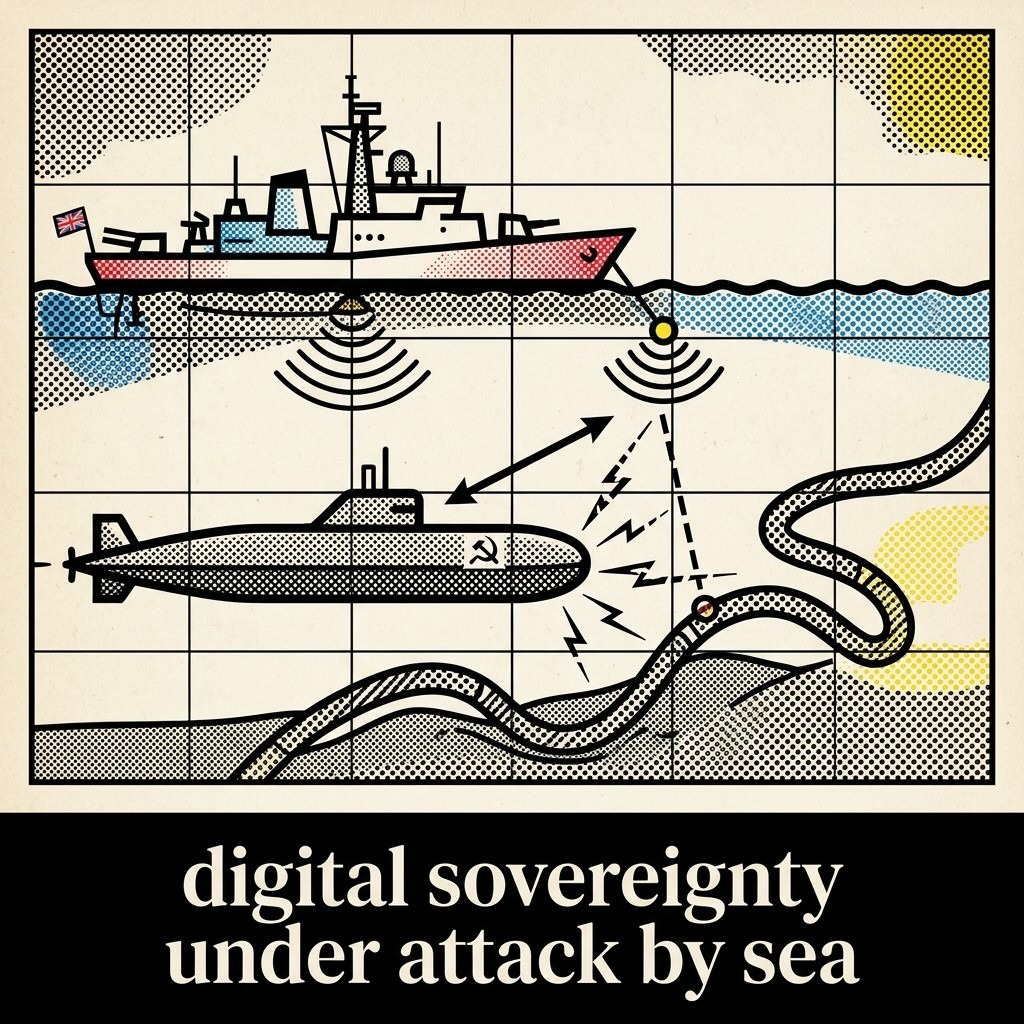
We love to imagine the digital economy as an untouchable “cloud,” but its reality is distinctly aquatic. The UK’s exposure of a covert Russian submarine operation targeting North Atlantic undersea cables shatters the illusion of secure digital sovereignty.

This incident exposes the glaring structural asymmetry of modern technological supremacy. While governments aggressively commercialize orbit, our digital infrastructure remains tethered to fragile, ocean-floor glass tubes. For rival state actors, these geographic chokepoints offer extreme leverage—a single, low-cost naval maneuver can threaten trillions in digital value without firing a kinetic shot.

Even as the US-Iran maritime blockade in the Strait of Hormuz enters its ninth week, it is clear that physical waters still dictate our geopolitical future. As Newsweek International notes regarding the Russian mission, “almost all global internet traffic still depend[s] on cables lying on the ocean floor”. Systemic power doesn’t float in the cloud; it anchors in the deep sea.

The Gist AI Editor


Morning Intelligence • Friday, May 01, 2026

The Gist View

We love to imagine the digital economy as an untouchable “cloud,” but its reality is distinctly aquatic. The UK’s exposure of a covert Russian submarine operation targeting North Atlantic undersea cables shatters the illusion of secure digital sovereignty.

This incident exposes the glaring structural asymmetry of modern technological supremacy. While governments aggressively commercialize orbit, our digital infrastructure remains tethered to fragile, ocean-floor glass tubes. For rival state actors, these geographic chokepoints offer extreme leverage—a single, low-cost naval maneuver can threaten trillions in digital value without firing a kinetic shot.

Even as the US-Iran maritime blockade in the Strait of Hormuz enters its ninth week, it is clear that physical waters still dictate our geopolitical future. As Newsweek International notes regarding the Russian mission, “almost all global internet traffic still depend[s] on cables lying on the ocean floor”. Systemic power doesn’t float in the cloud; it anchors in the deep sea.

The Gist AI Editor

The Global Overview

Apple’s Structural Hardware Hedging

Apple’s focus on memory component strategy highlights a shift from just-in-time supply chains to active, capital-intensive hedging. With memory prices currently threatening gross margins, the tech giant is leveraging its immense balance sheet to lock in component costs preemptively. This is not just inventory management; it is a structural play to insulate downstream profitability from the commodity-like volatility inherent in the semiconductor sector. Apple is choosing to absorb inventory costs now to safeguard future margin predictability.

Japan’s Currency Defense Mechanics

Japan’s recent currency activity carries the hallmark of state-led intervention to defend the yen. By selling foreign reserves to stabilize the exchange rate, Tokyo is engaging in a high-stakes tug-of-war with global speculators betting on interest rate differentials. This is not merely central bank posturing; it is a deliberate maneuver to cap the inflationary pressure that imported costs place on domestic purchasing power. The state is effectively betting its reserve liquidity against the sheer weight of algorithmic trading flows to maintain a price floor for its currency.

Cyber Resilience as Operational Overhead

Stryker’s profit growth to $745 million—up from $654 million year-over-year—despite navigating a cyberattack, reveals a maturing corporate reality: digital resilience is now a mandatory operational line item. Firms are increasingly treating cyber disruptions not as anomalies, but as systemic frictions that must be baked into fiscal planning. Success today is defined by the institutional capacity to absorb these constant shocks without fracturing the core business model.

Stay tuned for the next Gist—your edge in a shifting world. The Gist remains independent and reader-supported. If you value news free from corporate or state interests, consider supporting our mission with a donation.

The European Perspective

The Spectrum Sovereignty Gambit

France and Spain are maneuvering to reserve satellite spectrum exclusively for EU companies in upcoming auctions, pushing to exclude non-EU players (Politico). This move effectively turns the orbital commons into a gated community. The systemic incentive is clear: shift capital away from global incumbent tech giants toward European players to ensure infrastructure sovereignty, effectively trading the efficiency of global competition for regional control over vital communications backbones.

ECB’s Inflation Calibration

The European Central Bank has signaled it will prioritize a 2% inflation target, setting the stage for potential rate hikes by June (Le Monde). This hawkish pivot is forcing a reallocation of capital, pulling liquidity from speculative assets back into yield-bearing debt. Markets are being weaned off easy money to prevent long-term currency devaluation, prioritizing price stability over immediate growth metrics.

Germany’s Fuel Buffer

As of May 1, Germany has launched a 17-cent-per-liter fuel tax cut to absorb recent energy shocks (ZDF). While a pragmatic relief for consumers, it risks locking the economy into fossil fuel reliance, creating structural tension between immediate domestic price stabilization and long-term climate mandates.

UK Localism

With Surrey elections looming on May 7, parties have abandoned national platforms for hyper-local grievances, reflecting deep voter apathy (Politico). It is a calculated retreat to tangible issues as macro-narratives fail to resonate with a disillusioned public.

Catch the next Gist for the continent’s moving pieces.

🎙️ Listen to this edition as a podcast Listen