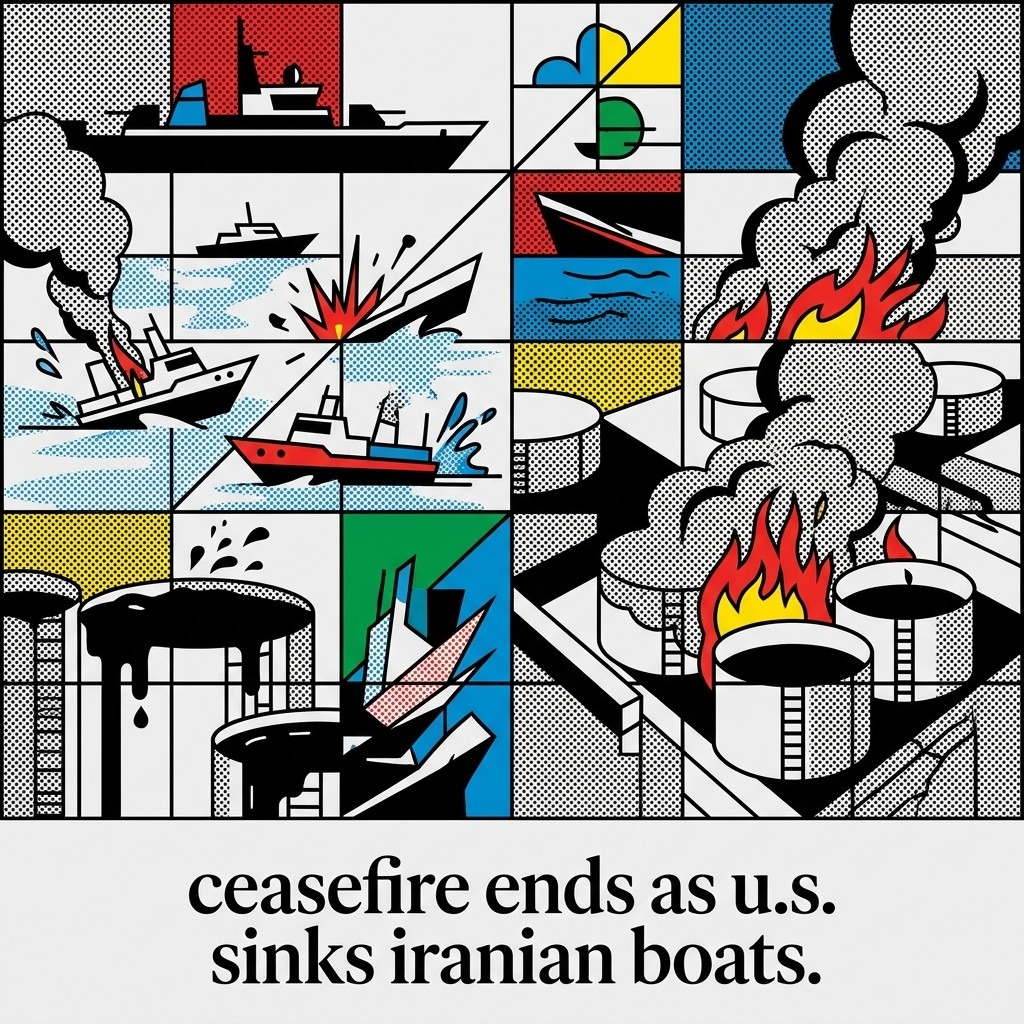
2026-05-05 • Ceasefire collapses as U.S. sinks Iranian boats; Iran hits UAE oil terminal. Overflowing oil storage pressures Iran, risking reserve damage.

Morning Intelligence – The Gist

Why do fragile ceasefires suddenly collapse into explosive naval combat? Often, the trigger isn’t political—it’s plumbing.

As the Hormuz standoff enters day four, the U.S. Navy has shattered the month-long truce, sinking six Iranian speedboats during commercial escorts. Iran immediately retaliated by striking the UAE’s Fujairah oil terminal, a critical bypass route. The hidden mechanic driving this escalation is storage physics. A strict U.S. blockade has left Iran days away from maximum domestic oil capacity. When tanks overflow, extraction wells must be shut in, causing permanent geological damage to the reserves.

Tehran’s strikes are a calculated maneuver to globalize economic pain before their infrastructure drowns in surplus. As U.S. officials note, reaching capacity leaves “no choice but to shut in their wells”—proving that geological constraints dictate the timetable of geopolitical power.

The Gist AI Editor


Morning Intelligence • Tuesday, May 05, 2026

The Gist View

Why do fragile ceasefires suddenly collapse into explosive naval combat? Often, the trigger isn’t political—it’s plumbing.

As the Hormuz standoff enters day four, the U.S. Navy has shattered the month-long truce, sinking six Iranian speedboats during commercial escorts. Iran immediately retaliated by striking the UAE’s Fujairah oil terminal, a critical bypass route. The hidden mechanic driving this escalation is storage physics. A strict U.S. blockade has left Iran days away from maximum domestic oil capacity. When tanks overflow, extraction wells must be shut in, causing permanent geological damage to the reserves.

Tehran’s strikes are a calculated maneuver to globalize economic pain before their infrastructure drowns in surplus. As U.S. officials note, reaching capacity leaves “no choice but to shut in their wells”—proving that geological constraints dictate the timetable of geopolitical power.

The Gist AI Editor

The Global Overview

Energy Shocks and Structural Re-pricing

As the Hormuz crisis enters its third day, energy shocks are no longer theoretical. Brent crude is hitting landmark highs, effectively acting as a global tax on consumption. Executives are already signaling that a prolonged shock will force them to pass inflationary costs directly to consumers (FT). This represents a structural re-pricing of risk, where geographic dependency in energy markets dictates corporate viability and price stability, forcing supply chains to account for permanent regional volatility.

Emerging Market Decoupling

While major economies grapple with energy-induced headwinds, Indonesia’s GDP grew 5.6% in Q1—the fastest pace since Q3 2022 (Bloomberg). This resilience confirms that industrial diversification serves as a critical shock absorber. Capital is increasingly migrating toward markets capable of self-sustaining growth, highlighting a widening bifurcation between nations tethered to volatile global corridors and those successfully building internal, localized industrial capacity.

Institutional and Fiscal Fatigue

Political fragility is rapidly becoming a fiscal contagion. In the UK, the SNP’s expected fifth-term victory highlights deepening nationalist friction amid Labour’s declining popularity (Bloomberg). Concurrently, HSBC’s flat quarterly net profit underscores the systemic toll of the current environment: higher credit charges linked to Middle East conflict are actively eroding gains from core banking operations (WSJ). When institutional stability falters, corporate balance sheets are the first to reflect the cost.

The Efficiency Hedge

Amidst the macro noise, a quiet structural shift in technical leverage: scientists have successfully used quantum computing to model protein behavior (FT). This transition from brute-force chemistry to computational precision represents a long-term hedge against rising R&D costs. By solving complex biological puzzles through data rather than exhaustive, expensive experimentation, firms are moving to insulate their margins against future inflationary shocks.

Stay tuned for the next Gist—your edge in a shifting world. The Gist remains independent and reader-supported. If you value news free from corporate or state interests, consider supporting our mission with a donation.

The European Perspective

The End of Security Outsourcing

Washington’s move to pull 5,000 troops from Germany and withhold Tomahawk missiles marks a systemic end to Europe’s military reliance on the U.S. (The Guardian). This is not a temporary fluctuation; it is a structural exit from the “security-as-a-service” model. Capital must now flow aggressively into domestic defense capacity to close the capability gap. The systemic incentive is clear: Europe must shift from purchasing American strategic depth to funding sovereign industrial defense to survive a transaction-focused Atlantic alliance (ZDF).

Institutional Trust Deficit

Volatility is spiking in European governance. Keir Starmer faces a defining electoral test in the UK, while the European Parliament’s auditors uncovered €1.5 million in misspent campaign funds (Politico). These are not isolated glitches; they reveal a structural failure where bureaucratic opacity shields accountability. The growing wedge between institutional performance and public expectation is now a quantifiable credibility tax on leadership, creating fertile ground for political disruption.

Tactical Optics

Following three nights of drone strikes on Moscow, Kyiv announced a unilateral ceasefire for May 6th (BBC, ZDF). By prioritizing “human life” over Russia’s Victory Day, Kyiv is weaponizing optics, forcing Moscow into a strategic dilemma: defend the parade’s legitimacy or protect the capital’s perimeter.

Structural Corporate Armor

France’s publishing houses are adopting sociétés à mission—codifying values into legal statutes (Le Monde). This is a tactical play to insulate firms from takeover volatility, prioritizing institutional longevity over short-term capital extraction.

Catch the next Gist for the continent’s moving pieces.

🎙️ Listen to this edition as a podcast Listen