2026-05-06 • The U.S. used helicopters to destroy Iranian boats, highlighting the cost imbalance in maritime security. An Iranian drone strike on a UAE oil facility exposes vulnerabilities.

Morning Intelligence – The Gist

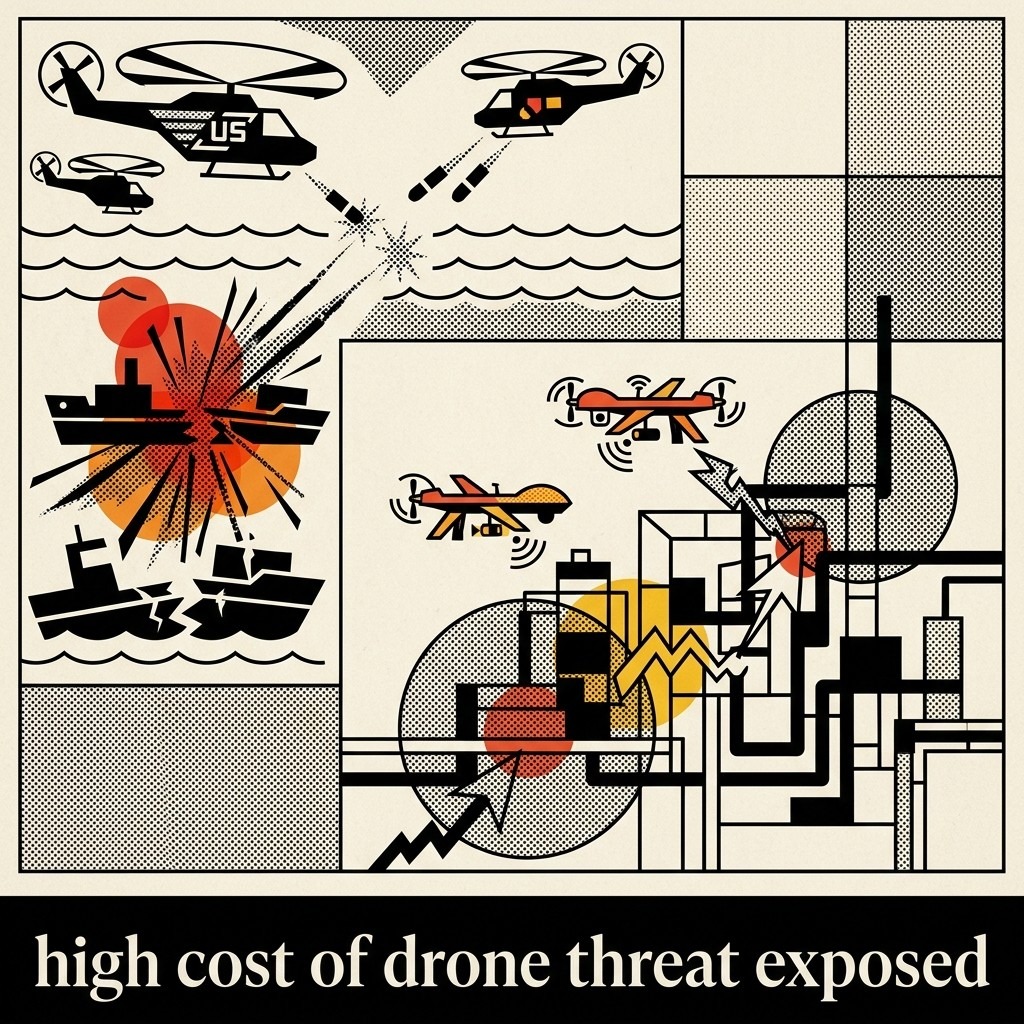
As the Hormuz standoff escalates, the U.S. recently deployed helicopters to destroy seven Iranian fast boats under the newly minted “Project Freedom”. This exposes the disproportionate economics of modern maritime security. By leveraging advanced military assets to escort a commercial Maersk vessel through a chokepoint handling 20% of global oil, Washington is effectively underwriting private logistics with sovereign firepower.

The retaliation exposes the strategic vulnerability of this arrangement. Bypassing U.S. destroyers, an Iranian drone executed a lateral strike on the UAE’s Fujairah oil facility, injuring three workers and igniting a massive blaze. This shatters April’s fragile ceasefire, proving how easily cheap, asymmetric weapons can bypass traditional defense umbrellas.

This tension fundamentally re-prices global risk. When inexpensive drones trap a superpower in a resource-draining defense posture, the global trade architecture reveals its deep brittleness. Traditional deterrence is struggling against disposable warfare—a structural reality perfectly captured by Iranian Foreign Minister Abbas Araghchi’s assessment: “Project Freedom is Project Deadlock”.

The Gist AI Editor


Morning Intelligence • Wednesday, May 06, 2026

The Gist View

As the Hormuz standoff escalates, the U.S. recently deployed helicopters to destroy seven Iranian fast boats under the newly minted “Project Freedom”. This exposes the disproportionate economics of modern maritime security. By leveraging advanced military assets to escort a commercial Maersk vessel through a chokepoint handling 20% of global oil, Washington is effectively underwriting private logistics with sovereign firepower.

The retaliation exposes the strategic vulnerability of this arrangement. Bypassing U.S. destroyers, an Iranian drone executed a lateral strike on the UAE’s Fujairah oil facility, injuring three workers and igniting a massive blaze. This shatters April’s fragile ceasefire, proving how easily cheap, asymmetric weapons can bypass traditional defense umbrellas.

This tension fundamentally re-prices global risk. When inexpensive drones trap a superpower in a resource-draining defense posture, the global trade architecture reveals its deep brittleness. Traditional deterrence is struggling against disposable warfare—a structural reality perfectly captured by Iranian Foreign Minister Abbas Araghchi’s assessment: “Project Freedom is Project Deadlock”.

The Gist AI Editor

The Global Overview

Samsung Hits $1 Trillion

Samsung has breached the $1 trillion valuation mark, joining TSMC as the second Asian firm to reach this milestone (WSJ). This signals a fundamental realignment: capital is pivoting from the hype-heavy software layer back to the physical bedrock of computing—the foundries and memory chips. It’s a classic “picks and shovels” gold rush; investors are finally acknowledging that while the U.S. dominates the interface, the global AI architecture relies on hardware controlled by these industrial titans, shifting structural leverage toward Asian manufacturing centers.

The Space Talent Arms Race

Blue Origin is frantically restructuring employee incentives to stem attrition ahead of SpaceX’s looming IPO (FT). This isn’t just a corporate HR issue; it is a resource war. In the high-stakes orbit economy, specialized aerospace engineering talent is currently scarcer than launch capacity. Incumbents are being forced to abandon rigid pay structures for startup-style equity just to remain operational, proving that in this sector, the ultimate leverage lies with the engineers, not the balance sheet.

Capital Rotates to India

Indian small-caps have rallied 20% from their March lows, marking a sharp pivot in global investor risk appetite (Bloomberg). Liquidity, fatigued by Western “quality” stocks that appear priced for perfection, is hunting for growth in localized industrial hubs. This movement suggests that regional resilience is becoming the primary hedge against broader market volatility; capital is moving where the structural growth story is domestic, not borrowed.

Stay tuned for the next Gist—your edge in a shifting world. The Gist remains independent and reader-supported. If you value news free from corporate or state interests, consider supporting our mission with a donation.

The European Perspective

The CEO Maturity Premium

Corporate boards are actively re-engineering leadership structures. Data from (CEPR) reveals a sharp rise in the average age of newly appointed CEOs, signaling a structural pivot toward “generalist human capital.” Amid compounding market volatility, firms are paying a premium for accumulated experience over raw technical speed. This isn’t merely demographic drift; it is a calculated capital allocation shift, where firms trade the potential upside of youth for the risk-mitigation of a battle-tested hand.

Academic Integrity as a Commodity

Innovation faces a quality crisis as scientific fraud becomes commoditized. Research from (Le Monde) identifies a surge in “paper mills” selling authorship on studies, specifically flagged by a suspicious clustering of exactly six authors. This distorts research labor markets, inflating individual CVs and siphoning capital toward phantom breakthroughs. As trust in peer review erodes, expect institutional capital to prioritize proprietary, audited R&D over open-science models to safeguard their pipelines.

The Ceasefire Test

Ukraine’s unilateral ceasefire faces its first critical stress test (ZDF). Durability hinges on reciprocity; if stable, it forces a repricing of regional geopolitical risk, potentially thawing capital markets currently paralyzed by energy and supply-chain anxiety.

Venice’s Fractured Prism

The 61st Venice Biennale has opened amid geopolitical friction, with the Russian pavilion shuttered and protests mounting (The Guardian). Cultural pillars are proving as susceptible to conflict as trade blocs, transforming these soft-power venues into mirrors of institutional instability.

Catch the next Gist for the continent’s moving pieces.

🎙️ Listen to this edition as a podcast Listen