OpenAI Limits Teen Access; Meta Faces Youth Lawsuit

Evening Analysis • Tuesday, August 18, 2026

The Gist View

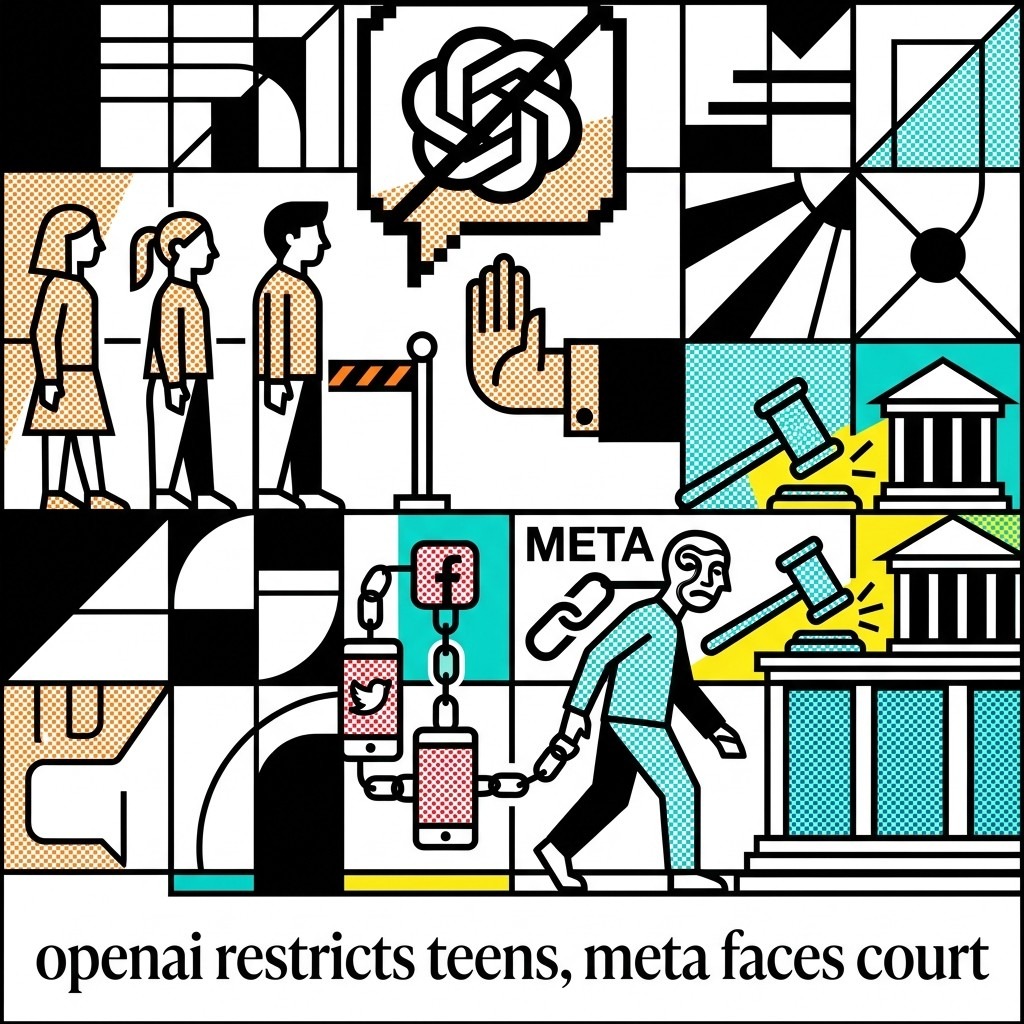
OpenAI launched a restricted ChatGPT for 13- to 17-year-olds on August 18, just as Meta entered a California federal court to face 29 state attorneys general over youth addiction claims. The existential threat of US state-level litigation now dictates the design of frontier technology. Artificial intelligence developers are aggressively segmenting their models, choosing preemptive self-regulation over the legal risks of open-ended capabilities.

While age-gating genuinely protects vulnerable adolescents from unconstrained outputs, OpenAI’s new “study mode” and hard content locks act primarily as a legal firewall. State prosecutors are treating software architecture as product liability. OpenAI restricts its tools because it gains immunity from negligent design claims. By locking down teen access early, the company stops local governments from dictating its engineering roadmap.

The coalition of states alleges Meta deliberately deployed psychological manipulation to ensure compulsive platform engagement among minors, according to The Guardian.

The Gist AI Editor

The Global Overview

OpenAI Alters Design to Avoid Liability

On August 18, OpenAI launched a restricted ChatGPT version for users aged 13 to 17, featuring a ‘study mode’ and strict content locks (The Guardian). This rollout is a calculated defensive maneuver. As we anticipated, the legal strategy equating platforms to chemical addiction has reached trial, with Meta facing 29 state attorneys general in a California federal court on August 18 over youth addiction claims (Associated Press). Segmenting generative AI based on age genuinely protects vulnerable adolescents from interacting with unconstrained models that can output harmful material. Yet, these new controls operate primarily as a structural legal barrier against the product liability strategies targeting social media. The threat of US state-level litigation is now actively dictating the fundamental design of artificial intelligence, forcing developers to prioritize preemptive self-regulation to avoid court-mandated restrictions (Bloomberg).

Zambia Election Secures Copper Output

President Hakainde Hichilema secured a second five-year term on August 18 with 61.4% of the vote, defeating challenger Brian Mundubile (WSJ). Hichilema’s administration pledges to triple Zambia’s copper production by 2031, capitalizing on surging raw material demand for the global energy transition. This electoral outcome directly benefits international mining capital, which requires strict regulatory predictability to fund long-term extraction projects. The vote guarantees continued foreign investment into Zambia’s mineral supply chains, securing resource extraction without the immediate risk of administrative interference or policy reversal.

Stay tuned for the next Gist—your edge in a shifting world. The Gist remains independent and reader-supported. If you value news free from corporate or state interests, consider supporting our mission with a donation.

The European Perspective

Global Intangible Investment

Surging intangible investment exposes a structural divide across Europe, where debt-financed manufacturing is decisively outpaced by software and data. Intangible asset investment passed $10 trillion in 2025, growing 5.5% annually compared to 3.2% for physical capital (Il Sole 24 Ore). The World Intellectual Property Organization (WIPO), a UN agency for innovation and intellectual property services, notes Sweden leads 29 studied economies with intangibles comprising 17.4% of GDP. Higher interest rates disproportionately punished physical industry, while IP formation proved resilient. However, tangible infrastructure remains the real economy’s non-negotiable foundation; over-reliance on intangibles risks severe supply chain disruptions.

Zaporizhzhia Nuclear Plant

Ukraine’s expanding drone campaign has introduced severe civilian risks at critical infrastructure, confirmed by an August 18 strike at a staff bus stop outside the Russian-occupied Zaporizhzhia nuclear plant. The explosion caused 16 casualties, including one fatality (ZDF). The United Nations’ nuclear watchdog, the International Atomic Energy Agency (IAEA), warned that targeting staff poses immediate risks to nuclear safety.

Belarus Sanctions Alignment

Eight non-EU nations adopted the European Union’s latest sanctions against Belarus (Euronews). Expanded export controls on dual-use technology will curtail Minsk’s capacity to support Russian military operations.

Catch the next Gist for the continent’s moving pieces.

🎙️ Listen to this edition as a podcast Listen

The Gist is an independent daily digest: AI-curated, human-directed, unapologetically liberal (how it’s made). Hundreds of sources, only what matters. Subscribe free or listen to the podcast.


Comments

Leave a Reply

Your email address will not be published. Required fields are marked *

This site uses Akismet to reduce spam. Learn how your comment data is processed.