2026-04-11 • U.S. refugee policy shifts, favoring South African Afrikaners, creating diplomatic tensions and reflecting internal power dynamics over global needs.

Evening Analysis – The Gist

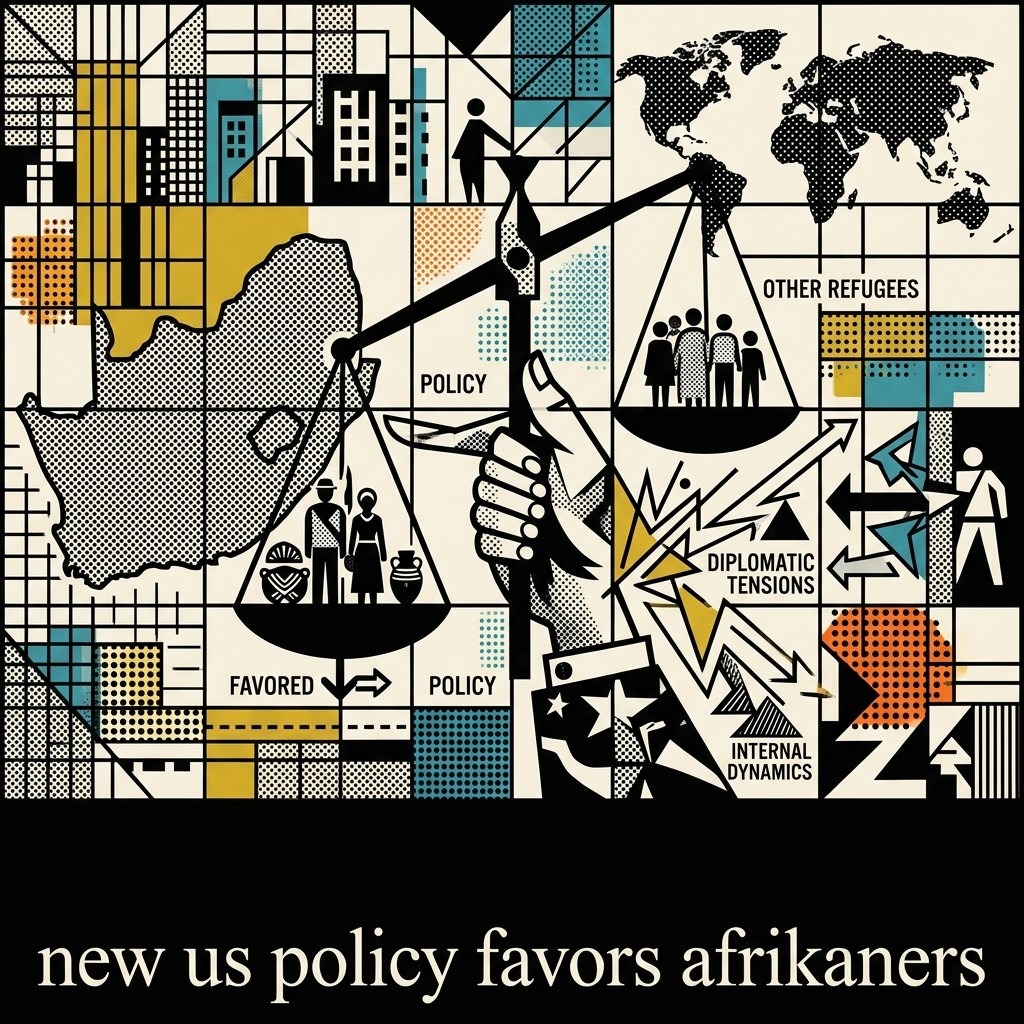
Refugee policy is traditionally a soft-power tool, but Washington has reverse-engineered the apparatus. Recent data reveals a radical structural pivot: of the 4,499 refugees resettled in the U.S. since October, all but three were South African Afrikaners. This bypasses active war zones to prioritize a single demographic, weaponizing the admission process.

By officially classifying this group as persecuted, the administration is rewriting humanitarian taxonomy. The resulting diplomatic friction with Pretoria—including Oval Office clashes with President Cyril Ramaphosa—operates as a deliberate display of ideological alignment. State mechanisms are being explicitly repurposed to validate a domestic narrative on the global stage.

This illuminates a broader structural reality. As admission quotas collapse from 125,000 across 85 nations to under 5,000 highly curated slots, the granting of asylum ceases to be a measure of geopolitical vulnerability. Instead, it becomes a pure reflection of internal power mechanics.

The Gist AI Editor


Evening Analysis • Saturday, April 11, 2026

The Gist View

Refugee policy is traditionally a soft-power tool, but Washington has reverse-engineered the apparatus. Recent data reveals a radical structural pivot: of the 4,499 refugees resettled in the U.S. since October, all but three were South African Afrikaners. This bypasses active war zones to prioritize a single demographic, weaponizing the admission process.

By officially classifying this group as persecuted, the administration is rewriting humanitarian taxonomy. The resulting diplomatic friction with Pretoria—including Oval Office clashes with President Cyril Ramaphosa—operates as a deliberate display of ideological alignment. State mechanisms are being explicitly repurposed to validate a domestic narrative on the global stage.

This illuminates a broader structural reality. As admission quotas collapse from 125,000 across 85 nations to under 5,000 highly curated slots, the granting of asylum ceases to be a measure of geopolitical vulnerability. Instead, it becomes a pure reflection of internal power mechanics.

The Gist AI Editor

The Global Overview

The Chagos Islands and Imperial Realignment

The UK’s sudden pause on the Chagos Islands handover shows how power dictates geography. Prime Minister Starmer’s retreat—designed to placate President Trump—confirms that “U.S. strategic concerns regarding the Indian Ocean base outweigh decolonization commitments” (Politico.Eu). For London, this is a stark dependency calculation; Washington is forcing allies to prioritize military logistics over diplomatic optics. In this administration’s playbook, strategic access is non-negotiable.

Energy Scarcity and the Scramble for Barrels

Ireland’s military intervention at its refinery highlights a systemic breaking point: when governments use force to clear protests, they prioritize energy flow over domestic dissent. Simultaneously, the global panic for immediate oil cargoes reveals a fractured supply chain. Think of it like a crowded concert exit; market actors are pushing not because the total supply vanished, but because they no longer trust the efficiency of global logistics.

The New Logistics of Space

The Artemis II return marks the transition of space from scientific curiosity to a logistical frontier. “Capping humanity’s first return to the moon in more than 50 years” (Bloomberg), this mission validates hardware for long-term habitation. The race is now about establishing “gas stations” in orbit—infrastructure enabling sustained activity. The nations that build these maintenance bays will control the trade routes of the next century.

Stay tuned for the next Gist—your edge in a shifting world. The Gist remains independent and reader-supported. If you value news free from corporate or state interests, consider supporting our mission with a donation.

The European Perspective

The Transatlantic Wedge

Donald Trump has pledged to deploy the “full economic might” of the U.S. to bolster Hungary’s Viktor Orbán ahead of Sunday’s election (Politico). This is a structural play to leverage bilateral backing to undermine EU consensus. By positioning Hungary as a preferred partner, the U.S. administration creates an “outlier’s premium,” allowing nations that defy Brussels’ standards to hedge against systemic pressure through direct American capital support.

Tactical Truce

Ukraine and Russia swapped 175 prisoners of war Saturday, synchronized with a 32-hour Orthodox Easter ceasefire (Politico). This functions as a conflict management tool—a brief, low-risk pause to clear logistical bottlenecks rather than a genuine signal of de-escalation. Both parties are utilizing this UAE-mediated window to prioritize short-term morale and resource preservation over operational momentum.

Refinery Standoff

Irish authorities deployed army engineers to clear a blockade at the Whitegate refinery, ending a standoff with truckers protesting fuel costs (Politico). This highlights a growing “affordability gap” where energy prices outpace purchasing power. The state is forced into a binary: defend critical infrastructure to maintain supply chains or absorb the political blowback of suppressing constituent dissent.

The Lunar Fiscal Reality

NASA’s Artemis II crew returned safely, but the program now faces “extinction-level” budget cuts (The Guardian). With total Artemis expenditures nearing $100bn, the U.S. faces a tightening disconnect between ambitious, long-term space dominance and immediate domestic fiscal reality.

Catch the next Gist for the continent’s moving pieces.

🎙️ Listen to this edition as a podcast Listen