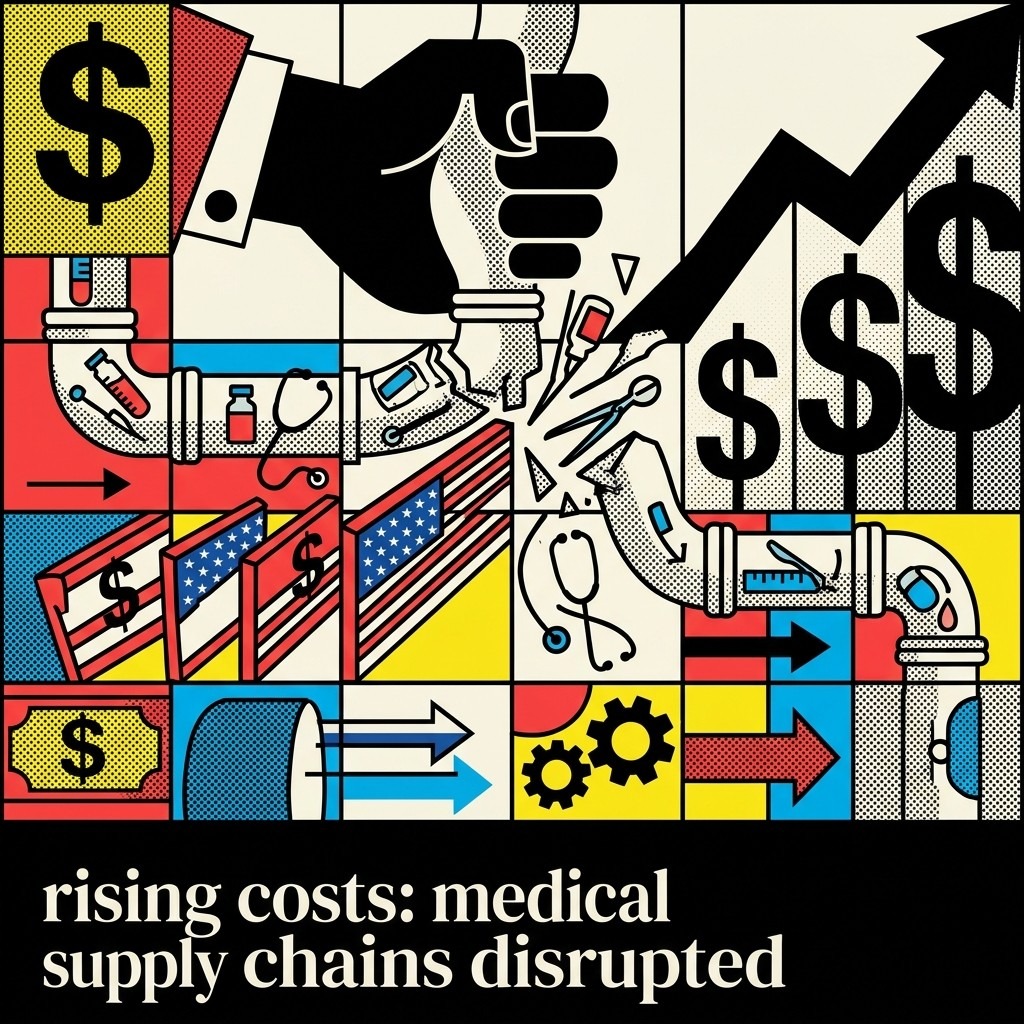
2026-04-13 • Geopolitical risks and trade policies are inflating healthcare costs, as tariffs on medical components disrupt supply chains, impacting public health.

Morning Intelligence – The Gist

Have you noticed how prescriptions are suddenly pricing in the geopolitical risk of a shipping container? As aggressive trade policies decouple global manufacturing, a structural collision with public health is unfolding. Strategic tariffs meant to force industrial reshoring are instead acting as a systemic tax on healthcare access.

The tension lies in the severe inflexibility of biological supply chains. While tech companies can rapidly pivot assembly lines, relocating an Active Pharmaceutical Ingredient supplier requires up to eight years of regulatory approvals. Consequently, new import tariffs on raw medical components bypass corporate margins and instantly inflate hospital costs.

Governments cannot radically rewrite international trade architecture without destabilizing the domestic health systems reliant upon it. This push for localized infrastructure effectively mandates a premium on survival. As industry experts note, “Even though some pharmaceuticals are exempt, the raw materials behind them may not be”.

The Gist AI Editor


Morning Intelligence • Monday, April 13, 2026

The Gist View

Have you noticed how prescriptions are suddenly pricing in the geopolitical risk of a shipping container? As aggressive trade policies decouple global manufacturing, a structural collision with public health is unfolding. Strategic tariffs meant to force industrial reshoring are instead acting as a systemic tax on healthcare access.

The tension lies in the severe inflexibility of biological supply chains. While tech companies can rapidly pivot assembly lines, relocating an Active Pharmaceutical Ingredient supplier requires up to eight years of regulatory approvals. Consequently, new import tariffs on raw medical components bypass corporate margins and instantly inflate hospital costs.

Governments cannot radically rewrite international trade architecture without destabilizing the domestic health systems reliant upon it. This push for localized infrastructure effectively mandates a premium on survival. As industry experts note, “Even though some pharmaceuticals are exempt, the raw materials behind them may not be”.

The Gist AI Editor

The Global Overview

Economic Friction and Earnings Reality

Markets are currently pricing in a recovery that ignores structural drag. With geopolitical uncertainty constraining supply chains, European corporate earnings growth is set for a cold reality check. Analysts projecting robust profit margins are overlooking how energy volatility creates an invisible tax on manufacturing—forcing companies to burn cash on operational resilience rather than expansion. This is the “friction tax” of a fractured world, where geopolitical instability directly cannibalizes corporate capital, leaving less room for the innovation-led growth investors expect.

The Cellular Shift in Health Economics

A newly identified mechanism for viral spread—where the Covid pathogen forces previously resistant lung cells to become infection hubs—is reshaping the calculus for health infrastructure. Beyond the biological risk, this shifts how pharmaceutical capital flows: away from reactive, mass-market treatments toward highly targeted, cellular-level interventions. Think of this as “biological bottlenecking”; the pathogen’s evolution forces the market to prioritize expensive, specialized precision medicine, fundamentally altering the return-on-investment profile for healthcare firms and insurers.

Institutional Realignment in Budapest

Hungary’s political pivot following Péter Magyar’s electoral victory signals an impending thaw in EU institutional relations. For the bloc, this is a liquidity event. The projected unlocking of €90 billion in frozen aid for Ukraine will likely accelerate, effectively dissolving the administrative bottleneck that paralyzed EU financial support structures and trade logistics for the last two years.

Stay tuned for the next Gist—your edge in a shifting world. The Gist remains independent and reader-supported. If you value news free from corporate or state interests, consider supporting our mission with a donation.

The European Perspective

UK Steel’s Protectionist Friction

The UK’s classification of steel as a “Strategic National Asset” is creating an industrial bottleneck. New tariffs meant to shield domestic makers risk “severely disrupting supply chains” (Politico). The trade-off is stark: protecting jobs in one sector creates inflationary drag across the wider manufacturing ecosystem, prioritizing political mandates over operational efficiency.

European Construction Rebound

The European construction sector is exiting stagnation. Forecasts indicate 2.4% growth in 2026, a sharp pivot from the 0.3% recorded last year (IFO). Capital is rotating away from defensive hedging and into tangible industrial output. The incentive is clear: as credit markets stabilize, developers are deploying dormant liquidity into physical infrastructure, shifting the continent’s economic engine from neutral to drive.

The Pharma Patent Squeeze

Public health systems are testing the limits of patent-protected pricing. Scrutiny is mounting over oncology costs; Keytruda alone draws roughly €2 billion in annual expenditure (ZDF). The structural tension is unavoidable: patent laws drive innovation but force a collision between pharmaceutical margins and public insurance solvency.

Regional Briefs

Hungary’s political landscape is fracturing as the Tisza party challenges 16 years of entrenched rule (Il Sole 24 Ore). Elsewhere, a €1m Picasso is the prize in a 120,000-ticket raffle for Alzheimer’s research (Guardian)—a novel use of elite assets to mobilize charitable liquidity.

Catch the next Gist for the continent’s moving pieces.

🎙️ Listen to this edition as a podcast Listen