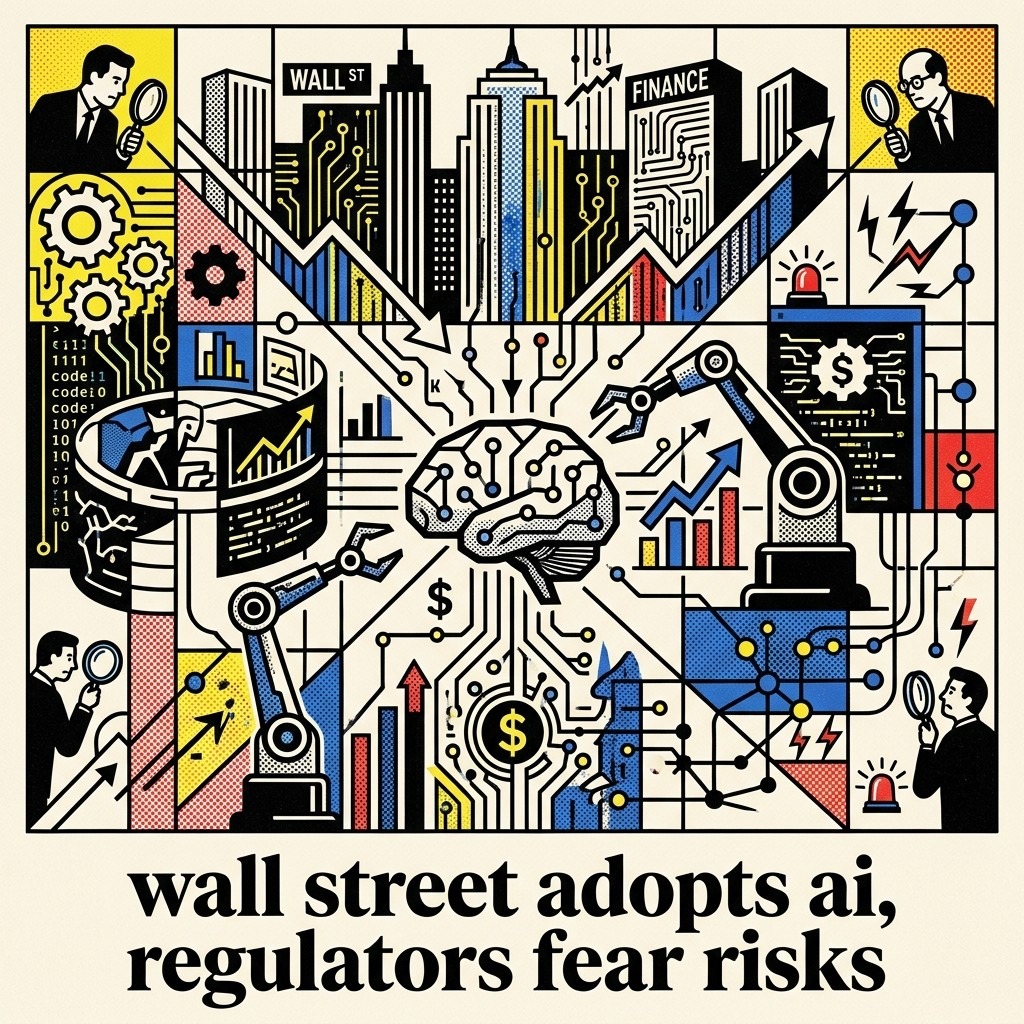
2026-04-18 • Wall Street adopts AI tech regulators fear to tackle rising cyber risks, replacing costly human analysts, risking structural contagion for resilience.

Evening Analysis – The Gist

Why are Wall Street titans adopting the exact technology regulators fear? Because the calculus of systemic defense has shifted. As US and UK officials warn of a “new era of cyber risk”, banks like JPMorgan are beta-testing Anthropic’s “Mythos” AI model to proactively hunt network vulnerabilities.

This pivot is an economic reflex. Amid rising fiscal strain and trade anxieties squeezing corporate margins globally, legacy IT security is prohibitively slow and expensive. Institutions are substituting human analyst armies with automated red-teams. Yet, delegating vital financial plumbing to proprietary, black-box algorithms risks unprecedented structural contagion.

With AI-assisted software attacks surging 44% year-over-year, the paradox of modern resilience is stark: to survive weaponized AI, you must surrender control to it. As Harvard researchers bluntly frame this asymmetric reality, “the bad people only have to win once… whereas the defenders have to win all the time”.

The Gist AI Editor


Evening Analysis • Saturday, April 18, 2026

The Gist View

Why are Wall Street titans adopting the exact technology regulators fear? Because the calculus of systemic defense has shifted. As US and UK officials warn of a “new era of cyber risk”, banks like JPMorgan are beta-testing Anthropic’s “Mythos” AI model to proactively hunt network vulnerabilities.

This pivot is an economic reflex. Amid rising fiscal strain and trade anxieties squeezing corporate margins globally, legacy IT security is prohibitively slow and expensive. Institutions are substituting human analyst armies with automated red-teams. Yet, delegating vital financial plumbing to proprietary, black-box algorithms risks unprecedented structural contagion.

With AI-assisted software attacks surging 44% year-over-year, the paradox of modern resilience is stark: to survive weaponized AI, you must surrender control to it. As Harvard researchers bluntly frame this asymmetric reality, “the bad people only have to win once… whereas the defenders have to win all the time”.

The Gist AI Editor

The Global Overview

AI Acceleration’s Structural Cyber-Blindspot

Anthropic’s new “Mythos” model reveals a dangerous trade-off: organizations are deploying AI agents significantly faster than they can establish defensive protocols (FT). These generative vulnerabilities function like master keys, allowing bad actors to exploit backend weaknesses faster than automated patches can secure them. It is the digital equivalent of upgrading to supersonic flight before building the air traffic control system to manage the skies.

The Erosion of the Risk-Free Asset

U.S. Treasuries are failing as a hedge during geopolitical friction, marking a pivot in market behavior (FT). As the world’s primary “safe haven” asset loses its ability to absorb systemic shocks, institutional capital is fracturing. Investors are moving toward hard alternatives—commodities or physical infrastructure—rather than paper promises, signaling that the traditional inverse relationship between bonds and volatility is no longer guaranteed.

Saudi Capital Constraints

The Saudi Public Investment Fund (PIF) is pivoting from aggressive, speculative expansion to fiscal triage (WSJ). The fund, holding $900 billion in assets, is shelving projects like the LIV Golf circuit, confirming a broader systemic trend: the era of “growth at any cost” is yielding to cash-flow reality. When a sovereign wealth giant begins trimming its hedges, it confirms that state-backed capital is retreating from high-risk exposure to preserve core liquidity.

The Hidden Cost of Maritime Depletion

Southeast Asia provides over 50% of global fish stocks, yet the region is hitting a structural breaking point (NPR). This ecological crisis acts as a bellwether for global food supply chains. As overfishing depletes these waters, expect systemic price shocks in protein markets—a stark reminder that our most critical supply chains remain fragile, biological systems, not just industrial ones.

Stay tuned for the next Gist—your edge in a shifting world. The Gist remains independent and reader-supported. If you value news free from corporate or state interests, consider supporting our mission with a donation.

The European Perspective

Economic Activity Via Night-Sky Data

New satellite analysis reveals Earth’s artificial light increased by a net 16% between 2014 and 2022 (The Guardian). Intelligence analysts now treat this as a high-fidelity proxy for real-time industrial output and energy demand. The volatility in regional brightness often decouples from official, lagging GDP data, offering an unfiltered look at where the global economy is actually accelerating or cooling.

European Construction Resurgence

European infrastructure is shifting from stagnant to growth, with EUROCONSTRUCT forecasting a 2.4% expansion in 2026, a sharp pivot from last year’s 0.3% growth (IFO). As capital flows into physical assets, developers are integrating AI-driven grid optimization to manage fiscal strain. However, this rapid digitization introduces systemic cyber-vulnerabilities; accelerated AI deployment in smart infrastructure creates digital backdoors, turning critical physical nodes into high-value targets.

Trade Anxiety Across the Atlantic

Canadian legislative pressure regarding US trade deals underscores mounting international trade anxiety (Politico). As fiscal strain limits policy maneuverability, protectionist rhetoric is sharpening. European leaders should view this as a leading indicator of Atlantic trade fragility, necessitating a hedge toward localized, resilient supply chains.

Cultural Capital Reallocation

Gardaland’s pivot to K-pop events illustrates a broader leisure trend (Il Sole 24 Ore). Amusement capital is moving from passive mechanical attractions to high-engagement cultural hubs, capturing youth-driven spending that traditional retail no longer secures.

Catch the next Gist for the continent’s moving pieces.

🎙️ Listen to this edition as a podcast Listen