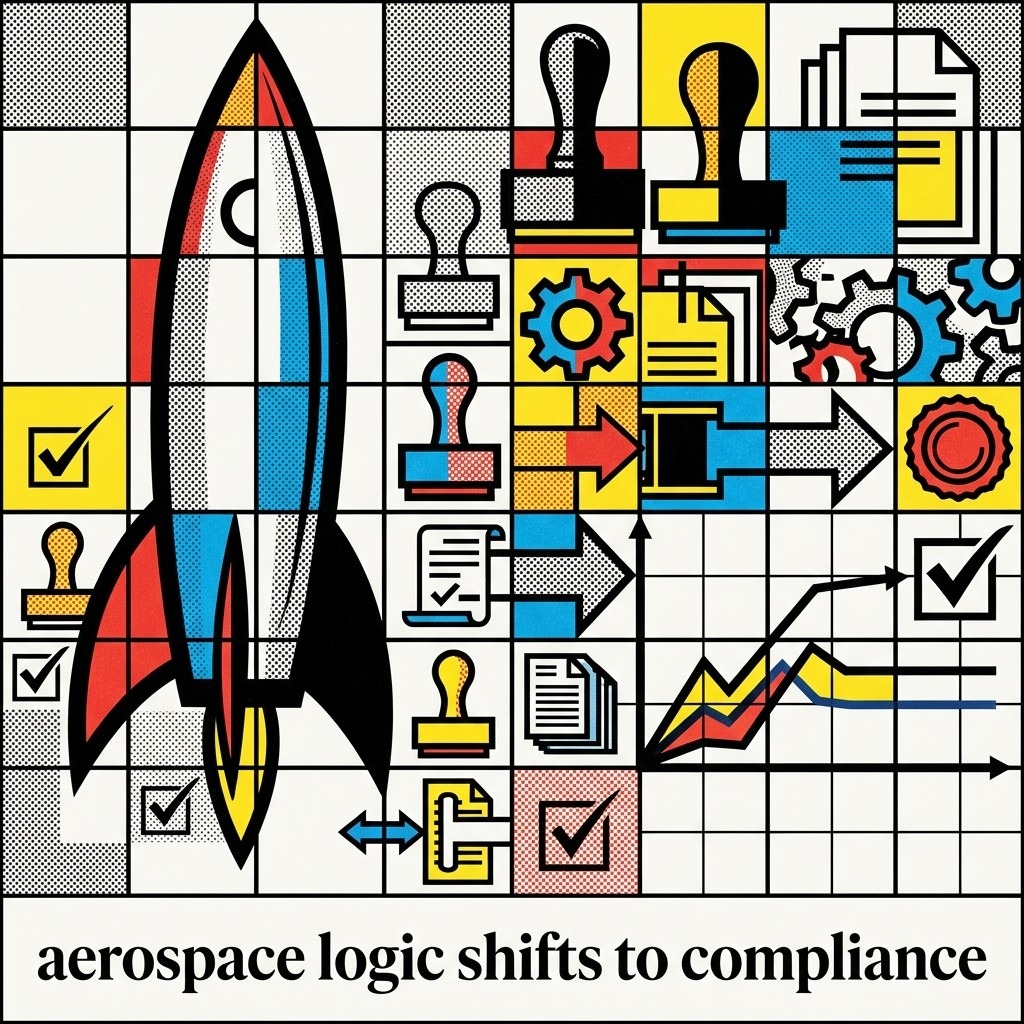
2026-05-08 • The future feels bureaucratic as aerospace shifts from tech innovation to regulatory certification, with compliance becoming the new competitive edge.

Evening Analysis – The Gist

Why does the future suddenly feel bureaucratic? Because the true aerospace frontier isn’t in orbit—it’s in regulatory certification. While the U.S.-Iran naval standoff in the Strait of Hormuz continues whipping global energy markets , a permanent structural shift is quietly rewriting the economics of the sky.

This week, Blue Origin’s MK1 lunar lander advanced terrestrial testing via a commercial NASA partnership , while Vertical Aerospace executed a historic piloted flight for its electric aircraft under strict UK regulatory oversight . This marks the institutionalization of the aerospace boom. Governments are no longer the sole architects of the cosmos; they are anchor tenants leasing capacity from private capital, efficiently de-risking their sovereign ambitions.

The pivot from speculative tech to certified logistics is the true bottleneck of aerospace dominance. As Vertical’s leadership noted, transitioning into “certification-focused” execution is the industry’s critical inflection point . Today’s deepest competitive moat isn’t thrust—it’s compliance.

The Gist AI Editor


Evening Analysis • Friday, May 08, 2026

The Gist View

Why does the future suddenly feel bureaucratic? Because the true aerospace frontier isn’t in orbit—it’s in regulatory certification. While the U.S.-Iran naval standoff in the Strait of Hormuz continues whipping global energy markets , a permanent structural shift is quietly rewriting the economics of the sky.

This week, Blue Origin’s MK1 lunar lander advanced terrestrial testing via a commercial NASA partnership , while Vertical Aerospace executed a historic piloted flight for its electric aircraft under strict UK regulatory oversight . This marks the institutionalization of the aerospace boom. Governments are no longer the sole architects of the cosmos; they are anchor tenants leasing capacity from private capital, efficiently de-risking their sovereign ambitions.

The pivot from speculative tech to certified logistics is the true bottleneck of aerospace dominance. As Vertical’s leadership noted, transitioning into “certification-focused” execution is the industry’s critical inflection point . Today’s deepest competitive moat isn’t thrust—it’s compliance.

The Gist AI Editor

The Global Overview

Meme Stock Mania Returns

AST SpaceMobile has surged 6,000%, fueled by social media speculation rather than fundamental value (Bloomberg). This is a liquidity-driven feedback loop where retail fervor completely displaces traditional analysis. When speculative assets decouple from earnings, it signals a market flush with excess risk appetite, effectively treating public equity like a high-stakes casino. Meanwhile, NASA imagery of “airglow”—photons emitted as atmospheric atoms shed energy—reminds us of the immutable physical laws that persist long after market bubbles pop (NASA).

Riyadh’s Capital Playbook

Saudi delivery startup Ninja is proceeding with a $1 billion IPO, signaling a strategic push for domestic capital retention despite regional uncertainty (Bloomberg). By utilizing local banking syndicates, Ninja demonstrates how Gulf firms are attempting to insulate their growth from the “war tax” currently dampening regional sentiment. It is a calculated institutional bid to deepen sovereign commercial infrastructure while global capital remains jittery.

Central Bank Resilience

Swiss campaigners’ failed bid to force the SNB to hold Bitcoin marks a hard systemic stop for crypto integration (Bloomberg). Central banks are mandated to prioritize stability, viewing volatile digital assets as threats to their ledger integrity. The failure confirms that while grassroots appetite for alternative assets grows, the institutional gatekeepers—designed to mitigate systemic shock—remain structurally immovable.

Geopolitical Volatility

As Iran-Hormuz tensions enter their fourth day, fresh US strikes on Iranian-flagged tankers underscore that President Trump’s truce is under extreme pressure (FT). Deterrence remains the primary diplomatic tool, though energy markets continue to price in the risk of sustained supply chain disruptions.

Stay tuned for the next Gist—your edge in a shifting world. The Gist remains independent and reader-supported. If you value news free from corporate or state interests, consider supporting our mission with a donation.

The European Perspective

Berlin’s Regional Realignment

Baden-Württemberg is consolidating administrative power. The coalition deal installing CDU leader Manuel Hagel as Interior Minister secures center-right control over the state’s security apparatus and policy implementation (ZDF). This structural shift functions as a tactical hedge, insulating the region’s massive industrial output from federal volatility and ensuring policy continuity in Germany’s primary economic engine.

Italy’s Industrial Pivot

Capital is migrating within Italy’s manufacturing sector, signaling a departure from legacy industries. Marine engineering and shipbuilding revenues have surged to €14 billion, eclipsing traditional textile strongholds (Il Sole 24 Ore). This structural pivot toward high-complexity output benefits investors by moving away from low-margin consumer goods toward capital-intensive maritime assets, effectively capturing long-term market share in essential global infrastructure.

The Economics of Cultural Gravity

The installation of 30 monumental Henry Moore sculptures at Kew Gardens is a calculated deployment of “soft power” (Euronews). By pivoting from a standard public park to a global cultural destination, the venue creates high-yield, premium tourism opportunities—an understated hedge against stagnant visitor metrics.

Trade Sovereignty Hardens

Finally, “European Preference” is hardening. EU industry chief Stéphane Séjourné now explicitly links market access to reciprocal openness (Politico). The bloc is preparing to cordon off public procurement contracts from protectionist partners, forcing a structural reckoning for external exporters dependent on EU capital.

Catch the next Gist for the continent’s moving pieces.

🎙️ Listen to this edition as a podcast Listen