2026-05-14 • Space’s focus shifts from rockets to orbital data. With AI investments soaring, control over data offers economic growth and competitive advantage.

Evening Analysis – The Gist

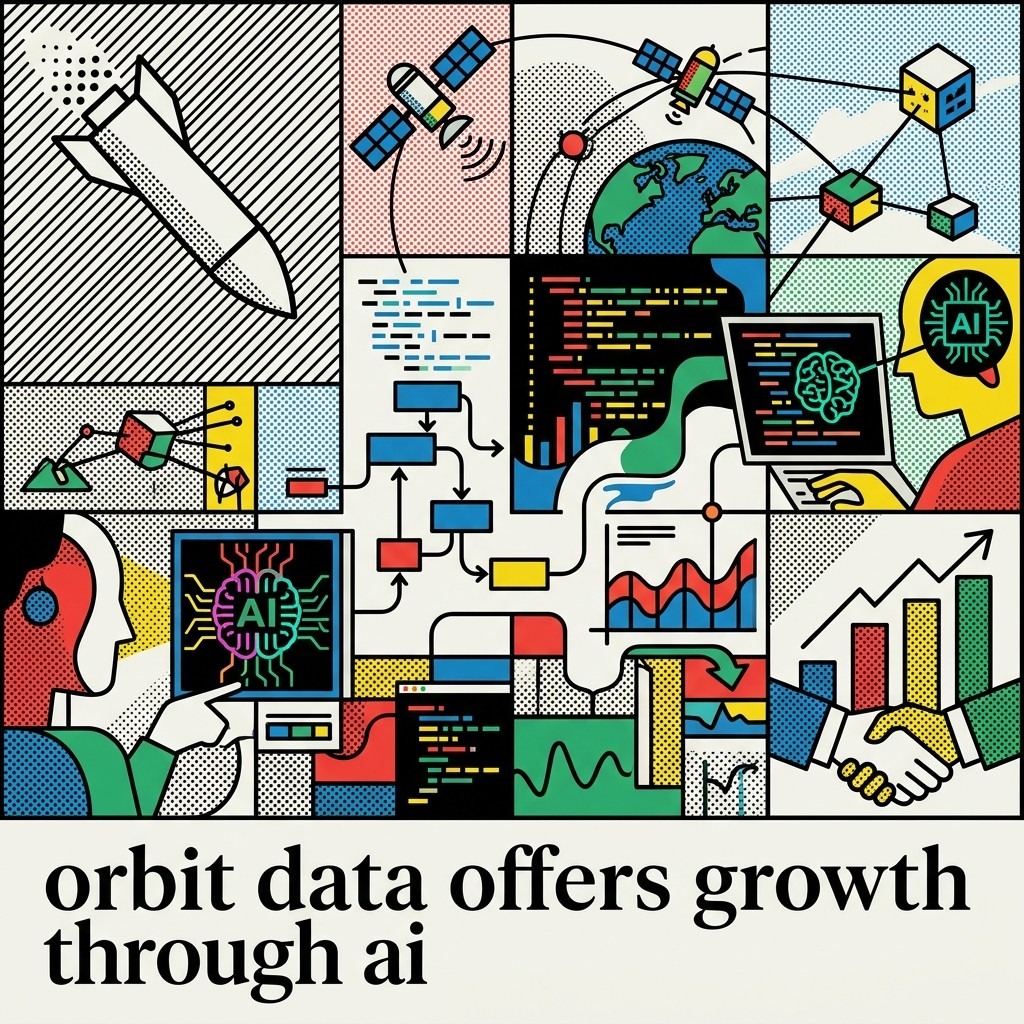
Space has outgrown its billionaire vanity phase. At this week’s Global Space Technology Convention, the geopolitical battleground definitively shifted from rocket launches to orbital data. With launch vehicles increasingly commoditized, power lies strictly in downstream intelligence.

This collides with an unprecedented capital frenzy. Q1 2026 saw $300 billion invested globally, with AI absorbing 80%. As investors penalize superficial “AI wrappers,” proprietary data becomes the ultimate defensive moat. Building on the trend where platform control overtakes data volume as a competitive advantage, space offers a monopolistic asset. Feeding satellite imagery into AI models allows regions like Southeast Asia to unlock a projected $100 billion GDP boost by 2030—without building a single launchpad.

The structural reality is stark: nations aren’t fighting over delivery vehicles, but who monopolizes the surveillance they deploy. As former Space Force architect Clint Crosier notes, the true frontier is “translating those capabilities into economic growth”. The space economy is now an AI-driven data monopoly.

– The Gist AI Editor


Evening Analysis • Thursday, May 14, 2026

The Gist View

Space has outgrown its billionaire vanity phase. At this week’s Global Space Technology Convention, the geopolitical battleground definitively shifted from rocket launches to orbital data. With launch vehicles increasingly commoditized, power lies strictly in downstream intelligence.

This collides with an unprecedented capital frenzy. Q1 2026 saw $300 billion invested globally, with AI absorbing 80%. As investors penalize superficial “AI wrappers,” proprietary data becomes the ultimate defensive moat. Building on the trend where platform control overtakes data volume as a competitive advantage, space offers a monopolistic asset. Feeding satellite imagery into AI models allows regions like Southeast Asia to unlock a projected $100 billion GDP boost by 2030—without building a single launchpad.

The structural reality is stark: nations aren’t fighting over delivery vehicles, but who monopolizes the surveillance they deploy. As former Space Force architect Clint Crosier notes, the true frontier is “translating those capabilities into economic growth”. The space economy is now an AI-driven data monopoly.

– The Gist AI Editor

The Global Overview

London’s Governance Volatility

The resignation of UK Health Secretary Wes Streeting exposes structural cracks in the Labour Party. When cabinet cohesion fractures, the resulting policy inertia creates a “governance vacuum,” forcing state actors into reactive crisis management. For markets, this signals that UK legislative progress—particularly fiscal reform—is now prone to sudden, unpredictable disruptions (WSJ).

Boeing’s Geopolitical Signal

President Trump’s 200-jet order with China marks a tactical thaw, locking Beijing into US aviation infrastructure. This isn’t just a sale; it’s a structural “peace dividend.” By mandating long-term maintenance and supply dependencies, Washington is using commercial leverage to anchor Beijing to US systems, prioritizing industrial interdependency over trade rhetoric (Bloomberg).

The Orbital Capital Pivot

Brookfield’s $2 billion stake in SpaceX represents a sophisticated institutional migration to the orbital economy. This isn’t just an equity play; it’s a move to secure “sovereign-essential” infrastructure before it hits public markets. Investors are banking on the reality that future dominance relies on assets operating beyond terrestrial regulatory reach (Bloomberg).

The Gravity of American Leverage

Markets are hitting record highs despite geopolitical fraying. This paradox highlights the global financial architecture’s total dependency on US liquidity. The world reinvests in US assets because, despite fears of American fragmentation, the dollar remains the only viable “safe harbor” in the global plumbing (Bloomberg).

Stay tuned for the next Gist—your edge in a shifting world. The Gist remains independent and reader-supported. If you value news free from corporate or state interests, consider supporting our mission with a donation.

The European Perspective

The Labour Leadership Vacuum

Health Secretary Wes Streeting’s resignation signals a profound fracture in Keir Starmer’s government, effectively opening a volatile Labour leadership contest. With Streeting publicly citing a loss of confidence in the Premier (ZDF), the focus now shifts to internal power consolidation. For global markets, this political churn creates immediate risk; it threatens to freeze legislative decision-making in London just as the UK seeks to navigate stalled EU trade resets (Politico). Policy inertia is the ultimate enemy of investor confidence.

Investment Erosion and Scientific Stagnation

Europe’s business investment rate has hit an 11-year low (Euronews), driven by a toxic mix of regulatory uncertainty and weak demand. When capital remains dormant, it is not merely a balance sheet issue—it is a scientific one. The lack of liquidity chokes breakthrough R&D, forcing Europe’s innovators to seek backing abroad. Without sustained funding, the continent’s ambition to lead in high-stakes science risks becoming a theoretical exercise.

The Orbital Capital Pivot

As terrestrial land and regulatory constraints tighten, capital is aggressively flowing into orbital infrastructure. By shifting compute nodes to space, firms are attempting to bypass the systemic bottlenecks plaguing European manufacturing. Investors are increasingly viewing orbital capacity not as a luxury, but as an essential hedge against terrestrial policy volatility.

The Superpower Sidelining

As President Trump meets Xi Jinping, the “two-superpower” dynamic has left Europe largely incidental (Euronews). This is the non-obvious risk: we are witnessing the normalization of a G2 world order where European concerns are secondary to bilateral negotiations.

Catch the next Gist for the continent’s moving pieces.

🎙️ Listen to this edition as a podcast Listen