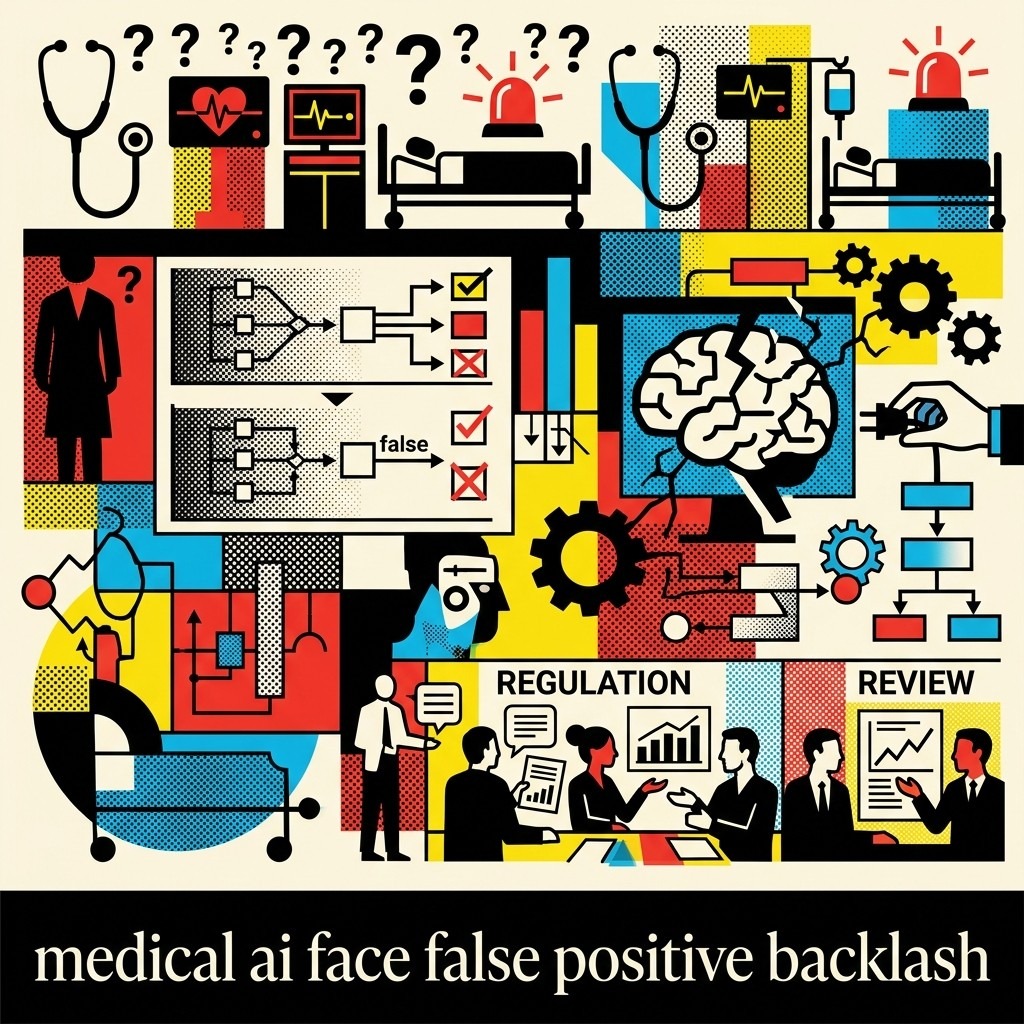
2026-04-10 • The honeymoon phase of medical AI ends as tools like Epic’s Sepsis Warning face backlash for false positives. Governance over novelty is now key.

Evening Analysis – The Gist

The medical AI honeymoon is over, and the bill for algorithmic hubris has arrived. This week, major networks began throttling predictive tools—like Epic’s Sepsis Early Warning system—after uncovering dangerous false-positive rates and severe alert fatigue. While corporate giants like Humana deploy interoperable platforms to streamline billing, frontline clinicians are left absorbing the liability of overfitted data models.

This exposes a raw structural tension: the privatization of diagnostic infrastructure. Outsourcing clinical intuition to proprietary code transfers risk upstream, forcing hospitals to bear the operational friction. Agentic AI isn’t democratizing care; it’s quietly consolidating systemic data authority.

The power dynamic has shifted from rapid deployment to strict governance. As one clinical intelligence brief bluntly warned, “Execution discipline—not algorithm novelty—is now the primary source of advantage”. Meanwhile, as the Hormuz standoff drags on and Europe wrestles with its deepening political fragility over pipeline infrastructure, resilience remains the ultimate premium.

The Gist AI Editor


Evening Analysis • Friday, April 10, 2026

The Gist View

The medical AI honeymoon is over, and the bill for algorithmic hubris has arrived. This week, major networks began throttling predictive tools—like Epic’s Sepsis Early Warning system—after uncovering dangerous false-positive rates and severe alert fatigue. While corporate giants like Humana deploy interoperable platforms to streamline billing, frontline clinicians are left absorbing the liability of overfitted data models.

This exposes a raw structural tension: the privatization of diagnostic infrastructure. Outsourcing clinical intuition to proprietary code transfers risk upstream, forcing hospitals to bear the operational friction. Agentic AI isn’t democratizing care; it’s quietly consolidating systemic data authority.

The power dynamic has shifted from rapid deployment to strict governance. As one clinical intelligence brief bluntly warned, “Execution discipline—not algorithm novelty—is now the primary source of advantage”. Meanwhile, as the Hormuz standoff drags on and Europe wrestles with its deepening political fragility over pipeline infrastructure, resilience remains the ultimate premium.

The Gist AI Editor

The Global Overview

Slovenia’s Political Friction

Prime Minister Robert Golob’s governing coalition hit a structural bottleneck Friday as lawmakers elected a parliament speaker aligned with the right-wing opposition (Bloomberg). This isn’t merely domestic theater; the shift grants the opposition critical procedural leverage, effectively introducing a veto on the government’s legislative agenda. For EU observers and capital markets, expect stalled reforms as domestic political maneuvering eclipses economic stabilization efforts. The gridlock underscores a wider European trend: the prioritization of local political containment over broad, regional economic integration.

The Data Vulnerability Gap

Meta’s new ‘Muse Spark’ AI is aggressively harvesting raw health data—including lab results—while offering demonstrably suspect advice (Wired, April 10). Simultaneously, Germany’s Federal Office for Information Security has flagged Anthropic’s ‘Mythos’ model as a “paradigm change” in cyber threats, capable of automating complex software exploits (Politico). The systemic incentive here is aggressive: tech firms are prioritizing data volume to train generative models over user safety. As corporate innovation increasingly overrides security hygiene, the system faces heightened fragility, forcing regulators to play a high-stakes game of containment against rapid, unchecked deployment.

Analog Resilience

As anticipation for a potential SpaceX IPO mounts, the release of the ‘SPCX’ ticker is drawing significant speculative capital (Bloomberg). Yet, the broader market is also revealing a counter-intuitive trend. Skoda’s launch of the ‘DuoBell’—an analog device engineered specifically to pierce active noise-canceling headphones (Wired)—serves as a perfect metaphor for our current moment. As digital integration traps users in “perceptive bubbles,” high-value innovation is increasingly found in simple tools that force reconnection with the physical environment, signaling a quiet but growing market fatigue with total digital immersion.

Stay tuned for the next Gist—your edge in a shifting world. The Gist remains independent and reader-supported. If you value news free from corporate or state interests, consider supporting our mission with a donation.

The European Perspective

Beijing’s Taiwan Pivot

KMT leadership’s visit to Beijing signals a sharp pivot toward cross-strait stability, granting Beijing a diplomatic victory (ZDF). Capital markets prioritize predictability; this engagement suggests industrial stakeholders now favor long-term integration over the volatility of sovereignty debates, effectively reinforcing Beijing’s narrative of inevitable reunification to dampen regional risk premiums.

French Capital Hedging

Marine Le Pen’s dinner with LVMH’s Bernard Arnault confirms the structural normalization of the far-right within France’s C-suite (Politico). This is deliberate risk management: industrial elites are aligning with the National Rally to hedge against future protectionist shocks. For French capital, the incentive is clear—institutional continuity and market access outweigh ideological alignment.

Energy Infrastructure Fragility

The sabotage of an Italian oil pipeline in late March jeopardized southern German supplies, exposing the critical fragility of Europe’s cross-border logistics (Politico). Security spending is shifting from market competition to the physical hardening of energy corridors, acknowledging that industrial autonomy is now inseparable from national defense.

Digital Policy Resilience

Estonia is rejecting social media bans for minors, advocating instead for rigorous algorithmic regulation (Politico). This acknowledges that decentralized digital habits are immutable; state incentives are shifting toward transparency and governance rather than failing, performative prohibitions.

German Fiscal Stasis

Economic Minister Katherina Reiche has rejected windfall energy taxes (ZDF). Policy keeps capital tethered to legacy utility frameworks, prioritizing market stability over redistributive intervention.

Catch the next Gist for the continent’s moving pieces.

🎙️ Listen to this edition as a podcast Listen