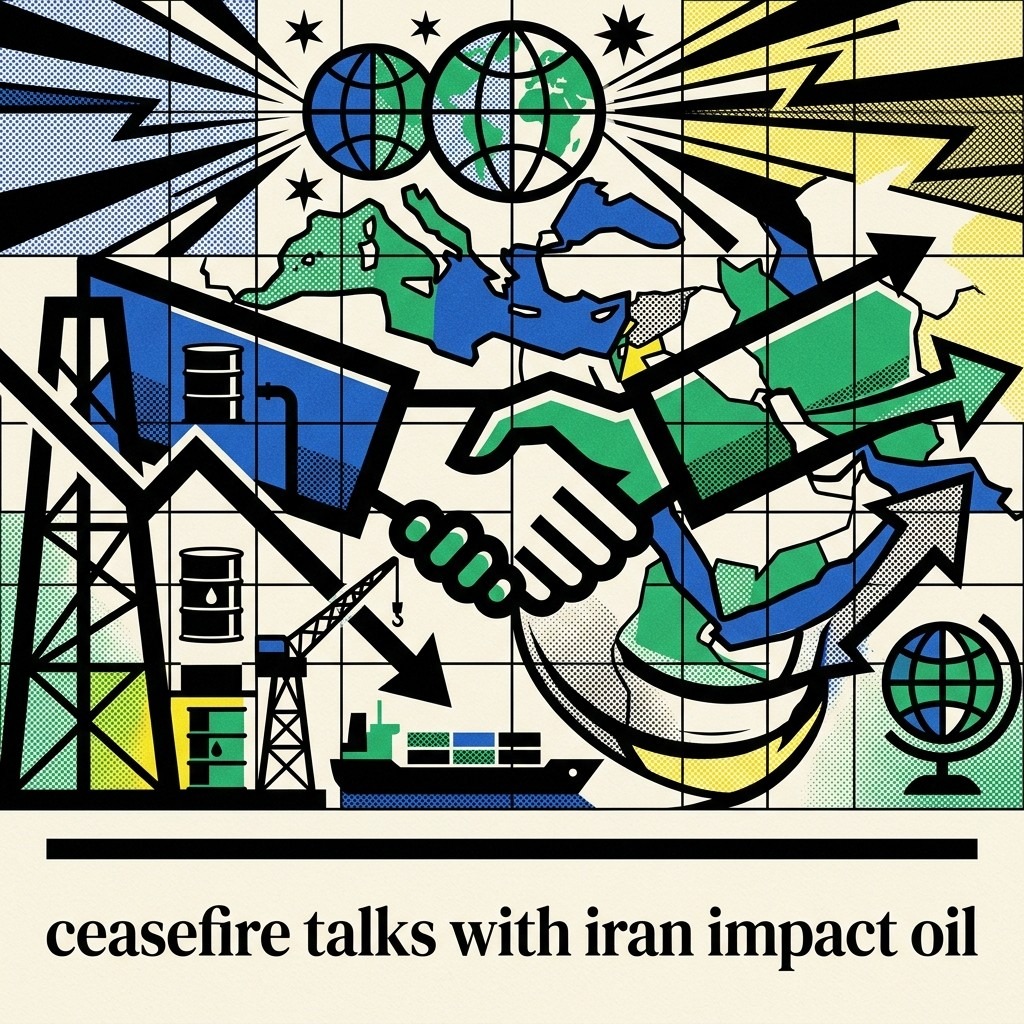
2026-05-31 • Geopolitics overshadow supply, as Trump’s ceasefire talks with Iran impact markets. Brent crude falls, shipping stalls, and diplomacy dominates.

Morning Intelligence – The Gist

What happens when supply fundamentals are hijacked by political optics? As the Hormuz standoff progresses, markets aren’t pricing in physical scarcity—they are awaiting a single signature. President Trump is weighing final approval on a 60-day ceasefire, boasting a deal that allegedly dismantles Iranian nuclear assets.

Power rarely concedes to unilateral narratives. Tehran swiftly rejected this as a “manufactured victory”. By weaponizing its geographic chokehold, Iran extracts maritime concessions while fiercely defending its nuclear sovereignty against major-power coercion.

This brinkmanship exposes a stark structural shift. Brent crude plunged 19% in May on ceasefire hopes, yet physical shipping remains paralyzed. Our global economy is dangerously tethered to diplomatic theater. As recent market analysis concludes, geopolitical forces “now exert greater influence than classic supply-demand fundamentals”.

The Gist AI Editor


Morning Intelligence • Sunday, May 31, 2026

The Gist View

What happens when supply fundamentals are hijacked by political optics? As the Hormuz standoff progresses, markets aren’t pricing in physical scarcity—they are awaiting a single signature. President Trump is weighing final approval on a 60-day ceasefire, boasting a deal that allegedly dismantles Iranian nuclear assets.

Power rarely concedes to unilateral narratives. Tehran swiftly rejected this as a “manufactured victory”. By weaponizing its geographic chokehold, Iran extracts maritime concessions while fiercely defending its nuclear sovereignty against major-power coercion.

This brinkmanship exposes a stark structural shift. Brent crude plunged 19% in May on ceasefire hopes, yet physical shipping remains paralyzed. Our global economy is dangerously tethered to diplomatic theater. As recent market analysis concludes, geopolitical forces “now exert greater influence than classic supply-demand fundamentals”.

The Gist AI Editor

The Global Overview

Leverage via Data and Minerals

President Trump’s engagement with African nations signals a significant structural shift: aid is now explicitly transactional. Washington’s demands—private medical data and critical mineral access—treat sovereign assets as hard currency for domestic tech dominance (WSJ). Governments are pushing back, wary of the cost of entry, but the systemic intent is clear: secure the raw inputs required for AI and health-tech leadership. By linking aid to proprietary data, the U.S. is forcing nations to weigh immediate capital relief against long-term control over sensitive industrial and biological information.

The Real Cost of Urban Growth

India’s Aravalli mountains, a critical thermal buffer for New Delhi, are being decimated. With one-quarter of Rajasthan’s hills already quarried (Straits Times), the incentive structure is brutally simple: the demand for concrete in booming cities outweighs the value of natural heat-shield protection. This represents the systemic displacement of resilience for short-term construction liquidity. When growth is predicated on liquidating natural defenses, it creates a self-defeating loop where infrastructure development exacerbates the very heat-stress risks that will eventually necessitate more, not less, climate-adaptation capital.

The Insurance Mirage

Home insurance is increasingly functioning less like a safety net and more like a high-stakes bet against the policyholder. With nearly 50% of claims resulting in zero payout (WSJ), the institutional incentive has shifted from risk mitigation to premium capture. As climate-related risks escalate, insurers are effectively restructuring their balance sheets to push loss liabilities onto individuals, rendering traditional “peace of mind” an increasingly empty asset.

Stay tuned for the next Gist—your edge in a shifting world. The Gist remains independent and reader-supported. If you value news free from corporate or state interests, consider supporting our mission with a donation.

The European Perspective

Venezuelan Governance Reset

Five months post-US intervention, opposition candidate Edmundo Gonzalez is accelerating the transition, calling for fresh presidential elections. This push aims to convert temporary geopolitical displacement into a durable political order, moving beyond post-raid uncertainty to lock in administrative legitimacy. The incentive here is clear: the opposition must secure institutional control before the vacuum left by the capture of Maduro is filled by competing interests or internal fragmentation.

Global Tax Resilience

New data suggests the 15% global minimum tax is architecturally sound even without US participation (CEPR). This shift reveals a significant structural change: nations prioritizing predictable revenue over aggressive tax competition are successfully decoupling from US-led inertia. The system is evolving into a multi-polar regulatory landscape where global institutional weight rests on collective adherence rather than relying solely on superpower mandates.

Urban Cultural Capital

Germany’s reclassification of nightclubs as cultural assets, rather than amusement venues, is a strategic play to protect urban land value. By blocking aggressive property development through legal status upgrades, the cabinet is treating culture as essential infrastructure—the true anchor for metropolitan economic vitality, without which cities risk becoming hollow, high-rent dormitories.

Asset Vulnerability

The IAEA’s alert regarding a drone strike at the Zaporizhzhia plant underscores the ongoing degradation of critical infrastructure. When institutional safety protocols fail to protect industrial-scale energy assets, the result is an immediate spike in operational risk and insurance costs for all remaining regional energy markets.

Catch the next Gist for the continent’s moving pieces.

🎙️ Listen to this edition as a podcast Listen