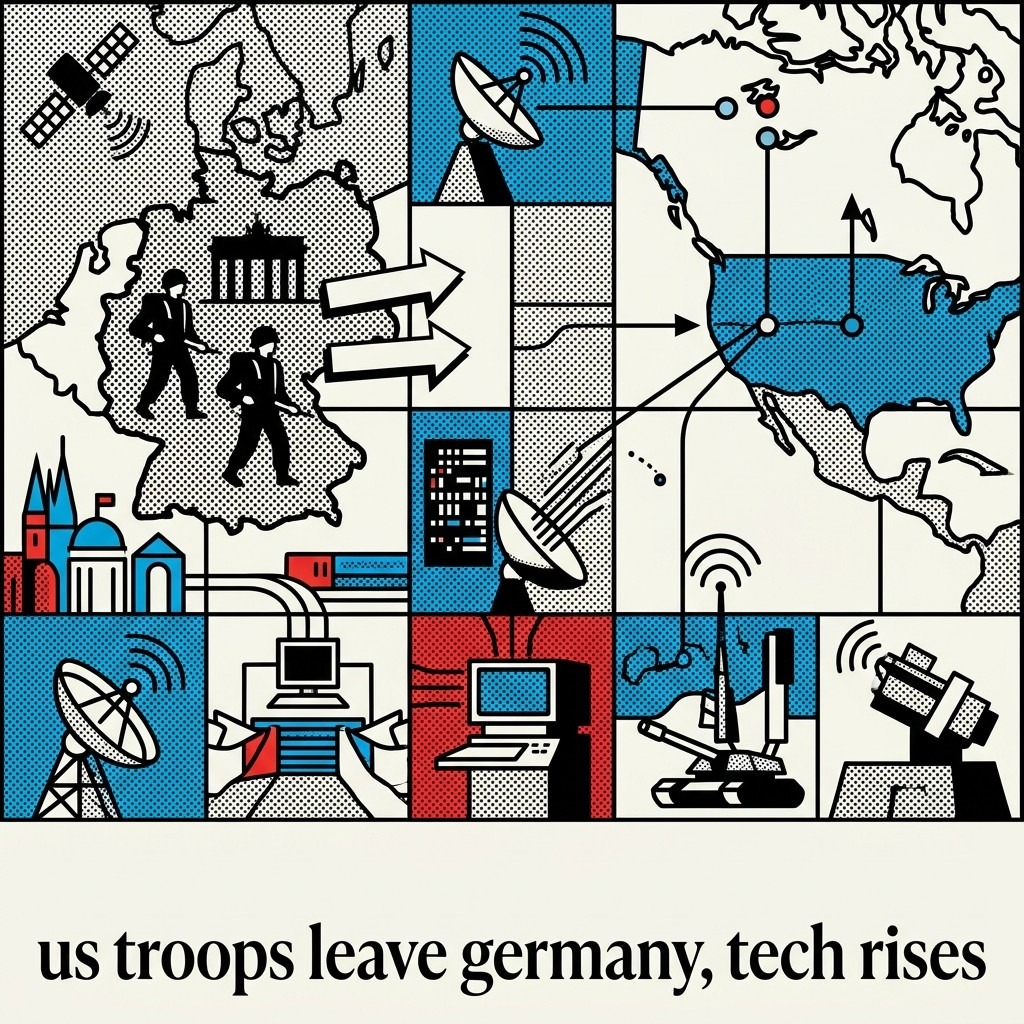
2026-05-02 • The US withdraws 5,000 troops from Germany, shifting to tech-driven military power, impacting transatlantic security and global strategy.

Morning Intelligence – The Gist

What happens when a superpower automates its military while abandoning its traditional garrisons?

The US administration’s sudden withdrawal of 5,000 troops from here in Germany over an Iran policy dispute fractures transatlantic security. As physical forces exit Europe, Washington is aggressively consolidating its modern power center. The Pentagon just locked seven leading tech firms into secret data agreements, seamlessly fusing Silicon Valley into the defense apparatus.

This stark doctrine of administration-led disruption shifts the global calculus. As the debate over AI development and human veto power enters day five of our coverage, the structural reality is clear. Geopolitical leverage now demands monopolizing digital infrastructure over forward-deployed infantry. Allies are left navigating an analog alliance while Washington builds an autonomous digital fortress “amid a dispute over safeguards”.

The Gist AI Editor


Morning Intelligence • Saturday, May 02, 2026

The Gist View

What happens when a superpower automates its military while abandoning its traditional garrisons?

The US administration’s sudden withdrawal of 5,000 troops from here in Germany over an Iran policy dispute fractures transatlantic security. As physical forces exit Europe, Washington is aggressively consolidating its modern power center. The Pentagon just locked seven leading tech firms into secret data agreements, seamlessly fusing Silicon Valley into the defense apparatus.

This stark doctrine of administration-led disruption shifts the global calculus. As the debate over AI development and human veto power enters day five of our coverage, the structural reality is clear. Geopolitical leverage now demands monopolizing digital infrastructure over forward-deployed infantry. Allies are left navigating an analog alliance while Washington builds an autonomous digital fortress “amid a dispute over safeguards”.

The Gist AI Editor

The Global Overview

Arms as Diplomatic Glue

The Trump administration has authorized $9 billion in weapons sales to Israel, Kuwait, Qatar, and the UAE, bypassing standard congressional review (Bloomberg). By expediting these transfers of air defense and guidance systems, Washington uses arms exports as an immediate fiscal lever to sustain regional security amid a fragile ceasefire. This effectively prioritizes strategic speed and alignment over legislative optics, forcing a hardening of regional alliances under the US security umbrella.

Sanctions and Shadow Refineries

China’s independent “teapot” oil refiners are now the primary plumbing for Iranian crude, successfully neutralizing US sanctions (WSJ). By channeling oil through these private, state-aligned entities, Tehran creates opaque capital flows that render traditional Western enforcement mechanisms obsolete. This demonstrates a systemic shift: when states face economic isolation, they innovate around the global financial grid, moving trade into shielded, non-Western pockets of the market.

Institutions Under Pressure

Moody’s negative credit outlook for Columbia University signals that elite US institutions are no longer shielded from the administration’s regulatory crosshairs (Bloomberg). When the state signals intolerance for specific academic frameworks, funding pathways become high-risk. Capital is now reassessing its exposure to these entities, as the bedrock of traditional “soft power”—prestige institutions—becomes a vulnerability rather than a safe haven.

Power’s Success Trap

South Africa’s utility, Eskom, has moved from chronic energy shortages to a power surplus (FT). The challenge is now managing excess supply rather than rationing, forcing a complex transition from crisis management to grid infrastructure monetization. This structural pivot illustrates a classic economic hurdle: turning capacity into revenue requires systemic upgrades that the existing grid was never designed to handle.

Stay tuned for the next Gist—your edge in a shifting world. The Gist remains independent and reader-supported. If you value news free from corporate or state interests, consider supporting our mission with a donation.

The European Perspective

US Force Projection Recalibration

The US will withdraw 5,000 troops from Germany within 6–12 months following Chancellor Merz’s vocal opposition to Washington’s Iran strategy (ZDF). This reduction marks a structural inflection point: Europe can no longer rely on US security scaffolding as a geopolitical safety net. Capital is now aggressively shifting from legacy defense reliance toward massive, rapid re-investment in indigenous military supply chains, fundamentally altering the continent’s strategic autonomy.

The Auto Tariff Lever

President Trump’s threat to increase levies on European automobiles demonstrates the weaponization of protectionism to force supply chain regionalization (NYT). Markets are pricing in a future where high-margin EU exports face severe friction. The structural incentive for manufacturers is clear: migrate production stateside to circumvent borders, effectively eroding Europe’s industrial export base.

The Cost of Populist Monetary Policy

New cross-country data confirms that political interference in central bank leadership yields short-term growth at the expense of long-term credibility (CEPR). The “non-obvious” takeaway? Investors should view “populist-aligned” central bank appointments as a leading indicator of sustained inflation rather than mere stimulus.

Regional Resilience in the Netherlands

French and German firefighters have deployed to the Netherlands to combat worsening woodland blazes (Euronews). This cross-border coordination highlights a structural trend: climate-driven emergencies are forcing operational integration where formal legislative efforts continue to stall.

Catch the next Gist for the continent’s moving pieces.

🎙️ Listen to this edition as a podcast Listen