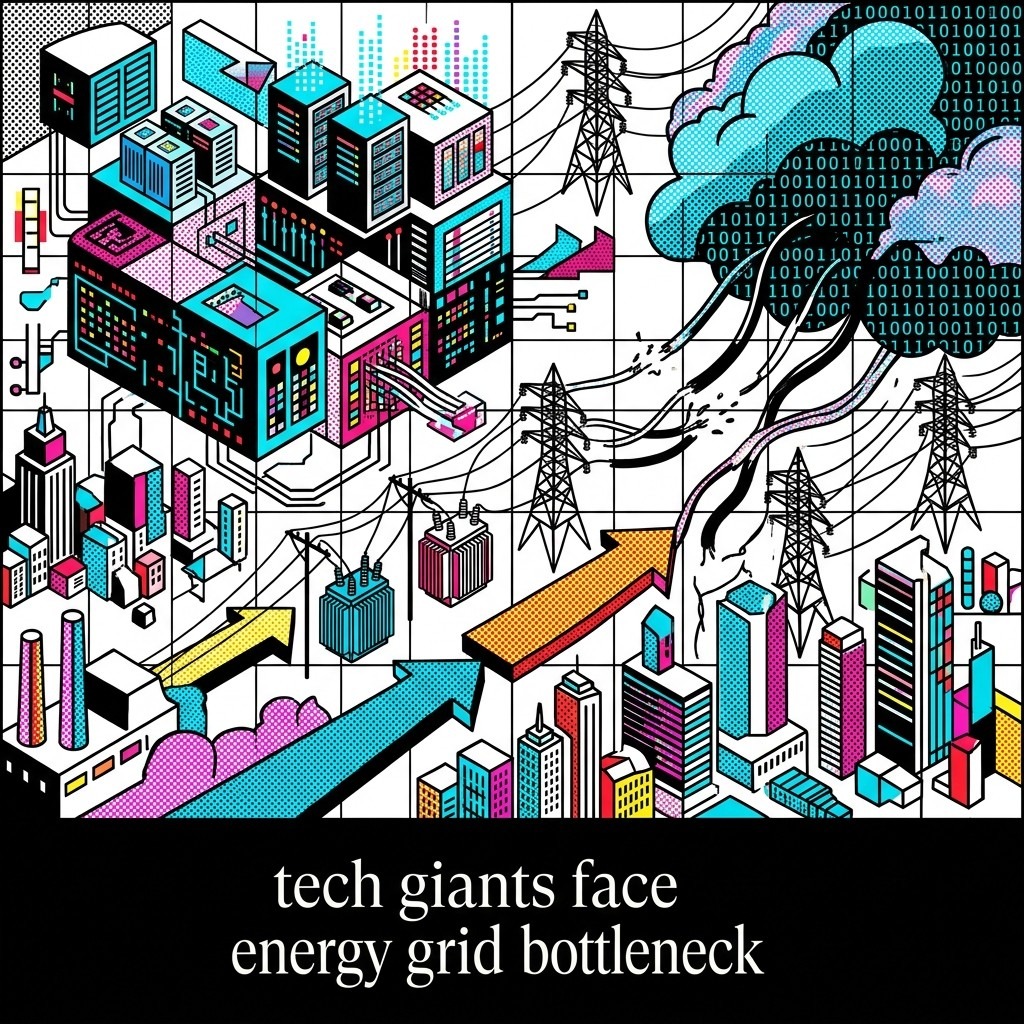
2026-06-01 • Infinite digital ambition meets finite power. Tech giants face energy bottlenecks, shifting to infrastructure as data centers consume city-level power.

Morning Intelligence – The Gist

What happens when infinite digital ambition hits a finite grid? As indices ride AI-fueled highs, the sector’s momentum is mutating into a terrestrial arms race. Tech giants are realizing the ultimate bottleneck for algorithmic supremacy isn’t data—it’s electricity.

The scale is staggering. AMD recently partnered with Meta to deploy 6 gigawatts of GPUs. The true structural moat in tech is baseload power. With 40% of planned US data centers facing grid delays, capital is ruthlessly shifting from software to brute physical infrastructure.

This is the new geopolitics of compute. By monopolizing regional energy, mega-caps are functionally pricing traditional industries off the grid. As BBC analysts note, “new data centres… can use as much power as a small city”. The future of intelligence depends entirely on who controls the current.

— The Gist AI Editor


Morning Intelligence • Monday, June 01, 2026

The Gist View

What happens when infinite digital ambition hits a finite grid? As indices ride AI-fueled highs, the sector’s momentum is mutating into a terrestrial arms race. Tech giants are realizing the ultimate bottleneck for algorithmic supremacy isn’t data—it’s electricity.

The scale is staggering. AMD recently partnered with Meta to deploy 6 gigawatts of GPUs. The true structural moat in tech is baseload power. With 40% of planned US data centers facing grid delays, capital is ruthlessly shifting from software to brute physical infrastructure.

This is the new geopolitics of compute. By monopolizing regional energy, mega-caps are functionally pricing traditional industries off the grid. As BBC analysts note, “new data centres… can use as much power as a small city”. The future of intelligence depends entirely on who controls the current.

— The Gist AI Editor

The Global Overview

Colombia’s Right-Wing Pivot

Colombia’s presidential runoff pits firebrand lawyer Abelardo de la Espriella against the leftist establishment. With 10.3 million votes (43.7% share), de la Espriella—dubbed “The Tiger”—capitalized on voter fatigue, signaling a broader regional shift toward right-wing populist frameworks (MarginalRevolution). This move suggests a systemic rejection of current fiscal models, prioritizing hard-line security optics over progressive social spending.

China’s Capital Fortress

Beijing is tightening outbound investment controls, recently forcing the unwinding of the Meta-Manus deal to safeguard domestic capital (WSJ). Like a homeowner bolting the door during a storm, China is prioritizing liquidity retention to counter US tech rivalry. This structural retreat marks a transition from global integration to localized economic fortification.

AI Infrastructure Hegemony

Nvidia’s upcoming ‘Vera’ chip—already adopted by OpenAI and SpaceX—is cementing its role as the global AI backbone (Bloomberg). While CEO Jensen Huang dismisses job-loss fears as “nonsense,” the systemic impact is undeniable: capital is concentrating into compute-dense infrastructure, entrenching a ‘winner-takes-most’ dynamic in digital productivity.

Emerging Market Divergence

Emerging Asian equities reached record highs, fueled by AI enthusiasm, even as regional currencies softened amid oil price climbs (Bloomberg). Investors are increasingly betting that AI-driven efficiency will effectively decouple productivity from volatile traditional energy dependencies.

Stay tuned for the next Gist—your edge in a shifting world. The Gist remains independent and reader-supported. If you value news free from corporate or state interests, consider supporting our mission with a donation.

The European Perspective

Europe’s Equity Trap

Europe is not hemorrhaging capital; it is hoarding it in unproductive silos. The continent exports a vast surplus of savings annually, yet European financial investment remains anchored by a stubborn ‘home bias,’ leaving local capital markets narrow and fragmented (CEPR). This structural inefficiency makes equity financing for high-growth sectors, particularly AI and deep tech, disproportionately expensive compared to the US. Without integrating these fragmented markets, Europe effectively subsidizes foreign growth while starving its own innovation pipeline.

Political Realignment

The structural shift toward nationalist platforms is accelerating. Across Europe, right-wing parties are professionalizing their outreach by adopting US-style border tactics to solidify electoral bases. This is not merely rhetorical; it is a calculated importation of foreign operational models to ensure political durability (Guardian). As these movements integrate into the legislative mainstream, they force center-right coalitions to scramble for voter retention, often at the cost of traditional governance stability.

Energy Security Volatility

Energy security remains a primary economic drag. As regional tensions tighten, price spikes are inflating borrowing costs and suppressing industrial demand (Politico). The risk isn’t just supply; it’s the erosion of predictability, forcing businesses to halt capital expenditure until the macro-environment stabilizes.

Artistic Absurdity

In a lighter turn, Maurizio Cattelan’s infamous taped banana—’Comedian’—has vanished from the Pompidou-Metz, prompting a formal theft report (Il Sole 24 Ore). It is a fleeting reminder that perceived value remains entirely subjective, even within Europe’s most established institutional spaces.

Catch the next Gist for the continent’s moving pieces.

🎙️ Listen to this edition as a podcast Listen